Choosing a Skin Tone Analyzer in 2026 is not just about finding a device that matches a complexion to a shade. Global buyers also need to consider lighting consistency, camera quality, calibration, language support, and how clearly a product explains its results. A reading taken beside a sunlit window may differ from one taken under warm store lights. Small details matter.
This guide examines seven options for buyers comparing tools across markets. It focuses on practical questions: Does the analyzer work with different skin tones? Can staff or customers use it without lengthy training? Are recommendations easy to understand and repeat? We also consider data handling, regional availability, customer support, and the difference between a useful shade suggestion and a guarantee of a perfect match. That distinction is easy to overlook.
No analyzer removes every source of variation. Skin can look different across seasons, cameras, and surroundings, while product formulas and shade ranges vary by brand. Buyers should check each provider’s documentation and test devices in the settings where they will actually be used. A polished demo is helpful, but it is not the whole story. Some comparisons remain imperfect, especially when public information is limited. The aim here is a careful, practical shortlist—not a promise that one tool suits every market, shopper, or skin type.
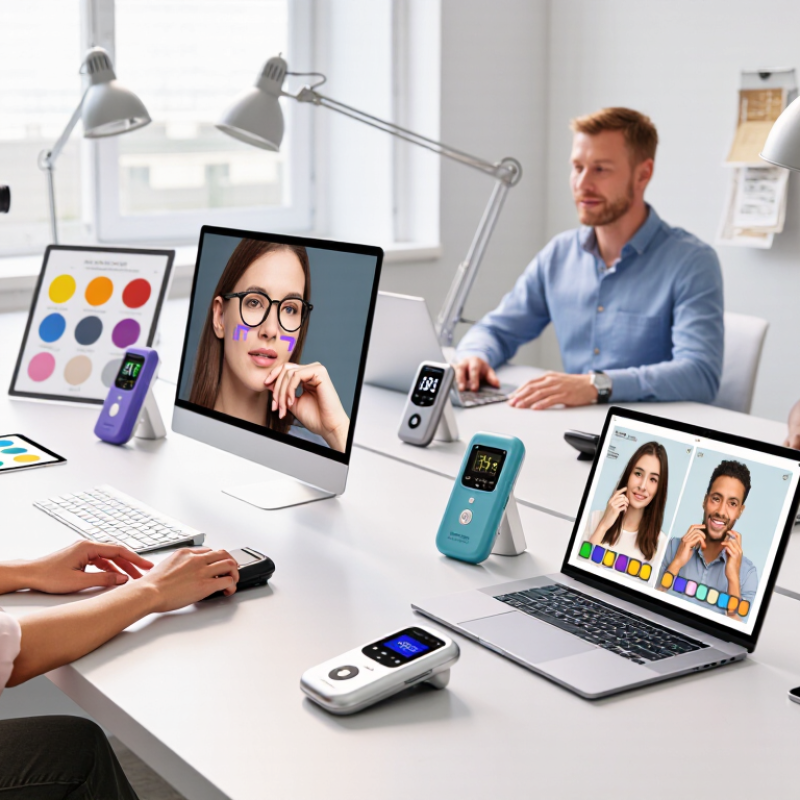
Skin tone analyzers estimate the color of skin at the surface; they do not diagnose skin conditions. Many measure reflected light and report CIELAB values, including lightness and red–green or yellow–blue components. CIE 15:2018, the international colorimetry standard, explains how standardized color spaces support consistent measurement. That matters: labels such as “warm” or “cool” can be subjective without measured color data.
A contact device typically illuminates a small area, such as the cheek, and reads the returning light against an internal reference. Software then converts the signal into color values or estimated pigment indicators. Camera-based tools analyze image pixels instead, so shadows, makeup, daylight, and screen settings can shift results. Not a colorimeter. The Monk Skin Tone research scale, published in 2022, uses 10 reference tones, showing why a simple light-to-dark slider may miss meaningful variation.
For a useful comparison, buyers should check which measurement method is used, whether the device is calibrated, and how results change across repeated readings. Test the same clean patch of skin under consistent conditions; even a nearby window can alter the light. Ask whether the output describes visible color or estimates melanin, since those are not interchangeable. Results can still vary between devices, and a precise-looking number is not automatically a complete account of someone’s skin tone.

Many analyzers estimate skin color using CIELAB measurements. The Individual Typology Angle (ITA°) is calculated from L* (lightness) and b* (yellow–blue) values. The chart shows commonly used category boundaries; it is a classification aid, not a complete description of skin tone or undertone. Lighting, calibration, and measurement location can affect results.
When comparing skin tone analyzers in 2026, start with measurement consistency. A reading should remain similar when the same person is measured again under controlled conditions. Ask how the device handles ambient light, sensor distance, and skin preparation. Small changes matter. A bright window or oily surface can shift a result.
Check performance across a broad range of skin tones, not just the shades shown in a product demonstration. Look for independent testing details, sample sizes, and clear explanations of measurement limits. A precise-looking number is not proof of accuracy. For beauty or product matching, results should support—not replace—professional judgment. A polished dashboard can still hide uneven performance.
Practical details shape long-term value. Compare calibration frequency, cleaning requirements, measurement time, and compatibility with existing workflows. If several staff members use the analyzer, check whether their readings remain comparable after training. Review how customer data is stored and who can access it. Ask about software updates and technical support, especially across regions with different service hours. A low purchase price may mean little if replacement parts are difficult to obtain. I would also test the device in the actual room where it will be used; laboratory conditions can be kinder than a busy counter.
Global buyers comparing seven skin tone analyzers should look beyond price and screen design. Handheld spectrophotometers measure reflected light across multiple wavelengths. Tristimulus colorimeters offer simpler readings for routine shade matching. Smartphone-based analyzers are convenient, but camera quality and room lighting can shift results. Small details matter.
Portable reflectance meters suit quick checks in stores or clinics. Contact probes help control distance and angle, though pressure may affect a reading. Multi-angle imaging systems capture skin under different lighting directions, revealing variation that one straight-on photo can miss. Laboratory spectrophotometers provide detailed measurements, but they usually need trained operators and a controlled setup. These are seven distinct approaches, not interchangeable guarantees.
For international use, test devices on varied skin tones and under warm, cool, and daylight-balanced lighting. Ask suppliers how often calibration is needed, which measurement units are reported, and whether results can be exported consistently. A device that performs well on a display model may struggle with deeper tones or uneven pigmentation. That gap is easy to overlook. No analyzer removes every source of variation, so compare repeat readings and keep human review in the process. A slightly imperfect workflow, documented honestly, is more useful than claiming perfect accuracy.
A skin tone analyzer that performs well in one market may misread users elsewhere. Regional selection starts with the people being measured, not a feature checklist. Skin tone ranges, undertones, age groups, and common lighting conditions vary across communities. Test devices with locally representative users, including lighter and deeper skin tones. Context matters.
Tips: Compare readings in daylight and indoor lighting. Check the calibration and cleaning instructions. Ask for evidence across different skin tones, not just an average score. Also consider language support, local service access, battery life, and secure data storage. These details affect everyday use more than a polished screen.
In humid regions, sweat and surface shine can affect readings, so clear preparation guidance matters. In colder or drier settings, flaky skin may create another source of variation. Clinics may need repeatable records; retail teams may prefer faster workflows. Neither setting should treat one reading as a diagnosis. Check results under consistent conditions and use professional judgment. Local testing can still be limited, and that uncertainty deserves attention before purchase.
Before comparing a skin tone analyzer, define the job it must do. A salon matching foundation needs different detail from a clinic tracking pigmentation. Check the measurement range, repeatability, calibration method, and whether results export in a usable format. Ask for test data across light, medium, and deep skin tones, not only a single sample. Small gaps matter.
Lighting can change readings. ISO/CIE 11664-2 specifies standard illuminant D65 at about 6,504 kelvin, a useful reference when checking a device’s measurement conditions. Ask whether the analyzer controls ambient light or requires a contact probe. The 2022 ACM FAccT paper on the Monk Skin Tone scale describes ten tone levels, offering a more granular reference than a few broad categories. Still, a tone scale is not a complete measure of undertone or skin condition.
Request the manufacturer’s validation protocol, sample size, and error range before purchase. Compare readings taken repeatedly on the same person, then across different operators. That practical check may reveal inconsistent placement or pressure. I would also question impressive accuracy claims if the testing conditions are unclear. Confirm software support, training needs, warranty terms, and how measurements are stored. A low price can become costly when calibration or service is difficult to obtain.
A practical shortlist by analyzer type. The best fit depends on whether you need a repeatable color reading, a facial map, an at-home estimate, or a sensor for integration. These categories are not ranked product models.
| Analyzer Type | How It Measures | Typical Output | Best Suited For | Key Strength | Practical Limitation | Checks Before Buying |
|---|---|---|---|---|---|---|
| Handheld skin colorimeter | Uses controlled illumination and color-sensitive detectors to measure reflected light from a small skin area. | Color values such as CIE L*a*b* or a device-specific color index, depending on the instrument. | Repeatable spot checks in clinics, product testing, and research workflows. | Portable and designed for more controlled readings than an ordinary camera. | Measures a small area; results can vary with probe placement, pressure, and skin preparation. | Confirm the reported color system, measurement aperture, calibration process, contact method, and export options. |
| Reflectance spectrophotometer | Measures reflected light across multiple wavelengths rather than only a few broad color channels. | Spectral reflectance data and, where supported, calculated color coordinates. | Laboratories and buyers needing detailed, instrument-based color measurement. | Spectral data can support more analysis than a single color score. | Usually needs careful calibration, consistent measurement conditions, and trained interpretation. | Check wavelength range, measurement geometry, calibration standards, software access, and whether skin-specific protocols are supplied. |
| Imaging colorimeter | Captures calibrated color measurements across an image, rather than at only one contact point. | Spatial color maps and region-based color measurements. | Comparing multiple facial or body regions and tracking visible color distribution. | Shows where color varies across the measured area. | Results depend on camera calibration, lighting control, and image-processing settings. | Ask how illumination is standardized, how regions are selected, and whether raw images and measurement data can be exported. |
| Multispectral skin imaging system | Records images in selected wavelength bands; some systems use visible light and may include additional bands. | Band-specific images or derived maps that may help assess visible skin features. | Professional assessment and research where spatial information across several bands is useful. | Provides more image information than a standard color photograph. | Available bands and derived outputs vary; an image-based estimate is not automatically a direct measurement of a biological property. | Verify the bands used, what each output actually represents, validation evidence, lighting controls, and operator training needs. |
| Standardized facial imaging analyzer | Uses a camera setup and controlled lighting to capture facial images; software analyzes selected regions or visible features. | Facial images, region comparisons, and software-generated reports or indices. | Clinics and skincare consultations needing a consistent visual record over time. | Can document a broad facial area in one session. | Software scores are not interchangeable across systems and may be affected by positioning, lighting, and image settings. | Check image standardization, report definitions, repeatability, data storage, consent controls, and whether results are clearly explained to users. |
| Smartphone-based skin tone app | Analyzes a phone-camera image, sometimes with an on-screen calibration reference or guided capture process. | An estimated tone category, color value, or app-specific recommendation. | Low-barrier consumer use and preliminary shade or tone guidance. | Accessible and easy to deploy without dedicated measurement hardware. | Phone cameras, automatic image processing, ambient light, and screen settings can change the result. | Check supported devices, calibration instructions, lighting requirements, privacy terms, and whether the result is described as an estimate. |
| Embedded or OEM skin-color sensor module | Integrates a compact optical sensor into a larger device or product; readings depend on sensor design and host-device setup. | Raw sensor signals or software-derived color measurements. | Product developers building measurement into a device or testing system. | Can be tailored to a specific workflow and integrated into a larger product. | Performance depends on the complete system, including optics, housing, firmware, calibration, and measurement procedure. | Confirm integration documentation, calibration support, operating conditions, data interface, supply continuity, and validation on intended skin tones. |

Since 1984, Thermostop has been a reputable manufacturer of Industrial Sectional Doors, Cold Storage Doors and Specialty Doors such as Impactable Breakaway doors, Acoustic Doors and Ballistic Doors.
Contact