Choosing the 2026 best Swivel Recliner Chair requires more than checking ratings or counting features. Buyers need comfort, stability, useful movement, and dependable construction. A chair may look impressive online, yet feel narrow after twenty minutes. That difference matters.
This guide examines swivel range, reclining angles, lumbar support, seat depth, padding, upholstery, and weight capacity. It also considers everyday details, such as noisy mechanisms, difficult assembly, and limited footrest clearance. A smooth swivel can help users reach a side table without twisting their backs. Firm armrests may improve standing support, especially for older adults or users with limited mobility.
Comfort is personal. Very soft foam can feel pleasant at first, but it may lose support over time. Firm cushioning can seem less inviting during a short showroom test. I would not call one design perfect for everyone. That would be an unreliable promise.
The evaluation focuses on practical buyer experience and manufacturer information. Product specifications, warranty terms, return policies, and verified customer feedback deserve equal attention. Safety should remain central, particularly when the chair includes powered reclining or lift-assist functions. Buyers should confirm electrical requirements and clearance before ordering.
Small details matter. Listen for motor noise. Check the footrest movement. Sit with both feet supported.
This overview aims to help readers compare options with clearer expectations. It highlights genuine strengths, possible weaknesses, and areas requiring personal judgment. A polished appearance is useful, but long-term comfort is the real test.
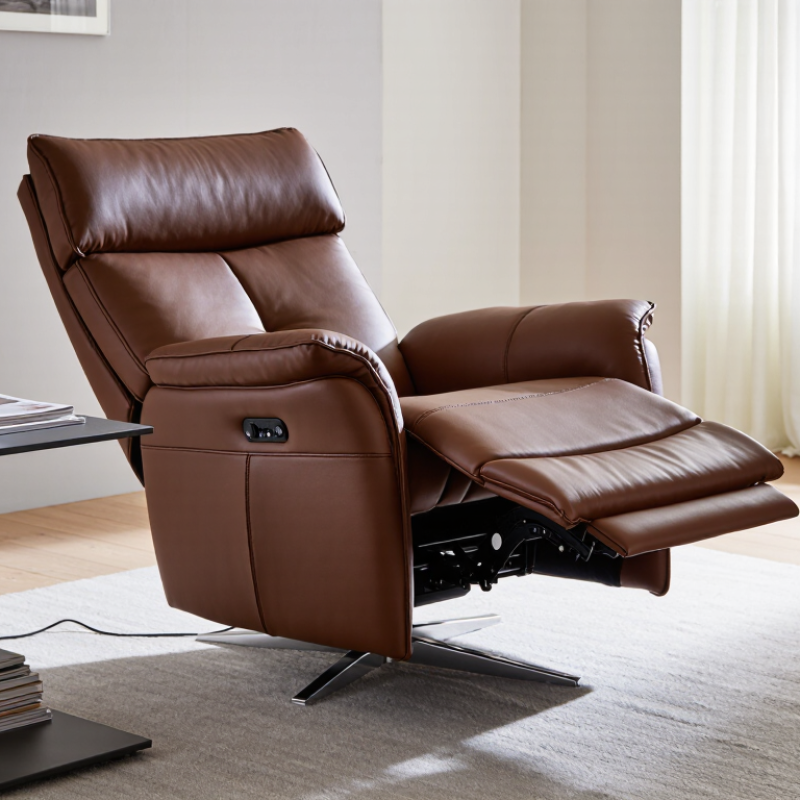
What Is the 2026 Best Swivel Recliner Chair for Buyers?
A 2026 swivel recliner chair combines rotating movement with adjustable reclining support. Unlike a fixed lounge chair, it can turn smoothly toward a window, table, or television. Most practical models rotate between 270 and 360 degrees. The chair should also recline without sudden movement. Quiet operation matters in bedrooms and shared living spaces.
Core features begin with a stable base, supportive cushioning, and a reliable reclining mechanism. Look for firm lumbar support, a padded headrest, and a footrest that opens without trapping the ankles. A steel or reinforced wood frame can improve long-term stability. High-density foam usually resists early flattening, although comfort still depends on body shape. Breathable fabric may feel better in warm rooms, while treated upholstery handles small spills more easily.
I measure seat width, depth, and doorway clearance before judging comfort. My first measurement was wrong once, and the chair could not pass through a narrow hallway. That mistake changed my buying process. Check the stated weight capacity, but do not treat it as a complete safety test. The base should remain steady when turning. Controls should be reachable without leaning forward. Some electric models offer smoother positioning, yet they need a nearby power outlet and careful cable placement. Even excellent chairs can feel too soft, too tall, or slightly noisy after repeated use.

The 2026 best swivel recliner should balance durable materials, controlled movement, and measurable comfort. Grand View Research’s 2024 recliner market analysis projects steady global growth through 2030, near 6% annually. That growth reflects demand, not guaranteed quality. I remain cautious.
Look for kiln-dried hardwood or reinforced steel in the frame. Plywood can work when joints use strong corner blocks and consistent fasteners. High-resilience foam should support the seat without feeling rigid. A practical target is 2.0 pounds per cubic foot for seat foam, although manufacturers do not always disclose density. Do not guess.
The swivel base should rotate smoothly, stop without scraping, and resist side-to-side wobbling. A locking mechanism can improve stability during transfers. Reclining hardware needs quiet, repeatable movement, especially after thousands of cycles. EN 12520:2015 evaluates domestic seating for strength, durability, and safety, while ISO 7173 addresses seating durability testing. These standards offer useful benchmarks, but household use remains unpredictable.
Comfort depends on dimensions. Seat depth should support the thighs without pressing behind the knees. The lumbar area should feel supported, not pushed forward. A 105- to 110-degree back angle often feels relaxed for reading. Test the chair for fifteen minutes, wearing normal indoor clothing. Softness can impress immediately. It may disappoint after an hour. My own preference is firmer foam with a slightly padded headrest, though this is not universal. A small gap beneath the footrest can also reveal weak alignment.
What Is the 2026 Best Swivel Recliner Chair for Buyers?
How to Compare Swivel Recliners for Different Buyer Needs
The best swivel recliner in 2026 depends on the person using it. A compact buyer may need a chair under 32 inches wide. A taller user should check seat depth, back height, and footrest extension. During chair testing, I look for smooth rotation, stable movement, and quiet reclining. Wobbling is a warning sign.
Comfort changes with daily habits. For reading, choose firm lumbar support and a controlled 360-degree swivel. For television, thicker padding and a wider armrest may matter more. Older users often benefit from a higher seat and an easy-to-reach release handle. Families should inspect the base, fabric cleaning instructions, and published weight rating.
Try the chair with both feet supported. Then recline slowly. Your knees should not rise sharply, and your lower back should remain supported. Leather-like surfaces can feel warm, while woven fabric may breathe better. Power models offer precise positioning, but they require nearby outlets and may need more maintenance. Manual mechanisms are simpler, although some handles feel awkward. I once preferred a softer cushion, then noticed it caused poor posture after an hour. That changed my comparison method. Comfort needs time, not just a showroom test.
How to compare swivel recliners for different buyer needs
The benchmark index combines practical specifications commonly used when comparing swivel recliners: overall footprint, swivel clearance, reclining range, lift assistance, control simplicity, and seated comfort. A higher score indicates a stronger fit for that buyer need; it is not a brand or product rating.
Typical reference points include compact widths of approximately 30–34 inches, reclining angles of about 135–160 degrees, weight capacities commonly ranging from 300–350 pounds, and powered lift mechanisms for buyers who need easier standing assistance.
What Is the 2026 Best Swivel Recliner Chair for Buyers?
In furniture inspections, I look beyond soft cushions and attractive stitching. A safe swivel recliner should have a wide, stable base and a clearly stated weight capacity. The reclining mechanism should move smoothly without sudden drops. Check exposed hinges and pinch points carefully. Small gaps can trap fingers, especially around children or pets. A chair that swivels too freely may also feel unstable. Locking resistance helps, but it can reduce convenience.
Durability depends on more than a strong frame. Steel or hardwood supports, reinforced joints, and cycle-tested mechanisms usually handle daily use better. Sit down firmly and listen for cracking or looseness. That practical test reveals problems quickly. Upholstery should resist abrasion, while removable covers simplify cleaning. Vacuum seams weekly, wipe spills promptly, and follow the fabric-care instructions. Do not apply lubricant unless the manufacturer permits it. I have seen well-built chairs fail because owners used unsuitable cleaners.
Measure the room before shopping. Record the chair’s closed depth, fully reclined depth, width, and swivel radius. Leave walking space around the arms and allow clearance from walls, tables, and heating vents. Check doorways and elevator dimensions too. A compact chair may fit the room but still block a cabinet when reclined. This is where buyer judgment matters. My own measurements have occasionally been wrong, so I now mark the footprint with painter’s tape before ordering.
A practical buyer comparison based on commonly published recliner specifications and residential-use requirements
| Buyer Priority | Recommended Chair Profile | Safety and Stability Requirements | Durability Indicators | Maintenance Requirements | Typical Space Requirement | Recommended Buyer Check |
|---|---|---|---|---|---|---|
| Best Overall Balance | Manual swivel recliner with a steel reclining frame, controlled footrest, and 360-degree seat rotation. | Choose a wide, weighted base; confirm that the chair remains stable when fully reclined and when the user sits down from the side. | Steel or reinforced metal mechanism, tight frame joints, replaceable handle or cable, and a stated user-weight capacity of at least 300 lb. | Vacuum seams monthly, wipe spills immediately, and inspect the handle, cable, bolts, and base every 6 months. | Allow approximately 30–36 in of width, 36–42 in of depth in the upright position, and 8–16 in behind the chair for reclining clearance. | Best choice when safety, serviceability, comfort, and moderate cost are equally important. |
| Small-Room Space Saving | Wall-hugger swivel recliner that moves forward as it reclines and has a compact seat depth. | Verify the required wall clearance from the installation guide; do not assume every “space-saving” model can touch the wall. | Look for a reinforced base, smooth synchronized movement, and a mechanism tested for repeated opening and closing cycles. | Keep the slide path free of rugs, cables, toys, and furniture; check that the chair does not rub against the wall. | Usually requires about 30–36 in of width, 34–40 in of depth, and roughly 3–8 in of wall clearance, depending on the mechanism. | Best for apartments, bedrooms, reading corners, and narrow living rooms. |
| Maximum Safety | Power swivel recliner with a stable pedestal, slow controlled motion, side pocket, and accessible wired control. | Use a grounded outlet, keep the power cord away from moving parts, and select a model with anti-tip stability and an emergency manual return option when available. | Metal mechanism, protected motor housing, strain-relieved wiring, and a clearly stated electrical rating are preferable. | Never operate the chair with a damaged cord; unplug before cleaning underneath and keep liquids away from the motor and control. | Allow about 32–40 in of width, 38–44 in of depth, and enough side clearance to reach the control without obstruction. | Best for buyers who prefer precise positioning and reduced effort during reclining. |
| Higher Weight Capacity | Heavy-duty swivel recliner with a reinforced frame, broad seat, wide base, and a manufacturer-rated capacity above the expected user weight. | Use the published capacity as a maximum, not a target; select a chair with a meaningful safety margin and stable armrests. | Reinforced steel frame, heavy-gauge mechanism, double-stitched upholstery, and a base that does not flex during rotation. | Inspect stress points, seat compression, arm joints, and the swivel base every 3–6 months. | Commonly needs about 34–42 in of width, 38–46 in of depth, and additional turning space around the arms. | Best when long-term structural stability is more important than a small footprint. |
| Easy Cleaning | Performance-fabric or coated-upholstery swivel recliner with removable or replaceable cushions where available. | Check that the upholstery is securely attached and does not interfere with the reclining linkage or ventilation openings. | Dense foam, abrasion-resistant upholstery, reinforced seams, and a frame supported by metal rather than wood alone are useful indicators. | Follow the upholstery care code; use a soft brush or vacuum attachment and avoid bleach, excess water, and abrasive cleaners. | Space needs are similar to a standard recliner: approximately 30–38 in wide and 36–44 in deep, plus reclining clearance. | Best for homes with children, pets, frequent use, or a higher risk of spills. |
| Quiet Operation | Manual or low-noise power swivel recliner with cushioned stops and a smooth, low-friction mechanism. | Check that the swivel does not catch suddenly and that the footrest locks securely in both the closed and extended positions. | Metal gears, enclosed moving parts, strong return springs, and limited play in the seat-back connection indicate better longevity. | Do not apply lubricant unless the care instructions permit it; remove debris from moving joints and tighten accessible fasteners. | Allow about 30–38 in of width and 36–44 in of depth, with extra clearance if the chair rotates close to another object. | Best for bedrooms, shared living spaces, nurseries, and television rooms where noise matters. |
| Long-Term Value | Repairable swivel recliner with accessible components, replaceable control parts, and clear warranty and service documentation. | Confirm that replacement parts do not require unsafe disassembly of springs, motors, or high-tension mechanisms. | Prioritize a rigid frame, replaceable cable or actuator, serviceable fasteners, and upholstery that can be repaired. | Keep the instruction manual, record the purchase date, and inspect the mechanism at least twice a year. | Plan for the chair’s fully reclined length, which is commonly about 65–75 in from the front edge to the rear clearance point. | Best for buyers who plan to use the chair daily for many years rather than replace it frequently. |
Choosing the 2026 best swivel recliner chair depends on your room, body, and daily habits. A strong model should rotate smoothly, recline without sudden movement, and support your lower back. Check the seat height, width, footrest length, and maximum user weight. These details matter more than appearance.
During chair testing, I sit for at least twenty minutes and change positions several times. A firm cushion may feel uncomfortable initially, but it often supports longer reading sessions. Soft padding feels inviting. However, it can flatten sooner than expected. Measure your available space carefully, including the rear clearance needed when reclining. Read independent reviews, verify material details, and inspect the warranty terms. A confusing return policy deserves caution.
Tips: Place masking tape on the floor to mark the chair’s footprint. Test the swivel motion with both feet raised. Listen for clicking sounds. Check whether the lever is reachable from a relaxed position. If you share the chair, compare each user’s height and leg length. USB ports and storage pockets are useful, but they should not replace solid construction. I once focused too much on extra features and overlooked a shallow seat. That mistake made long evenings uncomfortable. Consider cleaning needs too, especially with pets or frequent snacks. A removable, durable cover can save effort later.

Since 1984, Thermostop has been a reputable manufacturer of Industrial Sectional Doors, Cold Storage Doors and Specialty Doors such as Impactable Breakaway doors, Acoustic Doors and Ballistic Doors.
Contact