Choosing a Circuit Breaker Supplier in China is not simply a price comparison. Buyers must match each breaker to its voltage, fault-current rating, operating environment, and test evidence. The International Energy Agency’s Electricity 2024 report projects global electricity demand to grow by an average of 3.4% annually through 2026. That growth raises the stakes for dependable protection in factories, commercial buildings, and expanding power networks. The IEA’s 2023 grid report also says annual grid investment needs to more than double by 2030, from about USD 300 billion to over USD 600 billion. More infrastructure means more equipment decisions—and less room for vague specifications.
IEA Executive Director Fatih Birol has described the shift with the phrase, “The Age of Electricity.” For buyers, that shift makes supplier verification practical, not cosmetic. Ask for routine and type-test records, applicable IEC standards, production traceability, and clear warranty terms. For low-voltage breakers, IEC 60947-2 is a key reference; high-voltage equipment follows different standards and selection criteria. A polished catalogue is not proof of performance. Neither is a low quote. One detail is easy to miss: confirm that the tested model matches the offered model, including accessories and trip settings. A supplier may communicate well and still leave gaps in documentation. That should prompt a closer review, not an automatic rejection. This article examines how global buyers can compare Chinese manufacturers on technical fit, quality controls, delivery reliability, and after-sales support—before committing to a purchase.
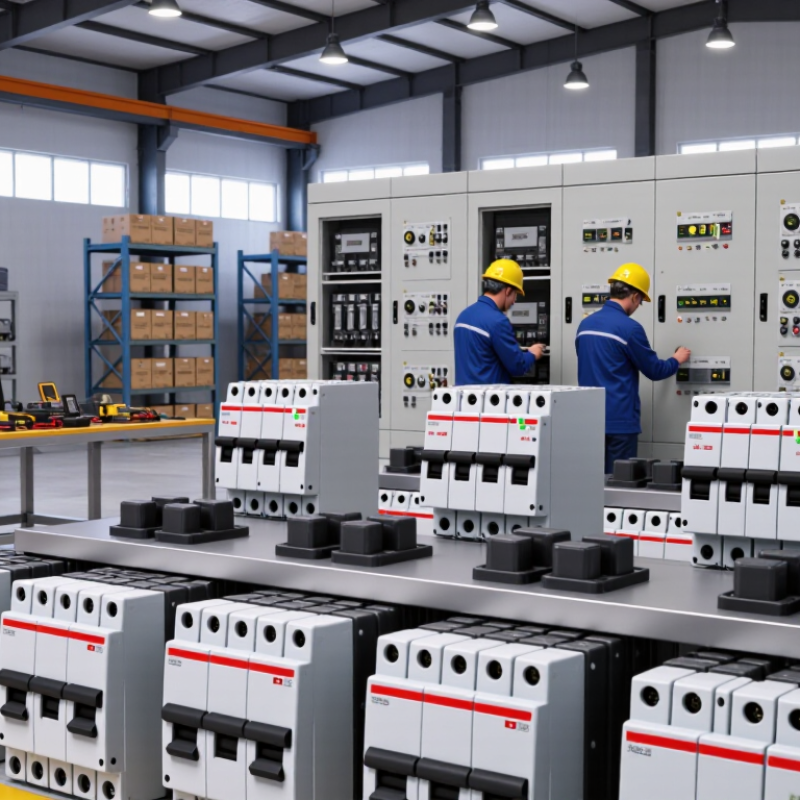
Global buyers need more than a circuit breaker product; they need clear technical support before placing an order. A capable supplier helps match rated current, voltage, pole count, and interrupting capacity to the intended application. It can also explain trip curves and installation limits in plain language. Details matter.
Useful documents include product datasheets, wiring diagrams, test records, and packaging specifications. Buyers should confirm that the documents match the exact model being quoted, not just a similar product. Suppliers can discuss samples, inspection arrangements, lead times, and export packaging. A small label mismatch can slow receiving checks.
The service should continue after shipment. Responsive suppliers answer questions about installation, troubleshooting, and replacement parts, while stating warranty terms clearly. They should also identify which requirements need verification for the buyer’s market and application. That process is not always smooth; project details may change, and some questions need an engineer’s review. Honest limits are better than quick promises. Buyers can compare offers more reliably when specifications, test evidence, and delivery commitments are written down.

Circuit breakers protect wiring and equipment by interrupting abnormal current. Miniature circuit breakers (MCBs) commonly protect lighting and socket circuits in homes and small buildings. Molded-case circuit breakers (MCCBs) handle higher currents and adjustable trip settings, making them suitable for commercial feeders and industrial machinery. Air circuit breakers (ACBs) are often installed in low-voltage switchboards serving large buildings or factories. Size matters.
Residual-current devices add protection against earth-leakage faults. An RCBO combines residual-current protection with overcurrent protection, often for individual circuits. For medium-voltage systems, vacuum circuit breakers are widely used in indoor switchgear, while other designs suit particular voltage and installation conditions. Selection depends on rated current, fault level, trip characteristics, and the available space—not simply the equipment label.
The International Energy Agency’s Electricity 2025 report says global electricity demand grew by 4.3% in 2024. More demand means more distribution equipment, but it does not make every site alike. A dusty workshop, a compact apartment panel, and a hospital switchboard need different protection choices. Engineers should verify coordination with upstream devices and check the installation environment against the manufacturer’s technical documentation. In practice, coordination can be less tidy than a diagram suggests. Testing and site conditions matter.
China’s circuit breaker supply chain is usually layered, not controlled by one factory. Component makers produce copper contacts, springs, molded cases, and trip units. Specialized workshops may handle stamping, molding, or plating. Final assembly plants bring these parts together and configure breakers for different current ratings and applications.
The handoffs matter. A change in contact material or trip-unit settings can affect performance, even when the outer casing looks identical. Some manufacturers make key components in-house; others rely on qualified suppliers. Buyers should ask who makes critical parts, how revisions are controlled, and whether production batches can be traced. Paperwork helps, but it does not replace inspection.
Testing and export preparation form another layer. Reputable suppliers should provide test records for the relevant model and explain which destination-market standards apply. Check details such as rated current, breaking capacity, and operating conditions against the intended installation. Ask for a sample when practical. Inspect markings, terminals, and packaging. One awkward truth: a sample may not fully represent later mass production. Clear specifications and routine batch checks reduce that gap, though they cannot remove it completely.
| Supply-chain stage | Typical inputs or products | Role in circuit-breaker production | What global buyers should verify |
|---|---|---|---|
| Raw materials | Copper and copper alloys, electrical steel, engineering plastics, thermosetting insulating materials, and contact materials. | Provide the conductive paths, magnetic parts, insulation, and switching contacts used in breaker assemblies. | Check material specifications, traceability where required, and suitability for the intended current, temperature, and operating environment. |
| Component manufacturing | Contacts, terminals, arc chutes, springs, molded housings, trip units, and operating mechanisms. | Specialist component makers supply parts that are assembled into miniature, molded-case, air, residual-current, and related breaker products. | Confirm component consistency, drawings and revision control, incoming inspection, and whether critical parts are made in-house or sourced from subcontractors. |
| Breaker design and engineering | Product ratings, pole configurations, thermal-magnetic or electronic trip settings, and enclosure designs. | Defines how a breaker responds to overloads, short circuits, or residual-current conditions, depending on product type. | Match rated voltage, current, breaking capacity, frequency, trip characteristics, and installation conditions to the application and local requirements. |
| Assembly and production | Subassemblies, molded parts, contacts, mechanisms, labels, and product-specific accessories. | Assembly lines bring together mechanical, electrical, and protective components; production methods and automation vary by product and manufacturer. | Ask about process controls, calibration, production records, lot identification, change management, and inspection of outsourced operations. |
| Testing and quality control | Routine checks and, where applicable, design or type testing against relevant product requirements. | Checks may cover electrical performance, operation, temperature rise, dielectric properties, and short-circuit performance, according to the applicable standard and product scope. | Review reports for the exact model and rating. Verify the test laboratory, report scope, certificate validity, and whether the tested configuration matches the supplied product. |
| Product standards and conformity | Applicable standards may include IEC 60898-1 for certain household and similar-installation circuit breakers, IEC 60947-2 for circuit breakers within its scope, IEC 61008-1 for RCCBs, and IEC 61009-1 for RCBOs. | Standards differ by device type, intended use, rating, and destination market; a single standard does not cover every breaker category. | Confirm the applicable edition and national adoption, required certification or marking, and any local approval rules before placing an order. |
| Packaging and export logistics | Individual packaging, cartons, pallets, shipping documents, and product labels. | Finished goods move from production or consolidation points to ports, distributors, project sites, or other destinations. | Agree on packaging, labeling language, carton quantities, delivery terms, export documentation, lead-time assumptions, and responsibility for freight and insurance. |
| Import, distribution, and after-sales support | Import clearance, local warehousing, technical documentation, replacement products, and warranty handling. | Importers and distributors help connect exported products with local installation channels and service requirements. | Establish warranty terms, spare-parts availability, complaint handling, technical support response, and responsibility for local compliance and installation guidance. |
Buyer note: Supply-chain arrangements vary by product and supplier. Confirm specifications, test evidence, conformity requirements, and delivery terms for the exact model and destination market.
Evaluating a Chinese circuit breaker supplier starts with the exact product and market you need. A certificate alone is not enough. Check that its model, current rating, voltage, and manufacturing site match the offered product. Ask for recent test reports and confirm their scope with the issuing laboratory. Standards such as IEC 60947-2 or IEC 60898-1 may apply, depending on the breaker type and intended use. Local requirements still matter. Details matter.
Review quality controls beyond the paperwork. Ask how incoming copper parts, contact materials, and molded housings are inspected. Request calibration records for test equipment and traceability details for production batches. A sample can reveal fit and finish, but it cannot prove consistent factory output. Check how the supplier handles failed tests, corrective actions, and changes to components. If possible, compare sample results with independent laboratory testing. This takes time.
A factory visit or remote audit can show whether documented procedures match daily practice. Look for clear inspection records, trained operators, and controlled storage for finished breakers. Be cautious if answers stay vague or documents cover a different model. Supplier evaluation is rarely tidy; gaps may appear even with a capable manufacturer. Record them, ask for evidence, and decide whether each risk is acceptable for your application.
Use the applicable product standard as one compliance checkpoint when evaluating a supplier. The chart compares the voltage limits in the scopes of two IEC standards; it does not rank suppliers or certify any product.
IEC 60898-1 covers specified household and similar AC circuit breakers up to 440 V. IEC 60947-2 covers circuit breakers for equipment up to 1,000 V AC or 1,500 V DC. Confirm that the product’s intended use matches the relevant standard, and request applicable test reports and certification documents for verification.
Start with a written specification: rated voltage, current, pole count, breaking capacity, trip curve, and installation conditions. A breaker for a dusty workshop may need different protection from one installed in a clean control cabinet. The IEA’s Electricity 2024 report projects global electricity demand will grow by an average of 3.4% annually from 2024 to 2026. That demand makes careful supplier qualification important, not optional. Shortlist manufacturers that can provide traceable test reports against the relevant IEC requirements, including IEC 60947-2 for many low-voltage circuit breakers. Check report numbers with the issuing laboratory, and confirm that the tested model matches the one quoted.
Request drawings, material details, routine inspection records, and sample units before placing a large order. Compare samples against the specification, then agree on tolerances, packaging, lead time, and inspection arrangements in writing. A factory audit can reveal gaps in calibration or production controls, though one visit cannot prove every batch will be consistent. That part takes follow-up.
Tips: Ask for a small pilot order. Photograph labels and packaging on arrival, and keep serial or batch records. Confirm who handles defects and replacement freight before payment. Low prices can be tempting; unclear test evidence is a poor trade.

Since 1984, Thermostop has been a reputable manufacturer of Industrial Sectional Doors, Cold Storage Doors and Specialty Doors such as Impactable Breakaway doors, Acoustic Doors and Ballistic Doors.
Contact