7 Tips for Choosing an Industrial Overhead Door?
Choosing an industrial overhead door is not simply a matter of comparing prices. It affects workflow, employee safety, energy use, and long-term maintenance. A door that looks suitable in a showroom may struggle beside a cold loading dock. Forklifts need clear sightlines. Rain, dust, wind, and repeated impacts expose weak decisions quickly. This guide presents seven practical tips for evaluating a door before purchase. It focuses on real operating conditions, not attractive brochures. Measurements, cycle ratings, panel construction, opening speed, and service access all deserve careful attention. Small details matter.
Experienced facility managers usually begin with traffic patterns and local climate. They ask how many cycles the door will complete each day. They also check whether trucks, pallets, and personnel share the same approach. A reliable industrial overhead door should match those demands without creating unnecessary complexity. Safety systems, emergency release features, sealing performance, and maintenance support must be verified with qualified suppliers. Manufacturer documentation and installation records provide useful evidence. Still, no checklist is perfect. A busy plant may overlook noise, condensation, or future equipment changes. That is why the best decision includes a site review, honest cost estimates, and room for correction. The cheapest option can become expensive when springs, tracks, or operators fail early. Careful selection protects productivity today and flexibility tomorrow.
Define the Door’s Industrial Use and Operating Environment
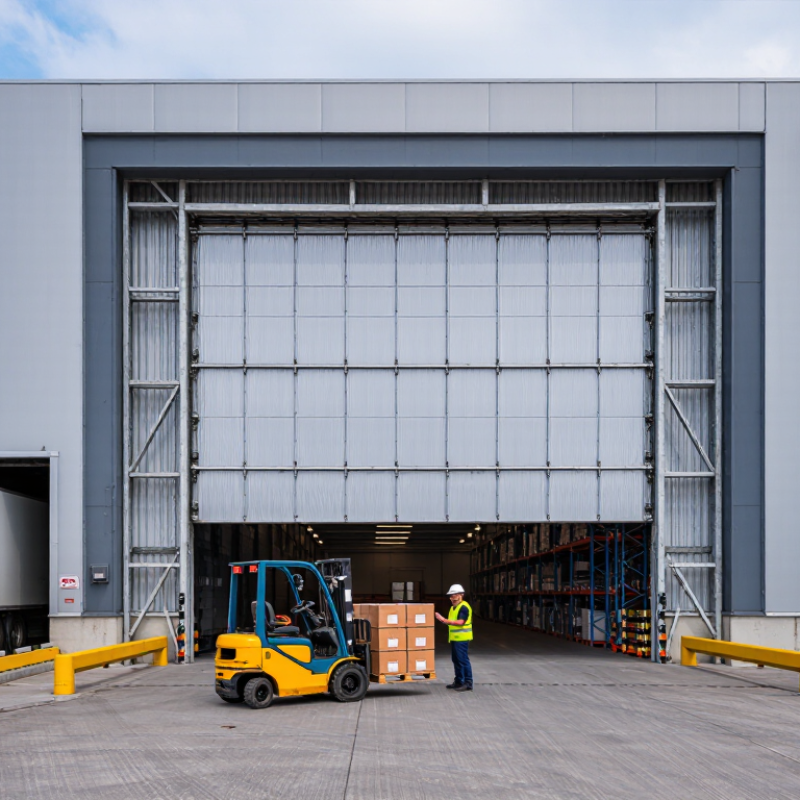
Before choosing an industrial overhead door, define its exact use. A loading dock needs fast cycles, impact resistance, and dependable sealing. A maintenance bay may need wider clearance and better ventilation. A cold-storage room has different priorities, especially insulation and moisture control.
Study the operating environment carefully.
Measure opening width, ceiling height, nearby equipment, and vehicle movement. Note dust, humidity, salt air, temperature changes, and washdown routines. A door exposed to forklift traffic may need reinforced panels and protective sensors. A door near food production may require smooth, cleanable surfaces. Local safety, fire, and energy requirements must also guide the specification.
During site reviews, I have seen projects fail because the door was selected from dimensions alone. The opening fit, but the motor struggled under frequent use. Another door sealed well, yet its tracks collected dust and became difficult to maintain. That detail is easy to miss. Ask how many cycles the door will complete daily, who will operate it, and how quickly access is needed. Consider service space too. A compact ceiling system may look efficient, but it can complicate repairs. Recheck the plan with installers and daily users before ordering. Their practical feedback often exposes assumptions that drawings cannot.
Compare Door Materials, Insulation, and Durability
An industrial overhead door faces more than daily opening cycles. It may meet forklift bumps, wind, dust, and sharp temperature swings. Steel panels offer useful impact resistance, while aluminum can reduce weight and suit openings where corrosion is a concern. Wood can provide a distinctive appearance, but often needs more upkeep in damp or demanding settings. The right choice depends on the building, not just the price tag.
Insulation deserves a closer look. A door’s stated insulation value matters, but gaps around the edges can still let in drafts. Check the panel construction, seals, and fit at the floor. For a heated workshop, insulated panels may help maintain steadier temperatures; in a washdown area, moisture-resistant finishes and hardware may matter more. Durability also depends on traffic and maintenance. A door used dozens of times each day needs components rated for frequent cycles, plus regular checks for loose fasteners, worn rollers, and damaged seals. Small faults add up. I would not assume a thicker panel is always the tougher option; construction quality and installation count, too. Ask for specifications, then compare them against real conditions at the opening.
Evaluate Maintenance Needs, Energy Efficiency, and Total Cost
An industrial overhead door should fit the way a facility actually works, not just the dimensions of its opening. Track how often it cycles, what passes through, and whether dust, moisture, or temperature swings cause trouble. A busy loading bay may need durable rollers and accessible service points. A quieter storage area may need less frequent maintenance, but neglect still adds up.
Ask what routine care involves before comparing prices. Hinges, rollers, cables, seals, and safety sensors need regular inspection. Some tasks are simple; spring adjustments are not. Leave those to trained technicians. Keep a maintenance log with dates, observed wear, and repair costs. It is not glamorous. It can reveal a pattern before a door fails during a shift. Still, no schedule prevents every breakdown.
Energy efficiency depends on the whole opening, not only the door panel. Insulation, tight perimeter seals, and correct installation can reduce drafts and temperature loss. For a heated or cooled workspace, compare insulation ratings and ask how the door performs under local operating conditions. A high rating looks good on paper. Poor seals can undermine it.
Look beyond the purchase price. Include installation, expected servicing, energy use, replacement parts, and downtime in a realistic total-cost estimate. A cheaper door may cost more over time if it needs frequent repairs or allows conditioned air to escape. Estimates are imperfect; usage and weather vary. Compare assumptions, not just totals.