Choosing the right capacitor is not a matter of matching one number. It requires understanding voltage, ripple current, temperature, frequency, lifetime, and physical space. Capacitors And Capacitance influence filtering, timing, power conversion, motor starting, and energy storage. A component that looks suitable on paper may overheat beside a switching transistor. That difference matters.
Industry data supports this growing design pressure. The International Energy Agency’s Global EV Outlook 2024 reports continued expansion in electric-vehicle sales, increasing demand for compact power electronics and reliable DC-link capacitors. Yole Group’s power electronics market analyses also identify electrification, renewable energy, and data centers as major drivers for advanced capacitor technologies. Meanwhile, the U.S. Department of Energy highlights efficiency and reliability as essential priorities across modern power systems. These trends make capacitor selection a practical engineering decision, not a purchasing detail.
Start with the circuit’s actual conditions. Measure the operating voltage, peak transients, ripple waveform, ambient temperature, and available board area. Then compare ceramic, aluminum electrolytic, tantalum, film, and hybrid technologies. Each has weaknesses. Ceramic capacitors can lose effective capacitance under DC bias. Electrolytic capacitors offer high capacitance, but their lifetime falls with heat. Film capacitors provide stability, yet they often require more space.
The answer is rarely perfect. Datasheet values may not reflect real assembly conditions. Prototype testing remains necessary. A careful design leaves voltage margin, checks impedance across frequency, and verifies performance after thermal cycling. That process produces a safer and more dependable choice for your specific needs.
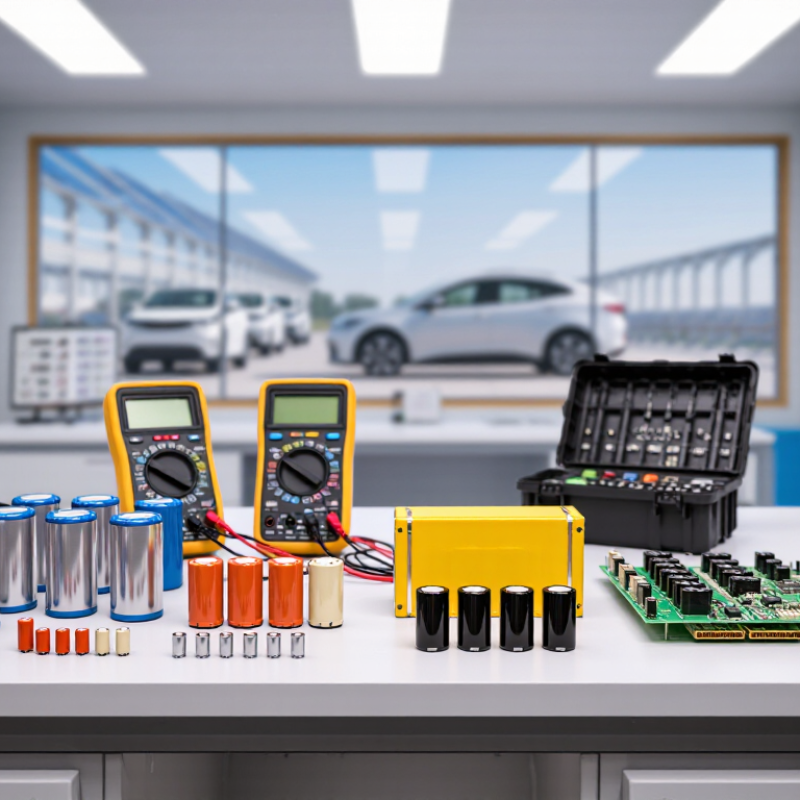
Capacitance describes how much electrical charge a capacitor stores per volt. One farad stores one coulomb at one volt. In practical circuits, values are usually measured in microfarads or nanofarads. A capacitor can smooth a rectified waveform, block direct current, or briefly supply energy during load changes. Its behavior depends on frequency, temperature, voltage, and equivalent series resistance. The IEC 60384-1 standard requires manufacturers to define these operating limits clearly.
Choosing capacitance starts with the circuit’s purpose. For a reservoir capacitor, engineers often estimate C = IΔt/ΔV, where current, time, and permitted voltage ripple control the result. A 1-ampere load lasting 2 milliseconds with a 0.5-volt drop needs about 4,000 microfarads. Real designs need margin. Ripple current creates heat. Excess capacitance can also increase startup current. I have seen calculations fail when engineers ignored capacitor aging and wiring resistance.
Professional data supports cautious selection. The U.S. Department of Energy’s Energy Storage Grand Challenge Roadmap identifies thermal management, safety, and lifetime as key storage concerns. These concerns also apply to capacitors in power electronics. A 2023 report from the International Energy Agency notes that modern grids require faster flexibility as renewable generation expands. That makes high-frequency filtering more important, but not automatically better. Check the datasheet at the actual frequency and temperature. Then test the assembled circuit. Small details matter.

Choosing a capacitor starts with its job, not its shape. Ceramic capacitors suit high-frequency noise control because they respond quickly and occupy little board space. Electrolytic capacitors provide high capacitance for smoothing power-supply ripple. They are polarized, so reversing their leads can cause failure. Tantalum capacitors offer stable, compact energy storage, but they need careful voltage derating. I check operating voltage, ripple current, temperature, and physical clearance before selecting one. Good practice matters.
Film capacitors use plastic dielectric films and perform well in timing, filtering, and pulse circuits. They usually offer low loss and strong stability, though their cases may be larger. Supercapacitors store far more charge than ordinary capacitors. Their voltage per cell is low. A series arrangement may need balancing. That detail is easy to miss. Variable capacitors allow manual or electronic tuning in radio-frequency circuits. Trimmer types help during calibration, but adjustment can drift with vibration or temperature.
Capacitance alone does not identify a suitable part. A 100-microfarad capacitor with poor ripple tolerance may overheat in a power converter. I have also seen compact ceramic parts lose effective capacitance under DC bias. Datasheets reveal this behavior more clearly than the printed value. Leave margin for voltage and temperature. Then verify polarity, leakage current, equivalent series resistance, and expected service life. Sometimes the smaller component is not the better choice. That assumption deserves another look.
Choosing a capacitor starts with the circuit’s real task, not a convenient catalog value. For timing circuits, capacitance controls frequency directly. For filtering, it reduces ripple across a load. In bench testing, I measure the operating voltage and current before selecting a part. A nominal 10 µF capacitor may deliver less under bias, temperature, or aging.
Voltage rating needs practical headroom. A capacitor rated for 16 V should not sit continuously on a 15 V rail. Transient spikes can exceed the normal reading. Many engineers leave a safety margin, such as choosing a 25 V rating for a stable 12 V supply. This reduces electrical stress. It can also increase size or cost.
Tolerance determines how closely the capacitor matches its stated value. A ±20% part marked 100 µF may measure between 80 and 120 µF. That range may be acceptable for bulk smoothing, but not for a precision timing network. Ceramic capacitors can also lose capacitance under DC voltage. Easy to overlook. Check the datasheet’s bias and temperature curves, then verify the circuit with actual measurements. I once selected the correct nominal value but ignored ripple current, causing unnecessary heating. The choice was technically valid, yet poorly matched to the application. ESR, ripple rating, temperature range, and physical spacing deserve the same attention as capacitance.
Representative capacitor selections matched to circuit function, capacitance, voltage rating, and tolerance.
Higher capacitance supports greater energy storage and filtering, while the voltage rating should exceed the circuit's maximum operating voltage with suitable margin. Lower tolerance is preferred for timing, sensing, and precision circuits; wider tolerance is commonly acceptable for bulk filtering and energy storage.
Choosing a capacitor starts with the circuit’s actual operating conditions, not only its printed capacitance. Frequency changes impedance, while equivalent series resistance affects heating and signal quality. A capacitor can show the correct value yet perform poorly at high frequency. I check the datasheet’s impedance curve and self-resonant frequency before selecting a part. Short leads also matter because stray inductance can weaken filtering.
Temperature deserves equal attention. Capacitance may shift across the rated temperature range, especially in compact ceramic components. Voltage bias can reduce their effective capacitance as well. For power circuits, I compare ripple-current ratings with the expected load and allow practical margin. Once, I selected a capacitor by room-temperature measurements alone. It passed the bench test but drifted noticeably inside a warm enclosure. That shortcut was avoidable.
Physical size creates another set of trade-offs. A larger case may provide lower resistance, better heat spreading, and longer service life. A smaller case may fit the board but suffer from tighter voltage and temperature limits. Measure the available height, pad spacing, and nearby clearance before ordering. Consider airflow, vibration, and whether technicians can replace the part later. A careful trial build helps. I measure capacitance after assembly, under operating voltage, and at realistic temperatures. Datasheet values guide the decision, but real measurements expose assumptions.
Choosing a capacitor is not only about matching the printed capacitance value. Check the working voltage, ripple-current rating, temperature range, and expected service life. I usually leave a practical voltage margin, because supply surges can exceed the nominal level. A 25-volt part on a 24-volt rail may be technically acceptable, but it offers little protection. More margin is often wiser.
Polarity deserves close attention. Electrolytic capacitors have positive and negative terminals, and reverse connection can cause heating, leakage, or failure. Confirm the circuit markings, the body stripe, and the component datasheet before soldering. Non-polarized capacitors suit alternating signals, but their capacitance and voltage limits still matter. Check the board carefully.
Long-term reliability also depends on ripple current, heat, vibration, and moisture. High ripple can raise internal temperature and dry out some capacitor types. Keep capacitors away from hot components when possible. Inspect for bulging cases, leaking material, cracked seals, or loose leads during maintenance. A capacitance meter helps, but it cannot reveal every weakness. Equivalent series resistance and leakage current may still be abnormal. I once trusted a normal capacitance reading and missed a rising leakage value. That mistake changed my inspection routine. Measure twice. Record the conditions. Use the manufacturer’s stated lifetime at the actual operating temperature, not only the headline rating.
A practical comparison of capacitor types, safety, polarity, and long-term reliability
| Capacitor Type | Typical Capacitance Range | Common Voltage Range | Polarity | Typical Tolerance | ESR and Ripple Performance | Temperature and Life Considerations | Recommended Uses | Key Safety Checks |
|---|---|---|---|---|---|---|---|---|
| Multilayer Ceramic (MLCC) | Approximately 1 pF to 100 µF | Approximately 6.3 V to 3 kV, depending on construction | Non-polarized | Commonly ±0.1% to ±20% | Very low ESR and excellent high-frequency performance; capacitance can change with DC bias in some ceramic classes | Generally long service life; temperature stability depends on the dielectric class | Decoupling, filtering, timing, noise suppression, and high-frequency circuits | Verify DC-bias derating, dielectric class, voltage rating, and mechanical cracking risk |
| Aluminum Electrolytic | Approximately 0.47 µF to 10,000 µF or more | Approximately 6.3 V to 630 V | Polarized | Commonly ±20% | High capacitance per volume; ESR and ripple-current capability vary significantly by design | Electrolyte evaporation makes temperature, ripple current, and operating hours important to service life | DC-link smoothing, bulk filtering, power supplies, and audio power circuits | Observe polarity, avoid reverse voltage, check ripple-current rating, and allow voltage derating |
| Polymer Aluminum | Approximately 10 µF to 1,500 µF | Approximately 2.5 V to 100 V | Polarized | Commonly ±20% | Lower and more stable ESR than many conventional electrolytics; suitable for high ripple currents | Usually good resistance to drying out; voltage, temperature, and surge limits remain important | Voltage regulators, processors, compact power converters, and high-current transient filtering | Check polarity, surge capability, leakage current, ripple rating, and maximum operating temperature |
| Tantalum | Approximately 0.1 µF to 2,200 µF | Approximately 2.5 V to 125 V | Polarized | Commonly ±10% to ±20% | Stable capacitance and moderate-to-low ESR; surge current can be a critical limitation | Good volumetric efficiency, but failure can be abrupt if overstressed by voltage, surge, or temperature | Compact digital equipment, signal conditioning, and stable power-rail filtering | Use voltage derating, limit inrush and surge current, observe polarity, and follow the specified application conditions |
| Film: Polyester or Polypropylene | Approximately 100 pF to 100 µF | Approximately 16 V to 2 kV or more | Non-polarized | Commonly ±1% to ±20% | Low loss, low dielectric absorption, and good pulse performance; polypropylene generally offers lower losses | Long service life and good stability; physical size increases at higher capacitance and voltage | AC filtering, snubbers, timing, audio crossovers, pulse circuits, and precision applications | Check AC and DC ratings separately, pulse capability, insulation, spacing, and safety classification where applicable |
| Safety Film Capacitor: Class X or Class Y | Commonly about 1 nF to 10 µF | Designed for specified mains and interference-suppression applications | Non-polarized | Commonly ±10% to ±20% | Designed for suppression duty; performance depends on the approved construction and application category | Built to address safety-related failure behavior when correctly selected and installed | Across-the-line suppression, line-to-ground filtering, and mains-input noise reduction | Use only the correct recognized safety class: Class X is generally across line; Class Y is generally line-to-ground |
| Supercapacitor | Approximately 0.1 F to thousands of farads | Typically around 2.3 V to 3.0 V per cell | Usually polarized | Often ±20% or wider | Very high capacitance and high power capability; ESR is higher than that of many small ceramic capacitors | Leakage current, temperature, balancing, and voltage stress strongly affect life and usable energy | Short-duration backup, energy harvesting, peak-power support, and memory retention | Never exceed cell voltage; use balancing in series stacks and include current limiting where required |
Selection rule: Choose capacitance and voltage ratings from the circuit's worst-case operating conditions, including tolerance, temperature, ripple current, transient voltage, aging, and DC-bias effects. For polarized capacitors, confirm the polarity before power is applied and use appropriate voltage derating for improved long-term reliability.

Since 1984, Thermostop has been a reputable manufacturer of Industrial Sectional Doors, Cold Storage Doors and Specialty Doors such as Impactable Breakaway doors, Acoustic Doors and Ballistic Doors.
Contact