Choosing the right Thermal Paper Machine is not a matter of selecting the fastest model on a brochure. It means matching the equipment to your paper grade, coating requirements, target output, and available floor space. A machine that runs smoothly during a short demonstration may behave differently across a full production shift. Details matter: web tension, coating uniformity, drying capacity, and how quickly operators can change rolls.
Taiichi Ohno, the manufacturing engineer associated with the Toyota Production System, offered a useful principle: “Where there is no standard, there can be no kaizen.” Applied here, it means comparing machines against clear production standards, not sales claims alone. Ask suppliers for operating data under conditions close to yours. Check expected waste rates, energy use, maintenance intervals, and the availability of replacement parts. If possible, inspect a running line and look closely at the finished roll edges and coating consistency.
There is no perfect checklist. A spreadsheet cannot reveal every operator frustration, and a polished demonstration may not show routine stoppages. That matters. Leave room for questions, trial runs, and a second opinion from your production team. The best choice is usually the machine your staff can operate reliably, maintain safely, and adapt as demand changes. One overlooked limitation can become tomorrow’s bottleneck. You may still have to revise your assumptions after installation; that is worth admitting before purchase.
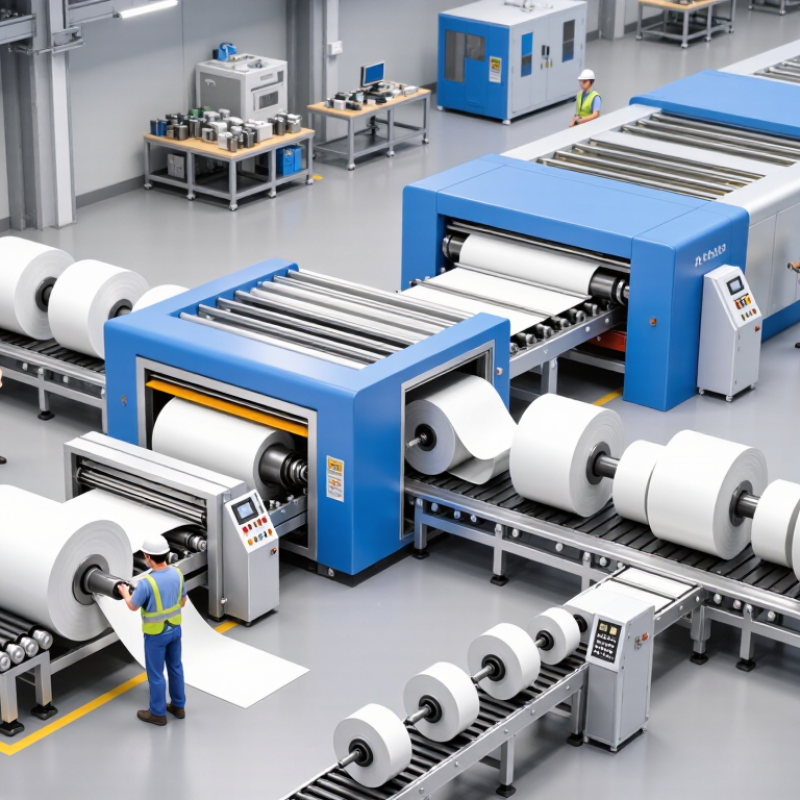
Choosing a thermal paper machine starts with the products customers will actually order. Common formats include 57 mm and 80 mm receipt rolls, barcode labels, ticket stock, and kiosk rolls. Each requires different web widths, core sizes, roll diameters, and winding tension. A machine that handles the widest jumbo roll may still struggle with narrow, short-run products. Small rolls. Fast changeovers.
Grand View Research’s 2024 Thermal Paper Market report estimates global market growth at a 5.1% compound annual rate through 2030. This signals expanding demand, but market growth alone cannot determine a factory’s capacity. Map the product mix first: monthly demand by format, average order size, seasonal peaks, and expected scrap. Then compare machines by saleable rolls per shift, not just maximum web speed. That matters.
For example, a plant serving shops may prioritize rapid slitting of 57 mm and 80 mm rolls. A label-focused operation needs dependable coating compatibility, precise tension control, and accurate rewinding. Record the basis weight and jumbo-roll dimensions too; a change in either can alter output. Ask suppliers to estimate finished output using your real order mix and planned shifts. Their calculations may look less impressive than a headline speed. That is useful. Leave room for maintenance, setup, and operator learning; those hours are easy to underestimate.

Machine type should match the stage of production you need. A coating line applies the heat-sensitive layer to base paper, while a slitter rewinder cuts and rewinds coated rolls. Converting equipment can add features such as printing, perforation, or automatic core loading. These machines do different jobs. Buying extra functions may add cost without improving your actual workflow.
Working width affects both output and material use. Match the machine’s usable width to your parent rolls and the roll sizes your customers request. A wider setup can handle more lanes, but only if your order mix and operators can keep it busy. Check web tension, speed range, and changeover time using sample stock. A specification sheet alone may not reveal awkward roll changes or edge waste. Not always obvious.
Tips: Ask for a trial run with your paper grade and target roll size. Check winding tightness, cut edges, and finished-roll consistency. Measure twice.
Converting functions deserve a practical review. Perforation spacing must suit the intended receipt length, and printing units need to align with your layout. Compare manual adjustments with automatic controls; automation can reduce repetitive work, but setup still takes skill. I would leave some room for future products, though forecasting demand is imperfect. Favor functions you can test and maintain over features that simply look impressive.
Choosing a thermal paper machine starts with the roll you need to produce, not the highest speed on a specification sheet. Check the unwind stand, coating section, drying system, slitter, and rewinder as one connected line. Stable web tension helps prevent wrinkles and uneven winding. Inspect how operators access rollers and clean coating residue. Small details matter. A machine that is difficult to maintain can lose more production time than its rated speed suggests.
Compare automation and technical specifications against your actual paper grades and roll sizes. Confirm supported web width, paper thickness, working speed, temperature control, and winding accuracy. Ask how the control system handles tension changes, faults, and restart settings. A clear alarm history can help technicians trace recurring defects. Request a trial using your own paper, if possible, and inspect coating uniformity, edge quality, and finished roll hardness. A polished specification sheet may still leave practical questions unanswered; I would treat it as a starting point, not proof of performance.
Tips: Bring sample rolls and a written list of target dimensions to supplier discussions. Test changeover time, cleaning access, and operator controls during a demonstration. Record the results. It is easy to overlook these checks when comparing machines quickly.
A thermal paper machine is a long-term production partner, not just a purchase. Check whether the supplier can provide component traceability, realistic delivery dates, and references from plants running similar paper grades. Ask for a written spare-parts list and lead times for heaters, rollers, and cutting blades. Small details matter. In the 2024 Risk Barometer, business interruption was cited by 31% of respondents as a major business risk. That figure is a reminder to assess how quickly a supplier can restore production, not just how quickly it can ship a machine. Request service-response targets in writing, then test them with a specific technical question before ordering.
Safety deserves the same scrutiny as output speed. Ask to inspect guarding, emergency stops, lockout instructions, and noise measurements during a factory acceptance test. The U.S. Bureau of Labor Statistics reported 2.8 recordable injury and illness cases per 100 full-time workers in manufacturing in 2023. This sector-wide rate is not a machine-specific risk score, but it makes practical safety checks hard to dismiss. After-sales support should include operator training, maintenance schedules, and clear escalation contacts. Verify whether technicians can diagnose faults remotely and whether common parts are stocked nearby. A glossy manual proves little. I would still ask operators to review it; their feedback may expose gaps a buyer misses.
Suggested evaluation weights for comparing suppliers. These are a practical scoring framework, not published industry statistics.
Prioritize documented delivery and quality performance, verify machine risk assessments and applicable electrical safety standards, and confirm spare-parts availability, response times, and service terms before purchase.
Choosing a thermal paper machine means comparing more than its purchase price. Include installation, operator training, spare parts, energy use, and routine maintenance in your cost estimate. A low-priced line may require frequent adjustments or create more trim waste. Small details matter. Ask suppliers for sample production data using paper grades and roll widths close to your planned products.
Operating efficiency shows up in daily tasks. Compare usable output, changeover time, coating consistency, and waste during startup. A machine’s advertised speed is less useful if operators must stop often to correct tension or replace components. Check how quickly common parts can be accessed, and whether one trained operator can monitor the process safely. A spreadsheet can look convincing, yet still miss the cost of downtime. I would question any estimate that assumes perfect production every shift.
Tips: Request a live demonstration and record output, rejected rolls, and changeover time. For expansion, check whether the machine can support wider rolls or added capacity later. Confirm available floor space, power, ventilation, and service access before purchase. Leave room for growth, but avoid paying for capacity you cannot use. A little uncertainty is normal. Revisit your forecast when product demand changes.
| Comparison factor | Entry-level slitter rewinder | Mid-range automated rewinder | High-speed integrated converting line |
|---|---|---|---|
| Best suited for | New or small converters, short runs, and limited product variety | Growing operations with regular multi-size orders and moderate production volumes | Established converters with high volumes, frequent scheduling demands, and automation needs |
| Typical equipment investment (USD) | $40,000–$90,000 | $100,000–$250,000 | $250,000–$600,000+ |
| Typical rated web speed | Approximately 150–250 m/min | Approximately 250–400 m/min | Approximately 400–600 m/min |
| Indicative practical running speed | Approximately 80–160 m/min, depending on roll specifications and operator experience | Approximately 160–280 m/min, depending on job mix and changeovers | Approximately 250–450 m/min when material, setup, and downstream equipment support the rate |
| Typical automation | Manual loading and setup; basic tension and edge-guiding controls | Automatic tension control, improved web guiding, and assisted roll handling or changeover | Automated roll handling and changeover options; may include core handling, packaging, or inline inspection |
| Indicative staffing | One operator per running shift; manual handling may require additional support during busy periods | One operator per running shift in many setups; support may be needed for material handling | One operator may supervise the line, with additional staff potentially needed for feeding, packaging, or logistics |
| Changeover and product flexibility | Best for simpler jobs; manual adjustments can make frequent size changes time-consuming | Suitable for mixed orders; assisted setup can reduce changeover effort | Well suited to repeatable high-volume work; more automation can speed routine changes but may require more setup expertise |
| Indicative annual operating cost, excluding paper | $55,000–$70,000 | $60,000–$80,000 | $65,000–$100,000 |
| Illustrative five-year total cost of ownership | $315,000–$440,000 | $400,000–$650,000 | $575,000–$1,100,000+ |
| Expansion potential | Limited; confirm whether controls, unwind capacity, and frame design allow later upgrades | Moderate; may support added automation, wider material handling, or selected downstream options | High; can be specified for integration with automated handling, inspection, and packaging systems |
| Key purchase checks | Verify finished-roll tolerances, safety features, spare-parts availability, and service support | Test representative grades and roll sizes; compare setup time, waste, and output under actual jobs | Validate line balance, material handling, installation needs, controls integration, and service response |
| Cost assumptions: Indicative planning ranges, not supplier quotations. Annual operating costs assume approximately 1,800 productive hours, electricity at $0.12/kWh, loaded labor at $30/hour, and routine maintenance and wear parts. Five-year ownership estimates equal equipment investment plus five years of estimated operating costs; they exclude thermal paper, financing, building work, taxes, major unplanned repairs, and resale value. Actual speeds, staffing, costs, and output vary with machine configuration, paper grade, roll dimensions, job mix, local labor and energy rates, and operating practices. | |||

Since 1984, Thermostop has been a reputable manufacturer of Industrial Sectional Doors, Cold Storage Doors and Specialty Doors such as Impactable Breakaway doors, Acoustic Doors and Ballistic Doors.
Contact