How to Choose the Best Wi-Fi HaLow Devices in 2026?
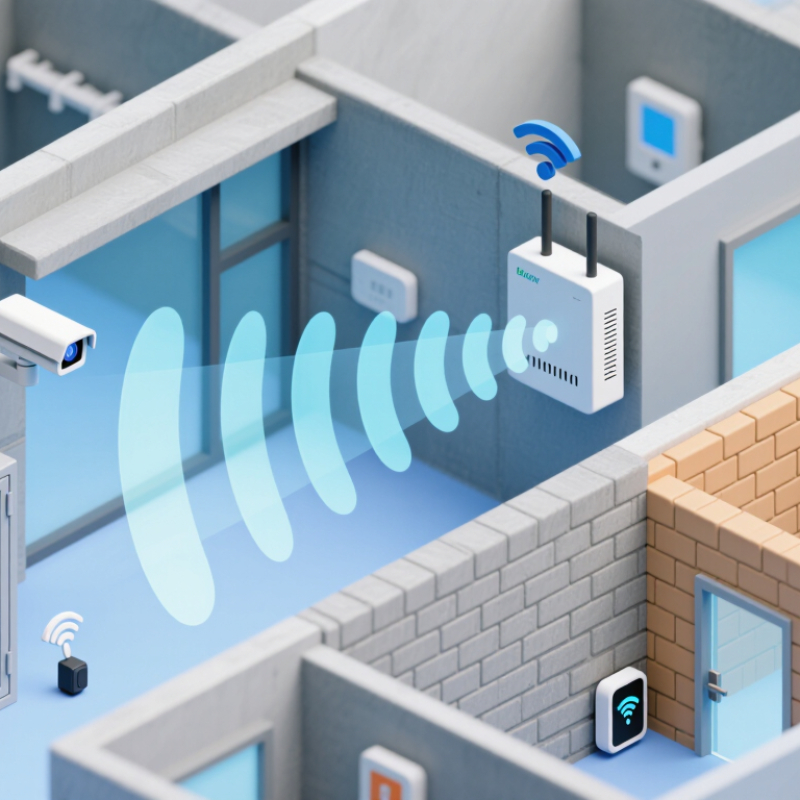
Choosing the best Wi-Fi HaLow device in 2026 starts with the space it must serve. A sensor in a metal utility cabinet has different needs from a camera mounted beneath a wide roof. Wi-Fi HaLow operates in sub-1 GHz spectrum, which can support longer reach and better wall penetration than conventional 2.4 GHz Wi-Fi. But range is not a promise. Building materials, antenna placement, interference, and device settings all matter.
Wi-Fi Alliance president and CEO Kevin Robinson described HaLow as a technology that brings Wi-Fi to the Internet of Things. That is the useful starting point—not a guarantee that every HaLow product will suit every deployment. Check the device’s certified status, supported frequency band, security features, battery expectations, and compatibility with its access point. Then compare real installation details: a sensor behind two concrete walls, for example, may behave differently from one tested in an open hallway. Small differences matter.
Look beyond the headline range. Review data rate, number of supported devices, management tools, firmware update practices, and the manufacturer’s support record. Ask whether the product uses an integrated antenna or requires careful orientation. Test it where it will actually live. A neat specification sheet can still miss the awkward corner of a real building. Sometimes the best choice is not obvious—and that is worth admitting. This guide explains how to weigh those trade-offs and choose Wi-Fi HaLow devices with evidence, not just optimistic packaging.
Understanding Wi-Fi HaLow and Its Role in 2026
Understanding Wi-Fi HaLow and Its Role in 2026
Wi-Fi HaLow, based on IEEE 802.11ah, brings Wi-Fi into sub-GHz radio bands for connected devices. Compared with familiar 2.4 GHz Wi-Fi, it can reach farther and pass through some walls more effectively, while supporting modest data rates and low-power operation. Picture a soil sensor beside a greenhouse, a meter in a utility room, or a camera sending occasional status updates. Not every camera. Video-heavy applications may need another connection. Signals can still weaken around metal cabinets, wet foliage, and crowded sites. Range is never one fixed number.
In 2026, HaLow is useful where sensors are spread across buildings or outdoor property, but replacing an entire network is rarely sensible. Check local sub-GHz support, sleep and wake behavior, payload size, antenna placement, and gateway connectivity. Ask for coverage results from a similar environment, not just a best-case distance on a box. Radio allocations differ by country, so confirm each device suits its intended region. That detail gets overlooked. Battery life also depends on reporting intervals and retries; a sensor sending every few seconds behaves differently from one reporting hourly. A small pilot can reveal dead spots and setup friction. Not magic. That limitation is worth keeping in view when planning.
Comparing Device Specifications, Bands, and Power Needs
Choosing Wi-Fi HaLow devices starts with the radio band, not the advertised range. The IEEE 802.11ah standard uses sub-1 GHz spectrum, with permitted frequencies varying by region. Lower-frequency signals can travel farther and pass through walls more effectively than 2.4 GHz signals, but building materials and antenna placement still matter. Wi-Fi Alliance materials describe HaLow links extending beyond one kilometer and supporting thousands of devices per access point. Treat those figures as best-case guidance, not a promise for a factory or farm. Small numbers matter.
Compare channel width, receiver sensitivity, transmit power, and antenna gain on each device’s specification sheet. Narrow channels can improve robustness and reduce airtime use, while wider channels may suit devices sending larger files. Check that the device’s supported frequency and channel settings match the intended deployment. A spec sheet can still mislead. For battery-powered sensors, look for sleep current, transmit current, wake-up time, and the energy cost of reconnecting—not just a claimed battery life. The Wi-Fi Alliance’s HaLow technical materials describe low-power operation, but actual runtime depends heavily on reporting frequency, signal quality, and payload size. A sensor sending a brief reading every few minutes behaves differently from one streaming frequent updates. Test with the expected antenna, distance, and wall materials; field results can be less tidy than a lab table.
Evaluating Costs, Support, and Long-Term Device Value
How to Choose the Best Wi-Fi HaLow Devices in 2026?
Evaluating Costs, Support, and Long-Term Device Value
A low purchase price can hide expensive deployment work. Compare the full cost: gateways, antennas, installation, software updates, and replacement batteries. Ask suppliers how long they will provide firmware fixes and whether updates can be installed remotely. Support matters. A device mounted above a warehouse ceiling is costly to service, even when its sticker price looks attractive. Test coverage through your actual walls and shelving; published range claims rarely match every building.
Long-term support is not a minor detail. IoT Analytics estimated 18.8 billion connected IoT devices worldwide at the end of 2024, with about 40 billion expected by 2030. That growth makes interoperability and maintenance planning more important, not less. Check that devices follow the Wi-Fi HaLow standard and document their security-update policy, interface options, and replacement process. Compare power use under your real reporting schedule, not only in a laboratory sleep mode. One awkward truth: a cheaper unit may still be the better choice for a short pilot, but not for sensors expected to run for years. Request a small field trial, measure battery life, and record support response times before committing.
How to Choose the Best Wi-Fi HaLow Devices in 2026? — Evaluating Costs, Support, and Long-Term Device Value
Standardized Wi-Fi HaLow channel widths (MHz)
IEEE 802.11ah defines channel widths of 1, 2, 4, 8, and 16 MHz. Check which widths a device supports in your region, then compare its purchase and operating costs, firmware-update policy, and support terms. These standard channel-width values are not device prices or support-life estimates.