What is an Overhead Coiling Door and How Does it Work?
The overhead coiling door is a crucial element in modern construction. It provides security and efficiency in various applications. According to a report from the Door & Access Systems Manufacturers Association (DASMA), the use of overhead coiling doors has increased by 25% in industrial settings over the past five years. This rise can be attributed to their durability and space-saving design.
Overhead coiling doors operate by rolling up tightly when opened. This mechanism allows for maximum clearance while keeping the entrance area free. Industries such as warehousing, manufacturing, and retail benefit significantly from this design. However, maintenance is essential. Neglecting regular checks can lead to operational failures. Many companies overlook this aspect, resulting in costly downtime.
Moreover, energy efficiency remains a pressing concern. According to the U.S. Department of Energy, overhead coiling doors can help reduce energy loss when designed with insulation features. Still, not all products on the market meet these criteria. Buyers must be vigilant. Selecting a quality overhead coiling door is vital for long-term performance and energy savings.
What is an Overhead Coiling Door? Definition and Key Features
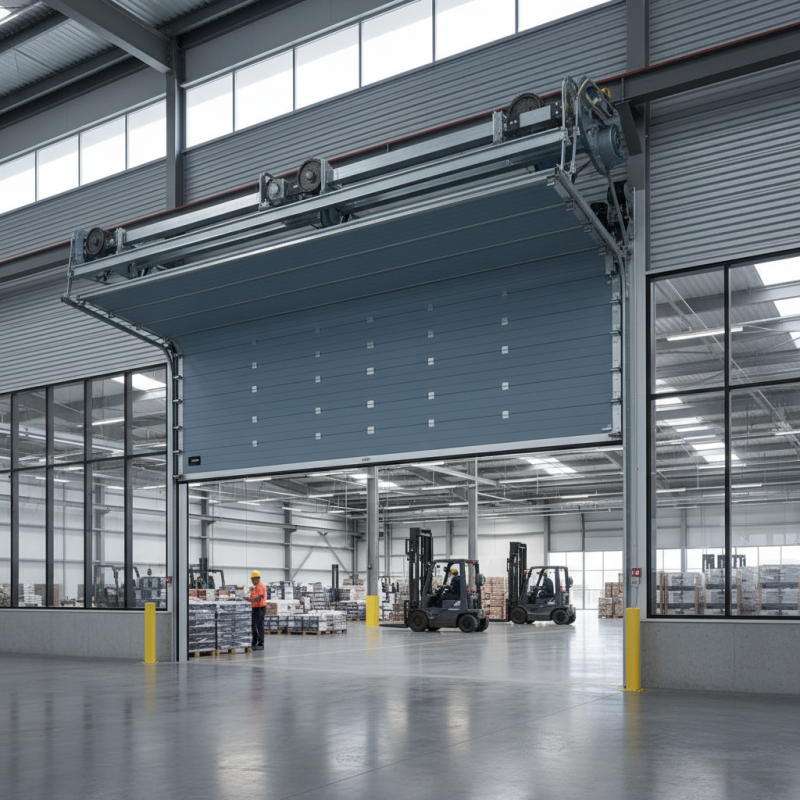
An overhead coiling door is a modern solution for various commercial and industrial spaces. It works by rolling up and down, which saves space. This type of door is often made from steel, providing durability. Businesses appreciate the easy operation and security features. When closed, it forms a tight seal, keeping out unwanted elements.
Key features include versatility. These doors can be installed in different sizes and styles. They're suitable for warehouses, retail spaces, and service entrances. Despite their strengths, some users report issues with maintenance. Regular checks are important to avoid rust and wear. A little attention goes a long way in ensuring longevity.
The installation process can be challenging for some. It's crucial to follow guidelines carefully. Misalignments can lead to problems later. The cost can be a concern, but the benefits often outweigh initial expenses. Investing in quality pays off in safety and efficiency.
Overhead Coiling Door Features Comparison
How Overhead Coiling Doors Function: Mechanics and Automation
Overhead coiling doors are designed for efficiency and durability. These doors consist of several slats that coil up into a drum above the opening. When activated, the door rolls smoothly along tracks, providing quick access to any area. This mechanism is vital in busy settings like warehouses and garages.
The automation of overhead coiling doors enhances their functionality. Sensors can detect motion and automatically open or close the door, improving safety. The system often integrates with security measures, allowing controlled access. However, flaws in automation can lead to malfunctions. Regular maintenance and proper setup are crucial for optimal performance.
Despite their efficiency, issues may arise. A misaligned track can cause the door to jam. Sensors may fail or become obstructed. Thoughtful inspection and adjustments are needed for longevity. Users should reflect on these aspects. It ensures that the doors remain reliable in high-traffic environments.
Benefits of Using Overhead Coiling Doors in Commercial Settings
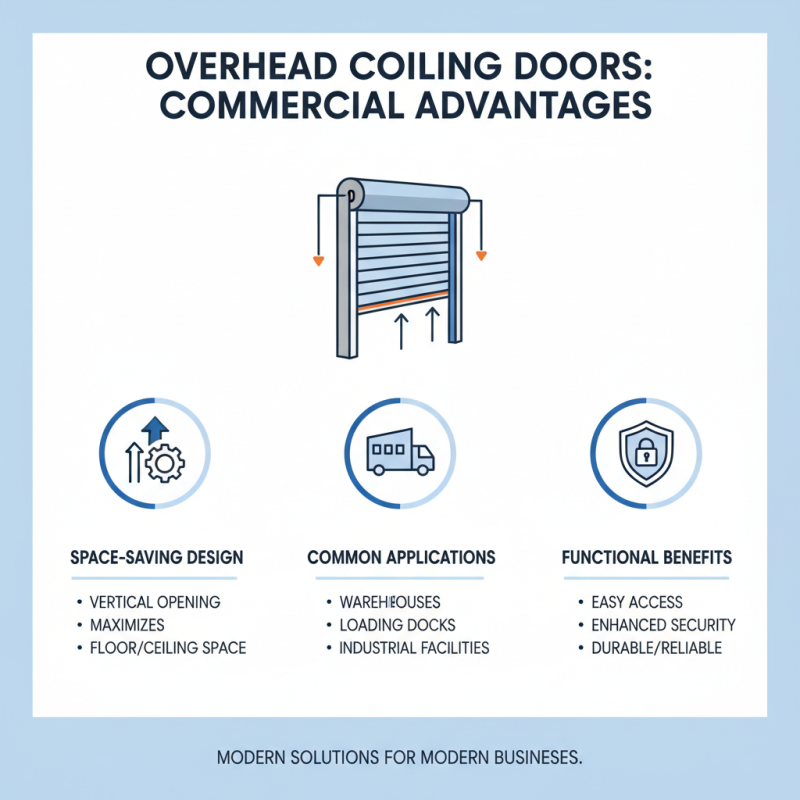
Overhead coiling doors are becoming popular in commercial settings. These doors open vertically, making them a space-saving choice. They are often used in warehouses and loading docks. Their design allows for easy access while maintaining security.
One significant benefit is durability. These doors can withstand heavy use and harsh conditions. They are often made with materials that resist rust and damage. However, proper maintenance is required to ensure they work efficiently. If not maintained well, they can lead to costly repairs and operational delays.
Another advantage is energy efficiency. Many overhead coiling doors are insulated. This helps regulate temperature and reduce energy costs. Businesses must be mindful, though, as poor installation can compromise this benefit. Choosing the right specifications is crucial. The wrong door might result in energy loss rather than savings.
Industry Standards and Safety Regulations for Overhead Coiling Doors
Overhead coiling doors are essential in various industries. These doors provide security while enabling easy access. However, their installation and operation must adhere to strict industry standards and safety regulations.
One important consideration is the installation process. Proper alignment and secure fastening are crucial. An improperly installed door can malfunction. This oversight can have serious safety implications. Always consult professionals familiar with current regulations.
Tips: Regular maintenance is key. Inspect the door and its components frequently. Lubricate moving parts to prevent wear. Also, ensure safety sensors are functioning. These measures reduce the risk of accidents.
Safety regulations often dictate the materials used in overhead coiling doors. Fire-rated doors are necessary in some areas to prevent fire spread. Choose materials wisely. Using non-compliant materials can lead to legal issues. Reflect on your choices to enhance safety and compliance.
Comparative Analysis: Overhead Coiling Doors vs. Traditional Garage Doors
When comparing overhead coiling doors to traditional garage doors, several factors emerge.
Overhead coiling doors are designed for heavy-duty use.
They roll up neatly into a coil, saving space. This design is efficient in high-traffic areas, allowing for quicker access.
Traditional doors open outward or upward, often taking more space. According to a report by the International Door Association,
coiling doors can improve workflow by up to 30% in busy environments.
Energy efficiency is another critical aspect.
Overhead coiling doors typically feature better insulation.
They can reduce energy costs by maintaining interior temperatures.
In contrast, traditional garage doors often struggle with air leaks and heat loss.
Research shows that well-insulated coiling doors can provide an R-value of up to 20,
compared to 6-8 for standard doors. However, their initial cost can be higher.
Maintenance should also be considered.
Coiling doors demand regular lubrication and inspection due to their mechanisms.
Neglect can lead to costly repairs. On the other hand, traditional doors may require more frequent repairs due to wear and tear from hinges.
Some users find the automated features of coiling doors intimidating.
They can create confusion for those unfamiliar with technology. Overall, understanding these differences helps in making an informed choice.