Choosing a Film Embossing Machine is a production decision, not just a search for attractive patterns. The right equipment must suit the film, required texture, line speed, and quality targets. A raised woodgrain finish, for example, can behave differently from a fine geometric pattern. Small details matter.
Industry reports offer useful context, though they cannot choose a machine for a specific factory. OECD’s Global Plastics Outlook reports that the world generated 353 million tonnes of plastic waste in 2019, with only 9% recycled. That figure makes material use and process consistency practical buying considerations—not marketing extras. Smithers’ packaging market outlook also highlights evolving demand for packaging formats and materials. Neither report evaluates individual embossing machines, so treat them as context, not proof of performance.
A careful assessment starts with the actual production job. Check compatible film types, working width, embossing depth, temperature control, pressure adjustment, and web-tension handling. Ask suppliers to run your own material and inspect the finished roll under real production conditions. Look closely at pattern sharpness, repeat consistency, edge quality, and waste during changeovers. A brochure cannot prove that.
Compare service access, operator training, spare-part availability, and total operating costs alongside the purchase price. Request clear test conditions and written specifications. Then verify claims against your own requirements. Even a good checklist misses something: future product changes. These seven tips help buyers ask better questions, compare machines fairly, and avoid paying for features their production line may never use.
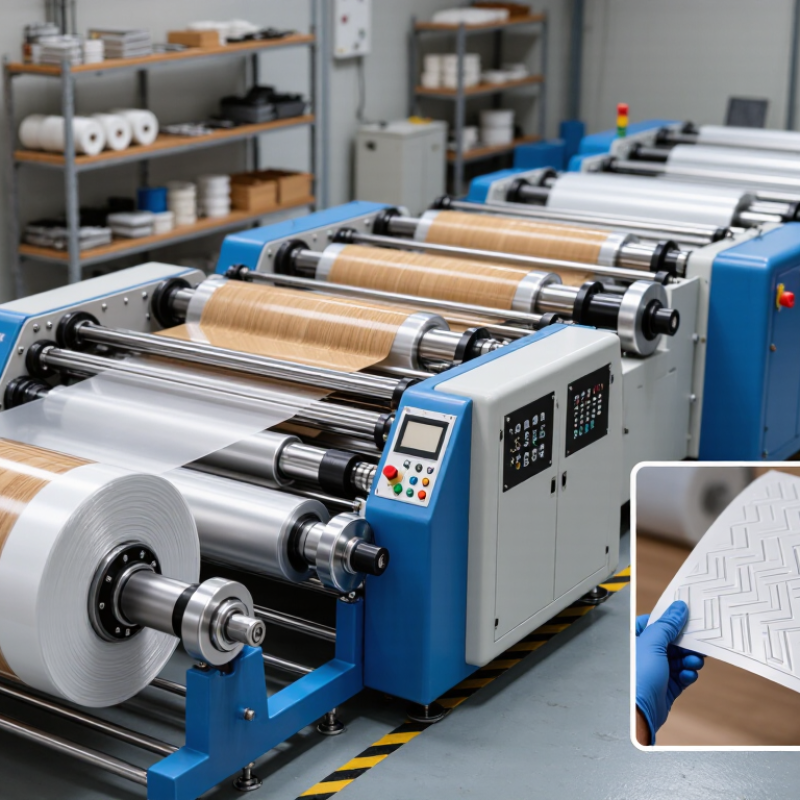
Before comparing machines, define the films you will run: material, thickness range, web width, and roll diameter. Specify the emboss pattern, desired depth, and whether texture must align with printed graphics. Be concrete. A shallow matte texture and a deep tactile pattern can demand different rollers, pressure, and heat control. Record target speed and acceptable variation across the web, too.
The Flexible Packaging Association’s 2023 State of the U.S. Flexible Packaging Industry report valued U.S. industry sales at $42.9 billion in 2022. That figure describes a broad market, not demand for any one embossing process. Still, it highlights why buyers should define their own product mix instead of selecting equipment by headline speed alone. Estimate changeover frequency, daily running hours, scrap during setup, and operators’ available adjustment time. A first production estimate is often optimistic; treat it as a working assumption, then check it against real orders.
Prepare representative film samples before requesting a machine trial. Test the thinnest and thickest films, plus the most demanding pattern. Inspect texture uniformity, wrinkles, edge tracking, and performance after winding. Keep the sample conditions: temperature, line speed, roller pressure, and film tension. Small details matter. If the pattern looks good only at one narrow setting, production may be less forgiving than the demonstration suggests.

Compare estimated output across three illustrative production profiles before choosing a film embossing machine.
Estimated output is calculated as usable web width × line speed × 480 minutes × 80% operating time. For example, a 1.0 m web running at 30 m/min yields about 11,520 m² per shift. These are planning estimates, not machine specifications; confirm achievable speeds, usable width, substrate compatibility, and embossing requirements with suppliers.
Tip 1: Start with your actual film, not brochure specifications. Identify its polymer, thickness range, width, surface treatment, and any adhesive or release layers. A 25-micron sample may feed differently from a thicker laminated web. Ask the supplier to test your rolls at the intended speed. Small trial, big clarity. Compare emboss depth, pattern consistency, and film tension across several samples.
Tip 2: Match heating and pressure controls to the material. Some films soften quickly; others need steadier heat and longer contact time. Check the temperature range, roller hardness, pressure adjustment, and cooling capacity. Request operating data at your planned line speed, not only the machine’s maximum. Keep notes. A mismatch can cause wrinkles, shallow patterns, or stretching, even when the machine looks well built.
Tip 3: Check the web-handling details. Confirm unwind and rewind limits, core sizes, guiding range, and changeover time for your roll widths. For delicate or stretchy films, stable tension control matters as much as embossing force. Ask for finished samples and inspect their edges under consistent lighting. Leave room for adjustment; material batches can vary, and a specification sheet rarely tells the whole story.
| Tip | Film Material or Requirement | Specifications to Check | Questions to Ask or Tests to Request |
|---|---|---|---|
| 1. Identify every film you plan to emboss | Different polymers and constructions respond differently to heat, pressure, and tension. Common substrates include PET, BOPP, PE, and PVC films. | Confirm the machine’s approved material list and usable thickness range. Compare those limits with the film supplier’s technical data sheet. | Can the machine process each planned film grade, coating, and laminate—not just a generic polymer type? |
| 2. Match the working width to your production rolls | Production widths vary by converting line and finished product. The full web width may not be usable if edge trim or guides are required. | Check maximum web width, usable embossing width, edge-guide range, and the machine’s allowance for web tracking. | Ask for a layout showing the usable embossing area and required edge clearance for your actual roll width. |
| 3. Verify thickness and layer compatibility | Film thickness varies widely by application. For example, flexible packaging films may be in the tens of micrometres, while some specialty films are substantially thicker. | Check minimum and maximum material thickness, thickness tolerance, and compatibility with coated, laminated, or multilayer films. | Run samples at the thinnest and thickest planned gauges. Inspect for stretching, pinholes, cracking, or damage to functional coatings. |
| 4. Choose a suitable tension-control system | Thin or stretch-prone films can wrinkle or elongate if web tension is unstable. Stiffer films may need different unwinding and guiding settings. | Review the unwind and rewind arrangement, tension-control method, web guide, and whether settings can be adjusted across the full production range. | Request a trial using your actual film roll. Check for wrinkles, lateral wandering, and changes in web length after embossing. |
| 5. Match heating and cooling to the process | Heat sensitivity differs by polymer, coating, and film construction. A setting suitable for one grade may distort or damage another. | Check the heating method, temperature-control range, sensor placement, temperature uniformity, and cooling arrangement. Use the film supplier’s processing guidance. | Ask for temperature readings across the working width and test for shrinkage, blocking, surface defects, or loss of coating performance. |
| 6. Check roller, pattern, and pressure options | Embossing depth and pattern transfer depend on the film, roller pattern, nip conditions, and process settings. | Confirm roller face width, available pattern options, changeover method, nip-pressure adjustment, and the machine’s supported roller dimensions. | Have the supplier emboss your target pattern on your material. Compare pattern definition and film integrity across a range of settings. |
| 7. Size line speed and rewinding for the finished roll | Required output depends on pattern quality, film behavior, roll dimensions, and downstream converting requirements. | Check the usable speed range, speed adjustment, maximum unwind and rewind roll dimensions, and rewind tension control. | Request a sustained production trial at a representative speed and roll size; inspect the finished roll for telescoping, loose winding, and pattern consistency. |
Note: Film properties and processing limits vary by grade, coating, and construction. Treat machine ranges as selection criteria, then confirm compatibility through the film supplier’s data and production trials using your actual materials.
When comparing film embossing machines, start with the embossing method. Rotary systems use a patterned roller and can suit continuous production. Flatbed systems press a defined area at a time, which may help with short runs or varied layouts. Some machines rely on heat and pressure; others use pressure alone. Ask how film thickness, temperature, and pressure affect the final texture. Test your actual film, not just a sample supplied with the machine. Small differences matter.
Check speed under working conditions. A maximum speed listed on a specification sheet may not include loading, alignment, or pattern changes. Ask for a trial using your film width and target pattern. Watch the surface closely for uneven depth, stretching, or marks near the edges. Look at changeover time, too. Fast output is less useful if setup takes half a shift. There is a catch: a slower, steady run can produce less waste.
Pattern options deserve equal attention. Confirm whether the machine accepts interchangeable rollers or plates, and how long a pattern change takes. Inspect fine lines, repeating motifs, and larger textures on finished film. Ask whether pattern alignment can be adjusted without replacing tooling. Get sample pieces for your own inspection under normal lighting. They may look different on the production floor. Also check how pattern wear is detected; this detail is easy to overlook.
A film embossing machine should feel manageable before it ever reaches full production speed. Ask the supplier to demonstrate routine setup, pressure adjustment, and film threading. Watch how clearly the controls show temperature and speed. Can an operator make a small adjustment without stopping to search through a manual? Try loading a roll yourself. A heavy spindle or awkward threading path can turn a simple changeover into a frustrating task. Short training helps, but it cannot fix confusing controls. That matters.
Maintenance deserves the same hands-on check. Look for accessible rollers, clearly marked lubrication points, and guards that open without special tools. Ask how often rollers and heating components need inspection, and whether common wear parts are easy to identify. Request a sample maintenance schedule. Compare it with your expected shifts and cleaning routine. Small details count. A machine that is easy to wipe down may still have hard-to-reach film residue near its rollers.
Safety features should be demonstrated, not just listed. Check emergency-stop access from the normal operator position, guarding around hot surfaces and moving rollers, and clear warnings near pinch points. Ask what happens if film jams or temperature rises unexpectedly. Test these procedures with trained staff, following the operating instructions. I have seen buyers focus on output speed and overlook the reach needed to clear a jam. That is an easy mistake to make, and worth reconsidering before purchase.
7 Tips for Buying a Film Embossing Machine
A film embossing machine is only as dependable as the service behind it. Ask who handles installation, operator training, and urgent repairs. Get response times in writing, including weekends and holidays. Ask whether technicians can troubleshoot remotely and which replacement parts are stocked locally. A helpful test: request the service contact you would call during a production stoppage.
Read the warranty line by line. Check its duration, covered components, labor terms, and exclusions for wear parts. Clarify who pays freight for a failed roller or control unit. Siemens’ 2024 True Cost of Downtime report estimated that downtime costs the world’s 500 largest companies about $1.4 trillion annually, or 11% of their revenue. That figure is not a forecast for your factory, but it shows why repair access deserves real scrutiny.
Compare total ownership cost, not just purchase price. Include installation, energy, tooling, maintenance labor, consumables, and expected parts replacement. Ask suppliers for a sample maintenance schedule and a written list of recommended spare parts. Then estimate costs across the machine’s expected service life. A clean spreadsheet helps. Still, estimates can miss awkward realities, such as a specialist part delayed for weeks. Request assumptions behind every figure, and keep a modest contingency in your budget.

Since 1984, Thermostop has been a reputable manufacturer of Industrial Sectional Doors, Cold Storage Doors and Specialty Doors such as Impactable Breakaway doors, Acoustic Doors and Ballistic Doors.
Contact