China has become a major manufacturing base for precision stainless steel components. Its suppliers serve medical, food-processing, automation, automotive, and industrial equipment markets. This guide explores China’s top 10 manufacturers of Cnc Stainless Steel Parts. It focuses on practical capabilities, not attractive claims alone.
The review considers machining accuracy, material control, equipment quality, surface finishing, inspection systems, and export experience. It also examines whether manufacturers support prototypes, small batches, and stable volume production. Factory communication matters too. A technically strong supplier can still create delays through unclear drawings or weak project management.
Real details deserve attention. Buyers should ask about stainless grades, tolerance ranges, thread quality, burr removal, and cleaning methods. Certificates may help, but they do not replace production evidence. Sample reports, inspection images, and audit discussions often reveal more.
No ranking fits every buyer.
A supplier producing surgical housings may not suit heavy industrial fittings. Lead time, order quantity, packaging, and post-sales support can change the final decision. Pricing also requires caution. The lowest quotation may exclude finishing, inspection, tooling, or protective packaging.
This introduction provides a structured starting point for supplier research. It does not claim that one manufacturer is universally superior. Information can change as equipment, certifications, ownership, and production teams develop. Readers should verify current details directly before placing orders. That extra step may feel slow, but it reduces avoidable quality and delivery risks.
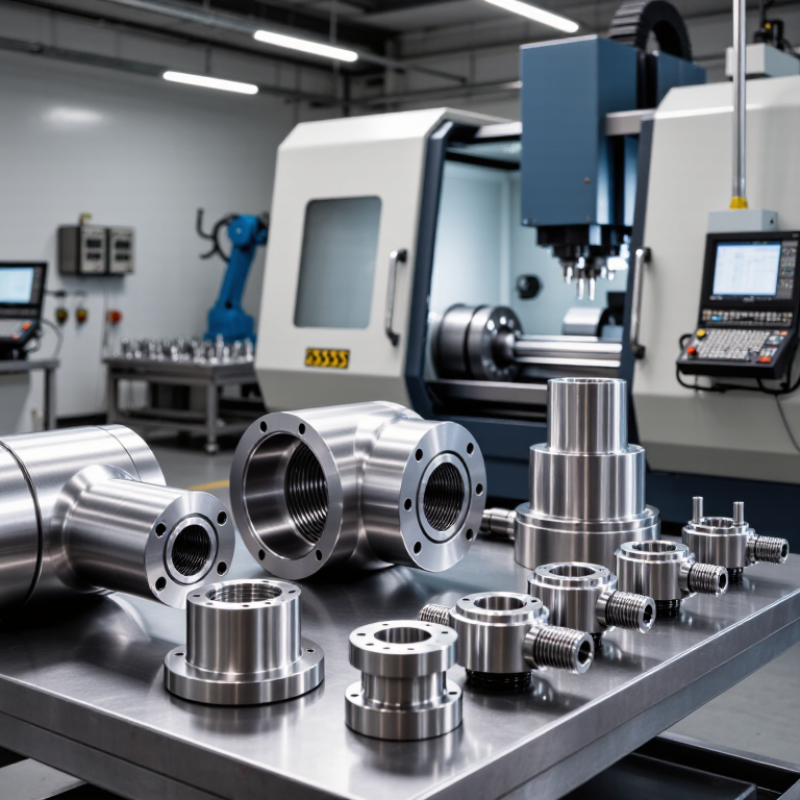
CNC stainless steel parts cover turned shafts, milled housings, threaded fittings, medical fixtures, and corrosion-resistant brackets. Their scope depends on geometry, alloy, tolerance, surface finish, and service environment. The International Stainless Steel Forum reported global stainless crude steel production of about 58.4 million tonnes in 2023. That scale reflects broad demand, but it does not guarantee machining consistency.
Common grades include 304 and 316, while precipitation-hardening grades serve higher-strength applications. ASTM A240 defines requirements for stainless steel plate, sheet, and strip, but buyers should verify the exact material certificate. ISO 286 supports limits and fits, and ISO 2768 can control unspecified dimensions. Those standards are useful, not magical. A drawing can still be unclear. Define datums, thread class, edge breaks, flatness, and inspection methods.
Industry terms often cause costly misunderstandings. “As-machined” describes the delivered surface, while Ra specifies measured roughness. “Passivation” improves the passive surface condition; it does not remove every machining defect. “First article inspection” checks an initial part against the drawing, whereas process capability studies examine repeatability. Quality systems certified to ISO 9001 may strengthen traceability, yet certification alone cannot prove cutting-tool stability. In practice, request material heat numbers, calibrated inspection records, and sample dimensional reports. Small details matter.
| No. | Data Dimension | Industry Scope and Typical Data | Relevant Standards or References | Manufacturer Evaluation Focus |
|---|---|---|---|---|
| 1 | Common Stainless Steel Grades | 304 / 304L: general corrosion-resistant applications. 316 / 316L: improved resistance to chlorides and marine environments. 17-4 PH: precipitation-hardening stainless steel for high strength. 420: martensitic grade used where hardness and wear resistance are required. | ASTM A240 for plate, sheet, and strip; ASTM A276 for bars and shapes; EN 10088 for stainless steel products. | Confirm material grade, heat or batch traceability, chemical composition, mechanical properties, and availability of a material test certificate. |
| 2 | Machining Processes | CNC milling, CNC turning, drilling, tapping, boring, reaming, thread machining, grooving, chamfering, and multi-axis machining are commonly used for stainless steel parts. | Process selection depends on part geometry, material condition, tolerance, surface finish, production volume, and required inspection level. | Assess equipment capability, workholding methods, tool management, coolant control, chip evacuation, and experience with work-hardening stainless steels. |
| 3 | Dimensional Tolerances | General tolerances may be specified using ISO 2768. Tighter tolerances, such as ±0.01 mm or tighter, should be identified on individual drawing features and confirmed through capability studies. | ISO 2768 for general tolerances; ISO 1101 for geometrical tolerancing; ASME Y14.5 for GD&T-based drawings. | Review capability for size, position, concentricity, flatness, perpendicularity, and profile requirements rather than relying only on nominal machine specifications. |
| 4 | Surface Roughness | Typical CNC-machined stainless steel surfaces may range from approximately Ra 0.8 to Ra 3.2 μm, depending on tooling, feed rate, machine stability, and finishing operations. Polishing can achieve lower Ra values when specified. | ISO 21920 for surface texture specification and assessment; surface roughness values should be stated directly on the engineering drawing. | Verify Ra measurement method, sampling direction, measurement equipment, and whether deburring, polishing, brushing, or blasting is included in the quoted process. |
| 5 | Passivation and Surface Treatment | Common treatments include nitric or citric acid passivation, electropolishing, mechanical polishing, bead blasting, and cleaning for removal of free iron and machining contaminants. | ASTM A967 for chemical passivation treatments; AMS 2700 for passivation of corrosion-resistant steels; treatment requirements should include acceptance criteria. | Check pre-cleaning, treatment chemistry, bath control, rinsing, drying, contamination prevention, and verification testing such as free-iron or corrosion-resistance tests when required. |
| 6 | Thread and Hole Quality | Internal and external threads should be defined by nominal size, pitch, thread form, tolerance class, depth, and inspection method. Precision holes may require reaming or in-process measurement. | ISO metric thread tolerances under ISO 965; Unified threads may follow ASME B1.1; hole and thread requirements must match the applicable drawing standard. | Review use of calibrated plug gauges, ring gauges, thread gauges, optical measurement, and documented control of burrs, lead-ins, blind-hole depth, and minimum wall thickness. |
| 7 | Inspection and Measurement | Inspection may include calipers, micrometers, height gauges, bore gauges, optical comparators, CMMs, profilometers, hardness testers, and visual inspection. | ISO 17025 for competence of testing and calibration laboratories; ISO 10012 for measurement management; inspection reports should reference calibrated equipment. | Confirm calibration status, measurement uncertainty where relevant, first-article inspection capability, sampling plans, inspection records, and traceability from inspection data to production lots. |
| 8 | Quality Management and Documentation | A controlled quality system should cover drawing revision control, purchasing, production records, nonconformance handling, corrective action, final inspection, and document retention. | ISO 9001 is widely used as a quality-management-system framework. Sector-specific requirements may apply depending on the end-use industry. | Evaluate process control plans, work instructions, inspection records, traceability practices, corrective-action response, and change-control procedures. |
| 9 | Production Capacity and Lead Time | Lead time varies with material availability, prototype or production quantity, programming complexity, special tooling, secondary finishing, inspection requirements, and export documentation. | Capacity should be stated using measurable factors such as machine count, working envelope, maximum turning diameter, spindle capability, shift pattern, and subcontracted-process control. | Request a realistic schedule covering engineering review, material procurement, machining, finishing, inspection, packaging, and contingency for nonconforming parts. |
| 10 | Application and Supplier-Fit Criteria | CNC stainless steel parts are used in medical equipment, food-processing machinery, automation systems, pumps, valves, instrumentation, marine equipment, and industrial assemblies. | Requirements may include customer drawings, material specifications, cleanliness rules, corrosion-resistance requirements, packaging instructions, and applicable industry regulations. | Select suppliers according to material expertise, tolerance capability, finishing control, inspection resources, communication quality, production scalability, and documented compliance—not only quoted price. |