Top 10 13.8kV Transformer Manufacturers Worldwide?
The global demand for medium-voltage equipment is accelerating as industries electrify, renewable projects expand, and aging grids require replacement. The IEA’s Electricity 2024 report expects global electricity demand to grow by approximately 4% annually through 2026. That growth creates sustained pressure on utilities, factories, data centers, and infrastructure contractors.
A reliable 13.8kv Transformer is more than a catalog item. Its insulation system, temperature rise, short-circuit strength, efficiency, enclosure design, and maintenance access directly affect operating risk. The IEA’s Electricity Grids and Secure Energy Transitions report estimates that annual grid investment must rise from about USD 400 billion to over USD 600 billion by 2030. Meanwhile, the U.S. Department of Energy has highlighted extended lead times and supply-chain concentration for transformer components. Availability matters.
This article reviews ten leading 13.8kV transformer manufacturers worldwide. The comparison considers manufacturing scale, engineering experience, product customization, testing capability, certifications, delivery reliability, and after-sales support. It also references IEC 60076 requirements, commonly used for power and distribution transformer evaluation. Rankings are not absolute. A utility may value fault performance, while a mining operator may prioritize rugged enclosures and rapid service.
That distinction deserves attention.
Manufacturers with strong global reputations may not fit every project. Local standards, ambient temperature, load profiles, harmonic content, and installation conditions can change the best choice. Some public data is incomplete, and supplier claims require verification through factory audits, test reports, and customer references. This guide therefore aims to provide a practical starting point, not a substitute for detailed technical due diligence.
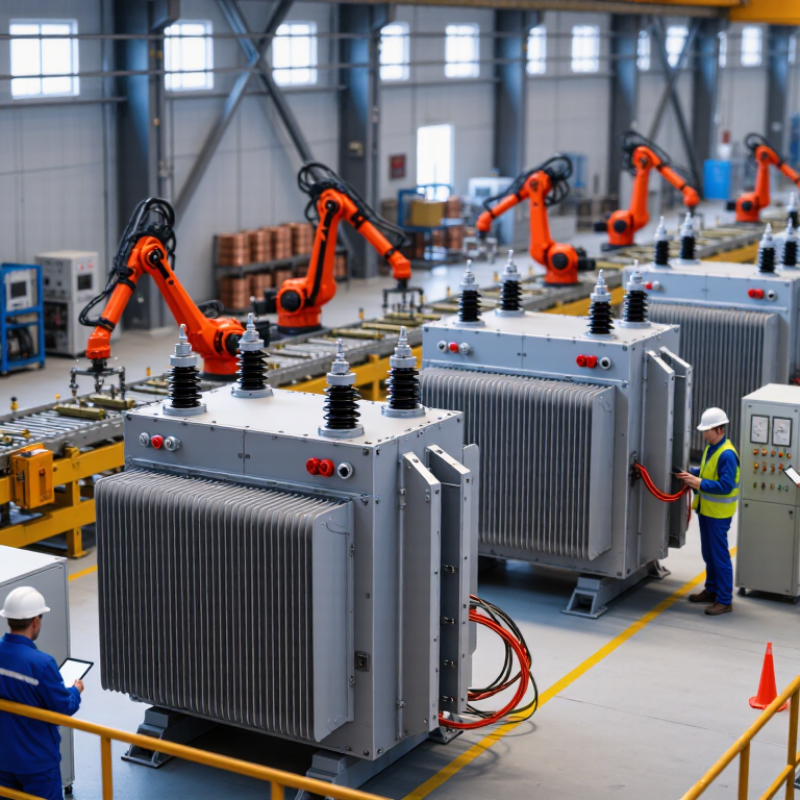
What Is a 13.8kV Transformer and Why Is It Important?
A 13.8 kV transformer is a medium-voltage device used to transfer electrical energy between voltage levels. Its primary winding usually accepts 13.8 kV, while the secondary winding supplies a lower voltage for factories, commercial buildings, or local distribution networks. It may also operate as a step-up unit in specialized systems. The rating describes voltage, not capacity. Power output still depends on the transformer’s kVA rating, cooling method, insulation, and load profile.
Its importance is both technical and economic. Lower transmission current reduces conductor losses, while reliable voltage conversion protects motors, control systems, and sensitive equipment. The U.S. Department of Energy has estimated that distribution transformers account for roughly 2.5% of U.S. electricity consumption. Small efficiency gains therefore matter at grid scale. The IEA’s Electricity 2024 report projected global electricity demand growth of 3.3% in 2025 and 3.7% in 2026. More demand means more medium-voltage equipment.
In practical selection, engineers review insulation coordination, short-circuit strength, temperature rise, noise, and maintenance access. IEC 60076 and IEEE C57.12.00 provide widely used technical references. A 13.8 kV nameplate is not a complete design. That assumption deserves challenge. Site altitude, harmonics, outdoor moisture, and daily loading can change performance. Field experience also shows that undersized cooling systems create avoidable losses. Report data helps, but measured operating conditions should decide the final specification.
How to Evaluate Global 13.8kV Transformer Manufacturers
Evaluating global 13.8kV transformer manufacturers requires more than comparing price lists. Begin with proven production experience. Review completed projects with similar voltage, capacity, climate, and load profiles. Ask for failure records, not only success stories. A credible manufacturer can explain root causes and corrective actions. That honesty matters.
Technical review should cover insulation design, temperature rise, short-circuit strength, losses, noise, enclosure protection, and accessory quality. Check whether designs follow applicable IEC, IEEE, or regional requirements. Request routine and type-test evidence from qualified laboratories. Inspect drawings, material traceability, factory acceptance procedures, and calibration records. During a factory audit, watch the details: clean winding areas, controlled drying, torque records, and sealed oil systems. Small gaps become expensive outages.
Service capability deserves equal attention. Confirm engineering support, spare-part availability, remote diagnostics, installation guidance, and response times across time zones. Speak with operating customers when possible. Their comments reveal delivery discipline and after-sales behavior. Financial stability also reduces long-term risk. No scorecard is perfect. I have seen technically strong bids weaken through vague exclusions or unrealistic schedules. Leave room for questions, independent inspection, and site-specific calculations before signing.
Top 10 13.8 kV Transformer Manufacturers Worldwide? — How to Evaluate Global 13.8 kV Transformer Manufacturers
This indicative evaluation model reflects common utility and industrial procurement priorities for 13.8 kV-class transformers. Buyers should verify compliance with applicable IEC 60076 or IEEE C57 standards, rated voltage, insulation level, efficiency, temperature rise, routine test results, service capability, and delivery performance before selecting a manufacturer. The percentages are evaluation weights, not company rankings or market-share data.
Top 10 13.8kV Transformer Manufacturers Worldwide
Top 10 13.8kV Transformer Manufacturers Worldwide
The top 10 13.8kV transformer manufacturers are usually evaluated through engineering depth, testing capability, and field performance. A credible supplier should provide factory test reports, temperature-rise data, insulation results, and clear documentation. Experience matters when transformers operate near mines, factories, substations, or coastal facilities. Each location adds different challenges.
Leading manufacturers commonly produce oil-immersed and dry-type units for industrial, utility, and commercial networks. Their designs may include sealed tanks, off-circuit tap changers, fire-resistant insulation, and monitoring accessories. Buyers should check compliance with applicable IEC or IEEE requirements. They should also review short-circuit strength, losses, noise levels, cooling methods, and installation limits. Small details matter.
A strong manufacturer supports the equipment after delivery. Spare parts, commissioning guidance, maintenance training, and responsive technical service can reduce downtime. References from comparable 13.8kV projects are especially useful. However, no ranking is perfect. Public information can be incomplete, and factory size does not always prove better field results. I would compare verified test records, warranty terms, production consistency, and actual service history before selecting among ten global suppliers. Site conditions still deserve more attention than glossy specifications.
How the Leading Manufacturers Compare by Products and Capabilities
Comparing the top 10 13.8kV transformer manufacturers requires more than counting sales. Product fit matters. The strongest suppliers typically offer liquid-filled units for outdoor substations and dry-type models for hospitals, factories, and high-rise buildings. Their ranges may include natural ester insulation, copper or aluminum windings, on-load tap changers, and surge-resistant bushings. These details affect fire risk, footprint, maintenance, and voltage stability.
Efficiency is another clear separator. The U.S. Department of Energy’s transformer efficiency rules show that even small reductions in no-load and load losses can produce major lifetime savings across utility fleets. The International Energy Agency reported in Electricity Grids and Secure Energy Transitions that annual grid investment must rise above 600 billion dollars by 2030. That pressure favors manufacturers with efficient designs, scalable production, and documented lifecycle data. Not every supplier measures losses the same way. That deserves scrutiny.
Capability also appears in testing and field support. Buyers should compare IEC or IEEE compliance, short-circuit testing, factory acceptance procedures, monitoring systems, spare-part access, and realistic delivery times. A 13.8kV unit may look standard, yet altitude, humidity, salt exposure, and harmonic loads can change its design. Suppliers with strong engineering teams adapt specifications before manufacturing. That is valuable. However, rankings based only on revenue can mislead; service quality and failure response are harder to quantify. A better comparison combines audited performance, installed experience, and transparent technical evidence.
Choosing the Right 13.8kV Transformer Manufacturer for Your Project
Choosing the Right 13.8kV Transformer Manufacturer for Your Project
Selecting a 13.8kV transformer manufacturer requires more than comparing purchase prices. Start with the project load, voltage regulation, fault level, installation altitude, and expected operating conditions. A dependable manufacturer should provide clear design calculations, routine test reports, and documented quality controls. Ask about transformer impedance, insulation levels, cooling methods, enclosure protection, and tap-changer performance. These details affect safety, efficiency, and future maintenance.
Tips: Request references from comparable industrial or utility projects. Review factory acceptance testing procedures before signing. Confirm compliance with applicable IEC or IEEE requirements. Check whether spare parts, technical support, and field service are available locally. Ask for realistic lead times, not optimistic promises.
Experience often reveals small gaps in a specification. A transformer may meet its rated power yet perform poorly under harmonic loads or frequent switching. Discuss non-linear loads early. Also inspect the manufacturer’s response quality; vague answers can signal weak engineering support. I have found that documentation is sometimes overlooked, although it becomes essential during commissioning and fault investigation. No supplier is perfect. A careful technical review, witnessed testing, and transparent communication can reduce costly surprises. Reliability should be judged across the transformer’s full service life, not only at the quotation stage.