Choosing the right bulletproof door requires more than comparing thickness, price, or online photographs. Global buyers must examine tested performance, certification, installation quality, and long-term service. A door may look extremely strong, yet its frame, hinges, glazing, or lock can remain vulnerable. That detail is easy to miss.
Bruce Schneier, a respected security technologist, wrote, “Security is a process, not a product.” His observation applies directly to protective entrances. A reliable bulletproof door should fit a broader security plan, including access control, surveillance, emergency procedures, and professional maintenance. Product claims deserve careful checking. Ask for current test reports, laboratory details, ballistic ratings, and installation instructions. UL 752 and EN 1522/1523 may guide evaluation, but their relevance depends on the project and region.
The seven doors discussed in this guide represent different priorities. Some emphasize discreet residential protection. Others suit banks, diplomatic facilities, transportation sites, or high-risk commercial entrances. Steel construction, certified glazing, multi-point locks, thermal performance, and corrosion resistance can change the buying decision. Local building codes still matter. So does after-sales support.
There is no perfect door.
A lower price may hide installation compromises. A higher rating may create unnecessary weight and cost. Buyers should compare the actual threat assessment, not chase impressive marketing language. This guide offers a practical framework for global purchasers, while acknowledging one limitation: product availability and certification can change by country. Independent verification remains essential before any purchase or installation.
A bulletproof door is not defined by thick steel alone. It is a tested assembly, including the slab, frame, hinges, locks, glass, and wall connection. The National Institute of Justice Standard-0108.01 classifies ballistic resistance from Level I to Level IV. At Level IV, testing uses a .30-06 armor-piercing projectile weighing 166 grains, fired at approximately 2,880 feet per second. That is a demanding benchmark.
European buyers may review EN 1522 and EN 1523, which use FB1 to FB7 classes and assess both resistance and test procedures. UL 752 also provides ten protection levels for bullet-resisting equipment. These systems are not interchangeable.
A door marked “Level III” needs its exact standard, ammunition, velocity, and test date clearly stated. Otherwise, the label says too little.
A practical inspection should request the complete laboratory report, not only a certificate. Check whether the test covered the finished door assembly. Pay attention to glass edges, hinge zones, lock pockets, and frame anchors. These areas can become weak points.
Testing should also examine repeated impacts, because one successful shot does not prove broad protection. The 2024 Global Ballistic Protection Market analysis by IMARC Group identifies testing compliance and rising infrastructure security demand as major market factors. Yet market growth does not guarantee product quality.
I would question any quotation that hides test conditions, uses outdated standards, or presents panel results as full-door performance.
Seven Leading Bulletproof Door Types for Different Security Needs
Ballistic-resistant steel doors suit banks, utilities, and guarded entrances. Their layered steel cores provide strong protection and dependable fire performance. Stainless-steel versions resist humidity and frequent cleaning. They fit coastal sites better. Aluminum doors reduce weight, making them practical for offices and interior checkpoints. However, lighter construction may limit higher protection levels. Always verify the complete assembly, not only the door leaf.
Transparent ballistic-glass doors preserve visibility at reception desks and control rooms. Laminated glass can combine security with daylight. Wood-faced ballistic doors offer a warmer appearance for hotels, residences, and executive areas. Their concealed steel layers require precise hinges and frames. Blast-and-ballistic doors serve industrial facilities where pressure and projectiles create combined risks. Vault-style doors provide the strongest option for restricted rooms, but they need substantial structural support. They are rarely suitable for ordinary walls.
The U.S. National Institute of Justice standard 0108.01 organizes ballistic protection into seven classes, including IIA, II, IIIA, III, and IV. UL 752 also provides recognized testing levels for bullet-resistant barriers. These classifications do not guarantee field performance. The 2024 Global Construction Outlook continues to identify infrastructure upgrades as a major security investment area. Yet report definitions vary widely. A certified door can still fail through weak glazing, anchors, or an incorrect frame. Inspectors should review test reports, impact locations, hardware, and installation records. In practice, the frame is often the forgotten weakness. That deserves more attention.
Choosing the seven best bullet-resistant doors depends on more than thickness or appearance. Steel-core doors offer strong structural resistance, while laminated fiberglass can reduce weight and corrosion concerns. Armored aluminum suits coastal environments, but its frame design needs careful review. A wood-finished security door can blend into residential interiors, although decorative layers do not provide protection alone.
Construction quality often decides real-world performance. Look for continuous welds, reinforced hinge leaves, protected lock areas, and a frame anchored into structural masonry or steel. Multi-layer doors may combine steel plates, aramid fabric, and impact-resistant glazing. Glass deserves special attention. A tested transparent panel should match the door’s stated resistance level, not merely appear thick. Compression seals can improve smoke control, sound reduction, and weather performance.
Performance claims should come from recognized laboratory testing and clearly identify the tested configuration. Ratings can change when the size, hardware, glazing, or installation method changes. A heavier door is not automatically safer. It may overload weak hinges or an unsuitable wall. In practical inspections, installation errors appear more often than material failure. That is uncomfortable, but important. Buyers should request test documentation, frame details, maintenance guidance, and local compliance information before ordering. Door closers, threshold design, and emergency egress hardware also deserve review. A secure entrance must remain usable during daily traffic, repairs, and stressful conditions.
7 Best Bulletproof Doors for Global Buyers?
Choosing a bulletproof door starts with the threat, not the product photo. For homes, businesses, and facilities, define exposure, occupancy, and escape needs. NIJ 0108.01 recognizes seven ballistic performance levels. UL 752 uses ten levels for protective assemblies. These are test classifications, not universal promises. A door tested alone may fail when its frame, glass, lock, or wall performs differently.
Request an independent laboratory report before comparing prices. Check projectile type, firing distance, impact count, and test temperature. The report should identify the door leaf, frame, hinges, hardware, and glazing. European buyers may also review EN 1522 and EN 1523 classifications. A label without traceable documentation is weak evidence. Small gaps matter.
On site, inspect the frame-to-wall connection and the threshold. Look for reinforced hinges, protected lock areas, and controlled closing. Measure the opening carefully; uneven masonry can create costly installation problems. A ballistic rating does not automatically provide fire, acoustic, or weather resistance. Ask for separate test evidence. I would not rely on “security grade” wording alone. It sounds reassuring, but it can hide important limits. Budgeting only for the steel leaf is another common mistake. Performance depends on the complete assembly and competent installation.
The chart compares approximate kinetic energy for representative ballistic test threats commonly associated with European FB-class testing. Higher-energy threats generally require more advanced door leaves, frames, glazing, locks, hinges, and wall connections.
These figures are threat-energy references, not door performance ratings. Buyers should request third-party certification for the complete door assembly, confirm the applicable standard, and verify that installation details match the tested configuration.
7 Best Bulletproof Doors for Global Buyers?
Global buyers should compare tested door assemblies, not isolated materials. Certifications must match the required protection level and destination market. Common references include UL 752, EN 1522, and EN 1523. Requirements differ by country and project type. Ask for current test reports, laboratory details, and certificate scope. A report for the panel may not cover the frame, vision glass, hinges, or locking hardware. That gap matters.
Customization should follow the building drawings and local conditions. Confirm opening size, wall thickness, swing direction, access control, finish, and emergency exit requirements. Oversized doors may need reinforced framing and special lifting equipment. Decorative finishes can also affect lead times. I have seen projects delayed because a beautiful specification ignored floor levels and delivery access. Small errors become expensive.
Shipping needs careful planning from the factory to the final site. Confirm packaging, moisture protection, pallet dimensions, insurance, customs documents, duties, and delivery terms. A door can arrive safely but still remain unusable without the correct anchors and installation instructions. Use a qualified local installer who understands the tested assembly. Ask for shop drawings, fixing details, torque requirements, and inspection records. Installation should preserve the certified performance. In practice, site conditions are rarely perfect. Allow time for measurement checks and corrective work.
| Door Solution | Recommended Applications | Typical Ballistic Certification Route | Forced-Entry and Security Options | Fire and Smoke Options | Customization Scope | Global Shipping Considerations | Installation Complexity |
|---|---|---|---|---|---|---|---|
| 1. Single-Leaf Steel Bullet-Resistant Door | Residential entrances, security offices, embassies, guard rooms, and commercial buildings with standard-width openings. | Commonly specified for an independently tested door assembly to EN 1522 FB4 or an applicable UL 752 protection level. The frame, hardware, glazing, and locking points should be included in the test scope. | Multi-point locks, reinforced hinges, anti-pry construction, concealed fixings, and optional EN 1627 RC4 forced-entry performance. | Optional fire-rated construction may be available, but ballistic and fire performance must be validated for the complete door assembly. Typical fire targets include EI30 to EI60 under the applicable local standard. | Custom height and width, handing, vision panel, access-control preparation, door closers, panic hardware, powder coating, stainless-steel skins, and weather seals. | Usually shipped as a single crated unit. Confirm crate dimensions, gross weight, unloading equipment, import duties, and local door-opening measurements before ordering. |
Moderate Requires accurate structural anchoring and alignment of the frame. |
| 2. Double-Leaf Steel Bullet-Resistant Door | Main entrances, archive rooms, secure storage areas, loading access, and openings requiring wider passage. | A practical target is an independently tested double-leaf assembly to EN 1522 FB4 or an equivalent recognized ballistic standard. Meeting stiles, inactive-leaf bolts, and the threshold require special attention. | Concealed or heavy-duty hinges, top-and-bottom shoot bolts, anti-lift devices, multi-point locking, and optional access-control integration. | Fire performance is project-specific because meeting stiles, thresholds, and hardware can affect the rating. Specify the required fire class and smoke-control class before fabrication. | Unequal leaf sizes, removable mullions, panic exit devices, electromagnetic locks, card readers, vision panels, thresholds, and custom finishes. | Heavier and wider than single-leaf models. Sea freight may require reinforced export crating; check container access, site storage, and lifting requirements. |
High Requires careful setting of both leaves and precise adjustment of the meeting stile. |
| 3. Stainless-Steel Hygienic Bullet-Resistant Door | Laboratories, pharmaceutical facilities, food-processing areas, hospitals, cleanrooms, and corrosive or frequently washed environments. | Ballistic protection can be specified through EN 1522 FB4, FB5, or another applicable test level, provided the stainless-steel skin, core, frame, and glazing are tested as an assembly. | Flush surfaces, tamper-resistant fasteners, reinforced frames, access control, security hinges, and optional forced-entry testing to the required project class. | Fire-rated versions require separate assembly testing. Stainless-steel construction alone does not establish a fire-resistance rating. | Grade 304 or 316 stainless steel, brushed or polished finish, coved edges, hygienic seals, flush vision panels, automatic operators, and washdown-compatible hardware. | Protective film and moisture-resistant crating are recommended. Stainless-steel finish should be inspected before shipment and protected against scratching during transit. |
High Requires cleanroom or hygienic detailing, accurate tolerances, and compatible wall interfaces. |
| 4. Transparent Ballistic Glazed Door | Banks, reception areas, control rooms, diplomatic buildings, luxury facilities, and locations requiring visibility and daylight. | The glazing is commonly classified under EN 1063, such as BR4 to BR7, while the complete door assembly should be tested under the relevant door or ballistic standard. Glass and frame ratings must match. | Laminated ballistic glazing, reinforced aluminum or steel framing, security cylinders, concealed fixings, anti-jemmy profiles, and optional forced-entry resistance. | Ballistic glass is not automatically fire-rated. Fire-resistant glazing and framing must be tested as a complete system to the required fire classification. | Clear or tinted glazing, acoustic interlayers, low-emissivity coatings, privacy film, access-control hardware, automatic doors, sidelights, and transoms. | Glass requires vertical transport, edge protection, shock-resistant packaging, and strict handling instructions. Confirm whether the shipment is delivered upright or flat. |
High Requires specialist glazing procedures and careful protection from edge damage. |
| 5. High-Security Vestibule or Interlocking Door Set | Data centers, critical infrastructure, detention facilities, secure laboratories, government sites, and controlled-access zones. | Door leaves may target EN 1522 FB5 or FB6, subject to the required threat assessment. The vestibule should also be assessed for its access-control and forced-entry configuration. | Two-door interlock, anti-tailgating controls, biometric or card access, emergency override, anti-passback logic, reinforced frames, and optional EN 1627 RC5 or higher target. | Fire and smoke performance must cover each door, frame, threshold, seal, and control interface. Fire-release logic should be coordinated with local life-safety regulations. | Custom vestibule dimensions, intercoms, CCTV provisions, emergency break-glass units, door-status monitoring, automatic operators, and integrated security software. | Often shipped in multiple crates with control panels and hardware packed separately. International buyers should arrange electrical compatibility checks and local commissioning support. |
Very High Requires coordinated structural, electrical, access-control, and life-safety installation. |
| 6. Fire-Rated Ballistic Steel Door | Utility rooms, secure corridors, industrial buildings, archives, military facilities, and projects requiring combined fire and ballistic protection. | Specify a complete tested assembly combining the required ballistic level, such as EN 1522 FB4, with the applicable fire classification. Ballistic resistance and fire resistance are separate performance claims. | Reinforced steel construction, multi-point locking, fire-rated security hardware, anti-pry features, smoke seals, and optional forced-entry classification. | Typical project requirements may include EI30, EI60, or EI90 under the applicable regional fire-testing system. The rating depends on the full assembly and installation method. | Single or double leaf, vision panels, panic hardware, automatic closing, smoke seals, intumescent seals, door position switches, and corrosion-resistant finishes. | Heavy construction increases freight cost and may require reinforced pallets or steel crating. Confirm maximum package weight and delivery access at the project site. |
High Requires approved frame anchoring, fire-seal continuity, and qualified hardware installation. |
| 7. Oversized Industrial Sliding Bullet-Resistant Door | Vehicle bays, industrial compounds, aircraft or equipment storage, secure warehouses, and openings too large for conventional hinged doors. | The panel, track, frame, and locking system should be evaluated as a complete assembly. A project may specify EN 1522 FB4 or another suitable ballistic level, depending on the threat assessment. | Heavy-duty tracks, anti-lift rollers, mechanical or motorized locking, ground locks, perimeter protection, access control, and optional EN 1627 RC4 target. | Fire-rated sliding systems require dedicated fire testing and certified closing mechanisms. Do not assume that an industrial sliding door has a fire rating. | Large custom openings, manual or automatic operation, emergency release, remote controls, weather protection, safety sensors, magnetic locks, and sectional configurations. | Usually shipped in several oversized packages. Check port handling limits, road transport restrictions, crane availability, foundation details, and final assembly space. |
Very High Requires structural engineering, track alignment, lifting equipment, and commissioning. |
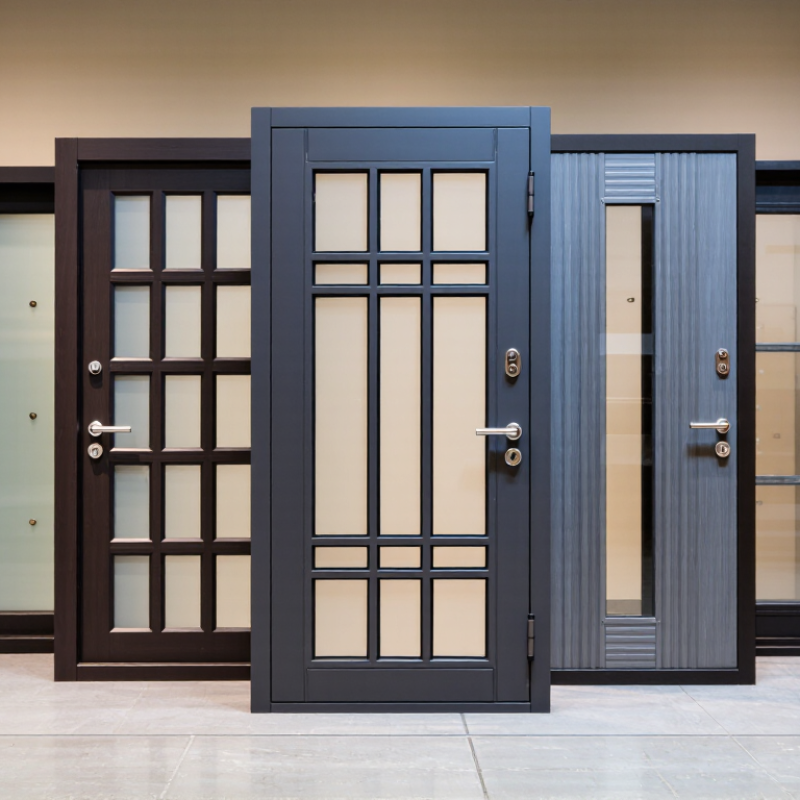
Buyer verification note: Certification levels, fire ratings, acoustic performance, and forced-entry resistance apply only when supported by valid test reports for the complete door assembly, including the leaf, frame, glazing, hardware, locks, threshold, and installation method. Always confirm local building codes, import requirements, electrical standards, warranty terms, and on-site installation responsibilities before purchase.

Since 1984, Thermostop has been a reputable manufacturer of Industrial Sectional Doors, Cold Storage Doors and Specialty Doors such as Impactable Breakaway doors, Acoustic Doors and Ballistic Doors.
Contact