10 Best Hydraulic Seal Suppliers for Global Buyers
Hydraulic systems quietly move excavator arms, factory presses, aircraft equipment, and agricultural machinery. Behind that force sits a small component with serious consequences: the Hydraulic Seal. A damaged seal can turn clean fluid into a costly leak within hours.
Grand View Research reported that the global hydraulic equipment market reached approximately USD 49.9 billion in 2023. It also forecasts a compound annual growth rate of about 5.9% from 2024 to 2030. This expansion increases demand for reliable sealing systems, especially in construction, manufacturing, energy, and mobile equipment. The data describes market momentum, not guaranteed supplier quality.
That distinction matters.
This guide reviews 10 hydraulic seal suppliers for global buyers. The comparison considers material capability, dimensional consistency, pressure ratings, temperature resistance, customization, certifications, and export support. It also considers practical purchasing details, such as minimum order quantities, sample approval, packaging, and replacement lead times. These details often decide whether a seal performs well in a clean test room or inside a dusty quarry.
ISO 3601 remains an important reference for O-rings, while ISO 6020 and ISO 6022 support dimensional expectations for hydraulic cylinders. However, compliance claims require verification through current certificates, test records, and traceable product documentation. Supplier websites alone are not enough.
No ranking removes every uncertainty. Even experienced buyers can overlook compound compatibility or storage conditions. Therefore, readers should match each supplier’s evidence with their operating pressure, fluid type, temperature range, and service environment. A lower unit price may become expensive after premature failure, downtime, and emergency freight.
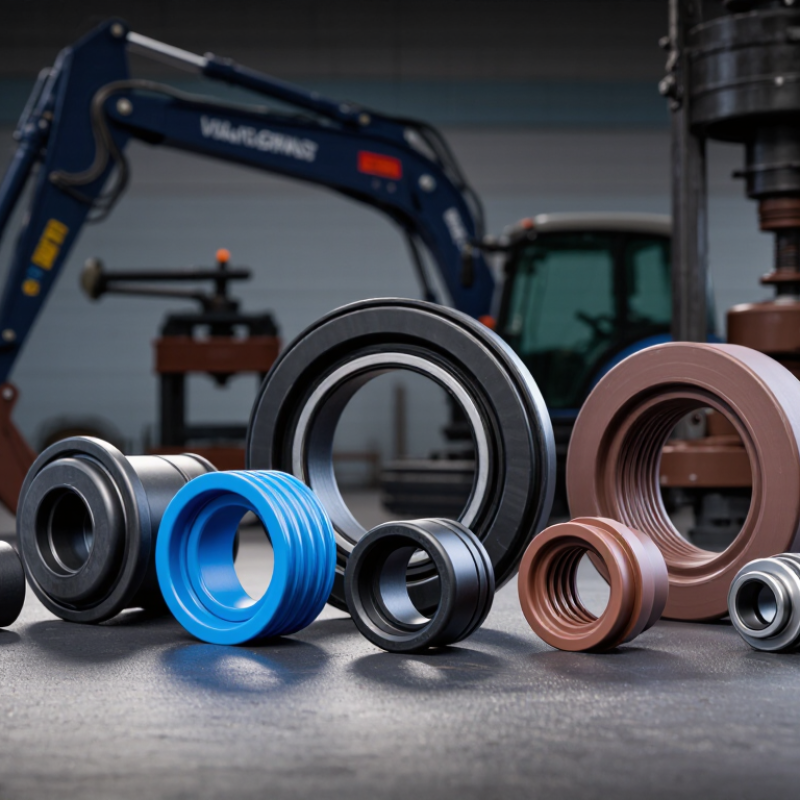
Hydraulic Seals: Types, Functions, and Common Applications
Hydraulic Seals: Types, Functions, and Common Applications
Hydraulic seals prevent fluid leakage and maintain pressure inside cylinders, pumps, and valves. They also block dust, water, and metal particles from entering sensitive components. Common types include rod seals, piston seals, wipers, guide rings, and static O-rings. Each design handles different movement, pressure, and installation conditions. A rod seal works around a moving shaft, while a piston seal controls pressure across the piston head. Small differences matter.
Material selection depends on fluid type, temperature, pressure, and sliding speed. Polyurethane often suits demanding mobile equipment. PTFE performs well under heat and low-friction requirements. Elastomer compounds may serve general industrial systems. Excavators, forklifts, agricultural machines, injection molding equipment, and hydraulic presses use these seals daily. In field inspections, damaged seals often reveal misalignment, rough shafts, excessive heat, or contaminated oil. Replacing the seal alone may not solve the failure. I have seen clean-looking components fail again because a worn groove was ignored.
Tips: Confirm dimensions from the original drawing, not memory. Check the pressure rating and fluid compatibility. Inspect the shaft for scratches. Keep seals sealed in clean packaging. Avoid stretching them during installation. A proper tool helps. Supplier reliability also matters; request test data, traceability, and consistent batch quality. Some advice sounds obvious, but rushed maintenance frequently overlooks it.
How to Evaluate Hydraulic Seal Suppliers Worldwide
When evaluating hydraulic seal suppliers worldwide, begin with evidence, not polished websites. Request material certificates, dimensional reports, pressure-test data, and traceability for each production lot. A reliable supplier should explain compound selection for temperature, pressure, fluid type, and shaft speed. Vague answers deserve caution.
Ask for samples before approving large orders. Measure critical dimensions with calibrated tools, then inspect sealing lips under magnification. In practical testing, run the seal through pressure cycles and temperature changes similar to your equipment. Check for extrusion, swelling, leakage, and permanent deformation. Short tests can expose serious weaknesses.
Supplier experience also appears in communication. Can the technical team review a drawing, suggest a tolerance, and identify an unsuitable material? Confirm production capacity, inspection procedures, packaging, replacement policies, and delivery records. Independent audits or recognized quality certifications can support your assessment, but certificates alone prove little. A polished website proves little.
Global sourcing requires careful document review. Verify product specifications, origin details, shipping terms, and applicable import requirements before payment. Ask how design changes are controlled and whether old batches can be traced. Some suppliers respond quickly before an order, then become slow when defects appear. That possibility should influence your risk plan. I have found that a small pilot order often reveals more than a confident sales presentation. Mistakes still happen, especially when drawings lack surface-finish or hardness details. Good suppliers admit this and correct the process.
Ten Leading Hydraulic Seal Suppliers for Global Buyers
For global buyers, the ten leading hydraulic seal suppliers are distinguished by process control, not attractive catalogs. They should provide seals for rod, piston, wiper, rotary, and static applications. A serious supplier shares compound data, temperature ranges, pressure limits, and dimensional tolerances. It also explains where those figures change. That detail matters. During supplier checks, request samples from the same production lot. Compare hardness, surface finish, and fit against the technical drawing. A seal that looks correct may still leak after heat cycling.
Reliable suppliers support common elastomers, polyurethane, PTFE blends, and engineered compounds. They can recommend materials for mineral oil, water-glycol fluids, dusty sites, or low-temperature service. Compatibility charts help, but they are not final proof. Ask for test methods, aging results, and traceable inspection records.
Manufacturing capacity also deserves attention. Confirm mold availability, minimum order quantities, packaging, and replacement lead times. A supplier may promise fast delivery, yet overlook customs documents or moisture protection. That small gap can stop a repair project.
The strongest suppliers communicate clearly when a requested design is unsuitable. They suggest groove adjustments, backup rings, or revised clearances instead of forcing a sale. Technical support should cover drawings, installation guidance, and failure analysis. Certifications can strengthen confidence, but buyers should verify their scope and validity. No supplier is perfect. Score each candidate on leakage performance, consistency, response time, and corrective action. Ten leading hydraulic seal suppliers should earn trust through repeatable evidence, not polished claims. That is the standard global buyers need.
Comparing Product Quality, Certifications, Pricing, and Delivery
10 Best Hydraulic Seal Suppliers for Global Buyers
Comparing Product Quality, Certifications, Pricing, and Delivery
Choosing among the 10 best hydraulic seal suppliers requires more than comparing catalog prices. Product quality begins with compound selection, dimensional accuracy, and resistance to pressure, heat, and fluid exposure. Experienced buyers should request material data sheets, batch numbers, and sample seals before approving large orders. Small details matter. A seal that hardens after several weeks can create costly downtime.
Certifications offer useful evidence, but they do not guarantee consistent performance. Look for ISO 9001 quality systems, traceable raw materials, inspection records, and pressure or leakage test reports. Ask whether testing covers the exact seal profile and operating conditions. Some suppliers present impressive documents while providing weak technical support. That gap deserves attention. I would also review corrective-action records, even when the results are imperfect.
Pricing should include tooling, packaging, testing, shipping, duties, and replacement risks. The cheapest quotation may become expensive after failures or delayed production. Delivery comparisons should examine production capacity, stock levels, realistic lead times, and export documentation. Request a written schedule with inspection milestones and transport terms. A supplier promising everything immediately may be overstating capacity. No scorecard is perfect. Still, combining verified quality evidence, transparent pricing, and dependable delivery gives global buyers a more defensible purchasing decision.
10 Best Hydraulic Seal Suppliers for Global Buyers - Comparing Product Quality, Certifications, Pricing, and Delivery
| Rank | Supplier Profile | Primary Supply Region | Main Hydraulic Seal Products | Quality Score
(10) | Common Certifications & Compliance | Indicative Unit Price
(USD) | Standard MOQ
(Pieces) | Typical Production Lead Time
(Business Days) | Export Delivery
(Business Days) | Best Fit |
| 1 | Supplier Profile 01 | Western Europe | Rod seals, piston seals, wipers, guide rings | 9.4 | ISO 9001:2015; ISO 14001:2015; IATF 16949 available for automotive programs | $1.80–$8.50 | 100 | 10–20 | 3–7 | High-performance OEM systems |
| 2 | Supplier Profile 02 | East Asia | Compact seals, backup rings, O-rings, dust seals | 9.1 | ISO 9001:2015; RoHS; REACH; material batch traceability | $0.45–$5.90 | 200 | 12–25 | 5–10 | Large-volume distributors |
| 3 | Supplier Profile 03 | North America | Heavy-duty rod seals, piston seals, pneumatic-hydraulic combinations | 9.0 | ISO 9001:2015; AS9100 support for qualified aerospace programs; FDA-grade materials on request | $2.20–$11.00 | 50 | 15–25 | 2–6 | Mining and mobile equipment |
| 4 | Supplier Profile 04 | Central Europe | PTFE seals, energized seals, rotary seals, precision guides | 8.9 | ISO 9001:2015; ISO 14001:2015; EU food-contact documentation for selected materials | $2.60–$14.50 | 50 | 15–30 | 3–8 | Chemical and process equipment |
| 5 | Supplier Profile 05 | South Asia | Standard hydraulic kits, O-rings, wipers, flange seals | 8.6 | ISO 9001:2015; ISO 14001:2015; RoHS and REACH declarations | $0.30–$4.80 | 250 | 18–30 | 7–14 | Cost-sensitive replacement parts |
| 6 | Supplier Profile 06 | Northern Europe | Low-temperature seals, high-pressure seals, custom compounds | 8.8 | ISO 9001:2015; ISO 14001:2015; NORSOK-related material documentation when specified | $3.00–$16.00 | 25 | 20–35 | 4–9 | Offshore and cold-climate machinery |
| 7 | Supplier Profile 07 | Southeast Asia | Polyurethane seals, dust scrapers, repair kits, custom molded parts | 8.4 | ISO 9001:2015; RoHS; REACH; incoming material inspection records | $0.40–$6.20 | 200 | 15–28 | 6–12 | Agricultural and construction equipment |
| 8 | Supplier Profile 08 | Mediterranean Europe | Metric seal kits, piston rings, guide bands, flange seals | 8.3 | ISO 9001:2015; ISO 14001:2015; product conformity declarations | $0.70–$7.40 | 100 | 12–25 | 4–9 | Regional aftermarket supply |
| 9 | Supplier Profile 09 | Eastern Europe | Standard rod seals, wipers, static seals, hydraulic repair kits | 8.1 | ISO 9001:2015; RoHS; REACH; dimensional inspection reports | $0.35–$5.30 | 150 | 15–30 | 5–11 | General industrial maintenance |
| 10 | Supplier Profile 10 | Middle East | High-temperature seals, oil-resistant seals, custom seal assemblies | 8.0 | ISO 9001:2015; ISO 14001:2015; material certificates available by order | $1.10–$9.00 | 100 | 20–35 | 5–12 | Oil, gas, and industrial service markets |
Note: Prices are indicative USD ranges for standard hydraulic seal sizes and common elastomer or polyurethane materials, excluding tooling, taxes, freight, and duties. Lead times and certifications should be confirmed with the selected supplier before purchase.
How to Choose the Right Supplier for Your Hydraulic System
10 Best Hydraulic Seal Suppliers for Global Buyers
How to Choose the Right Supplier for Your Hydraulic System
Choosing a hydraulic seal supplier requires more than comparing prices. Match the seal material with your fluid, pressure range, temperature, and cylinder design. Polyurethane may suit demanding abrasion conditions, while PTFE can perform better under heat and chemical exposure. Confirm dimensions carefully. A small groove error can cause leakage, downtime, or premature wear.
Request technical data, inspection reports, and material traceability before placing a large order. Reliable suppliers should explain tolerance limits, test methods, and storage requirements clearly. Ask whether they can provide samples for pressure, temperature, and motion testing. Delivery capability also matters. A supplier with stable production, protective packaging, and accurate documentation reduces risks across borders. Certificates help, but they do not replace real performance evidence.
Tips: Compare total operating cost, not only unit price. Check response times, replacement support, and minimum order quantities. Ask for a realistic lead-time promise. Short answers may signal weak technical support. Do not ignore regional service capacity. In practice, even experienced buyers can overlook installation tools or backup stock. That mistake is expensive. Recheck the seal profile with your maintenance team before approval, because catalog descriptions are sometimes incomplete.
10 Best Hydraulic Seal Suppliers for Global Buyers: Material Temperature Coverage
When choosing a hydraulic seal supplier, compare its ability to provide materials that match the system temperature, pressure, fluid, and motion requirements. The ranges below are typical continuous-use temperature ranges for commonly specified seal materials and should be confirmed with the supplier for the exact compound and application.
NBR and polyurethane are widely used for general hydraulic applications, while FKM and PTFE are selected when higher temperature or chemical resistance is required. A capable supplier should provide verified material data, dimensional control, compatibility guidance, and application-specific recommendations.