Choosing the top Indoor Led Billboard manufacturers worldwide requires more than comparing screen size or quoted prices. A reliable evaluation examines image quality, engineering depth, installation experience, and long-term support. Indoor displays often serve shopping malls, airports, broadcast studios, museums, corporate lobbies, and event venues. Each setting demands different performance.
Pixel pitch matters at close viewing distances. A 1.5-millimeter display may suit a luxury showroom, while a larger pitch can work above a convention stage. Brightness, refresh rate, cabinet weight, viewing angle, and color calibration also affect real-world results. Small details become visible. Uneven blacks can weaken a premium presentation. Flicker may disturb cameras and visitors.
This guide reviews recognized manufacturers through practical and technical criteria. It considers product consistency, module design, energy efficiency, control systems, warranty terms, spare-part availability, and regional service capacity. Manufacturer certifications and documented project experience provide useful evidence, but marketing claims still require careful checking. Factory tours, sample testing, and independent installation feedback can reveal problems hidden in brochures.
No shortlist is perfect. That limitation matters. A manufacturer may offer excellent panels but weak local support. Another may provide responsive service but limited customization. Buyers should match each supplier to the venue, content schedule, maintenance plan, and budget. The strongest choice is rarely the cheapest quote. It is the supplier that delivers stable performance after the opening ceremony, when daily operation begins.
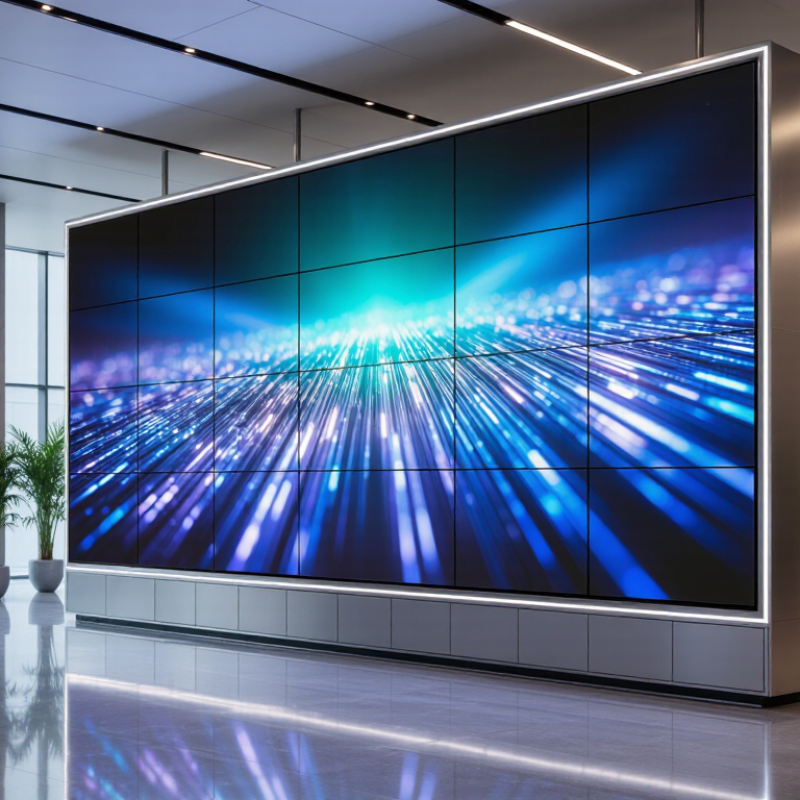
Indoor LED billboards are moving from premium showrooms into malls, airports, convention halls, and retail atriums. Grand View Research estimated the global LED display market at about USD 7.1 billion in 2023, with continued growth expected through 2030. Fortune Business Insights reported a comparable 2024 market estimate near USD 8.6 billion. Definitions differ, however. Some reports include rental screens and digital signage, so billboard figures require careful reading.
Demand is strongest where advertisers need bright, flexible visual communication. A 1.5 to 2.5 millimeter pixel pitch can deliver sharp images at close viewing distances. Many indoor projects also specify 800 to 1,200 nits, front-service access, and refresh rates above 3,840 hertz. These details reduce visible scanning lines during filming.
MarketsandMarkets linked LED display expansion to retail modernization, entertainment venues, and falling component costs. Installation experience shows another driver: modular cabinets can simplify repairs during busy operating hours.
Costs remain uneven. High-resolution screens, custom curves, and complex control systems can raise project budgets quickly. Energy use also deserves attention, especially in large atriums running twelve hours daily.
Industry forecasts are optimistic, but they are not perfectly aligned. This is important. Buyers should compare definitions, regional coverage, maintenance assumptions, and replacement cycles before trusting a growth percentage.
The market is expanding, yet demand does not guarantee every installation will deliver strong advertising returns.

For indoor LED billboards, the most useful comparison begins with pixel pitch, not cabinet size. At 0.9–2.5 mm, tighter pixels produce smoother text and cleaner faces at close viewing distances. However, 0.9 mm can be excessive in a lobby viewed from eight meters. It may increase cost without visible benefit. A site survey matters.
A 3,840 Hz refresh rate is another essential benchmark. It reduces scan lines and flicker captured by broadcast cameras or phone cameras. Installers should test moving content, not only static color bars. They should verify grayscale performance, brightness uniformity, and calibration across every cabinet. A bright screen is not necessarily a good screen. Ask for measured data, cabinet-level reports, and a repeatable test method.
Reliable manufacturers worldwide also disclose receiving-card architecture, module tolerances, service access, and thermal behavior. These details affect long-term image stability. During acceptance testing, inspect skin tones, small fonts, and dark gradients from several rows. Small defects show quickly. I would question claims made without viewing-distance guidance. Standards help, but installation practice decides the result. Even careful evaluations can miss heat buildup or uneven calibration after months of use. That uncertainty deserves a maintenance plan, spare modules, and documented recalibration intervals.
Indoor fine-pitch LED displays commonly span approximately 0.9–2.5 mm pixel pitch. Smaller pixel pitches provide a higher pixel-center density, while a 3,840 Hz refresh rate is widely used as a high-performance benchmark for smooth camera capture and motion reproduction.
Leading global manufacturers now compete through COB, SMD, and fine-pitch LED technologies. Their differences become clear during installation, calibration, and daily operation.
COB Panels place LED chips directly on the board. This structure improves surface protection and reduces visible gaps. It suits premium indoor spaces, including control rooms, museums, and executive lobbies. The front surface also feels more uniform under close viewing. However, repairs may require specialized tools and trained technicians.
SMD Remains widely used because it offers flexible pixel pitches and mature production processes. Many global factories provide cabinets for retail displays, conference halls, and broadcast studios. SMD modules can simplify maintenance when individual components need replacement. Yet, lower-quality assembly may create color differences between cabinets. Ask manufacturers for calibration data, cabinet tolerances, and long-term brightness testing. Do not trust peak brightness alone. Indoor viewers usually value stable color and comfortable brightness more.
Fine-pitch LED Products often use 0.9, 1.2, or 1.5 millimeter pixel spacing. They create sharper images from short viewing distances. This matters when viewers read charts, subtitles, or product details. Experienced manufacturers should explain refresh rate, grayscale performance, heat control, and service access clearly. During a factory review, inspect solder quality and cabinet alignment. Small defects become obvious on large walls. My own evaluation would not end there. Acoustic noise, power consumption, and spare-part availability deserve equal attention. Performance claims can look impressive, but field conditions are less forgiving.
Indoor LED billboard manufacturers should be compared through measured performance, not brochure brightness. For retail halls, airports, and broadcast spaces, 800–1,500 nits usually provides clear images under strong interior lighting. Higher brightness is not always better. It can cause glare, eye fatigue, and unnecessary energy use. The U.S. Department of Energy’s Solid-State Lighting reports emphasize that thermal management strongly affects LED performance and efficiency. Ask for calibrated brightness data, viewing distance, refresh rate, and power consumption.
Lifespan claims require closer inspection. Many manufacturers quote 100,000 hours, but that figure often refers to LED degradation under controlled conditions. LM-80 testing measures lumen maintenance, while TM-21 projects long-term performance from tested samples. Real installations face heat, dust, voltage variation, and continuous operation. A practical comparison should examine expected maintenance after 50,000–70,000 hours. That feels less impressive, but it is more useful.
Warranty terms reveal engineering confidence. A three-year warranty is common, while stronger suppliers may offer five years with module replacement and remote technical support. Check whether brightness loss, dead pixels, power supplies, and labor are included. Market research from Grand View Research identifies display reliability and service capability as major purchasing factors. I would not trust a ranking based only on nits. Factory test sheets can still miss installation problems. Ask for independent test records, thermal images, and references from comparable indoor venues.
Choosing top indoor LED billboard manufacturers requires more than comparing glossy product photos. Cost per square meter should include modules, cabinets, processing cards, installation, spare parts, and freight. Market research from MarketsandMarkets projects continued growth in the global LED display market through 2028, but prices still vary sharply by pixel pitch, refresh rate, cabinet material, and service terms. A credible quotation should state brightness, power consumption, warranty length, and replacement-unit pricing. Low bids often hide these details.
Certifications provide a practical safety filter. Buyers should verify electrical and electromagnetic compliance with IEC 62368-1 and EN 55032, while IEC 60529 supports claims such as IP-rated protection. Independent test reports matter more than printed logos. Capacity also needs measurable evidence. Ask for monthly output, aging-test records, quality-control sampling, and recent delivery references. A factory claiming thousands of square meters monthly should explain its assembly lines and inspection process. Numbers without evidence are weak.
Support can decide the real project cost. The 2024 AVIXA Industry Outlook emphasizes the continuing importance of service, integration, and lifecycle spending in professional AV projects. Require remote monitoring, response times, local technicians, firmware procedures, and spare-module availability. A five-year support plan may outweigh a modestly cheaper panel. Still, service promises are sometimes vague. Request them in writing, with named contacts and escalation rules. I would also test one cabinet before signing. It takes time, but prevents expensive surprises.

Since 1984, Thermostop has been a reputable manufacturer of Industrial Sectional Doors, Cold Storage Doors and Specialty Doors such as Impactable Breakaway doors, Acoustic Doors and Ballistic Doors.
Contact