China has become a major manufacturing base for industrial, commercial, and garage door systems. Its suppliers serve warehouses, factories, logistics parks, airports, and retail facilities worldwide. The real question is not simply, “Who offers the lowest price?” It is, “Who can deliver dependable performance in your operating environment?”
Industry reports show why this market deserves careful evaluation. Grand View Research and Fortune Business Insights have both reported steady growth in the global garage and industrial door sectors, driven by e-commerce logistics, warehouse construction, automation, and energy efficiency. Their market boundaries differ, however. That difference matters. A supplier listed as an overheaddoor manufacturer may focus on residential products, while another specializes in high-cycle industrial doors. Buyers should compare product categories, not marketing labels.
This guide examines leading China overhead door suppliers through practical evidence. It considers manufacturing experience, door-panel materials, motor and control systems, wind resistance, thermal performance, safety testing, customization, and after-sales support. Factory audits, sample inspections, and clear technical drawings remain valuable. Product photos are not enough. A reliable supplier should explain cycle ratings, replacement-part availability, installation tolerances, and warranty limits in writing. Certifications can support credibility, but they do not replace performance testing or customer references. Some rankings may still be imperfect because suppliers publish different data. That limitation deserves honest attention. A strong choice combines documented engineering capability, consistent quality control, responsive communication, and a realistic total cost—not merely an attractive quotation.
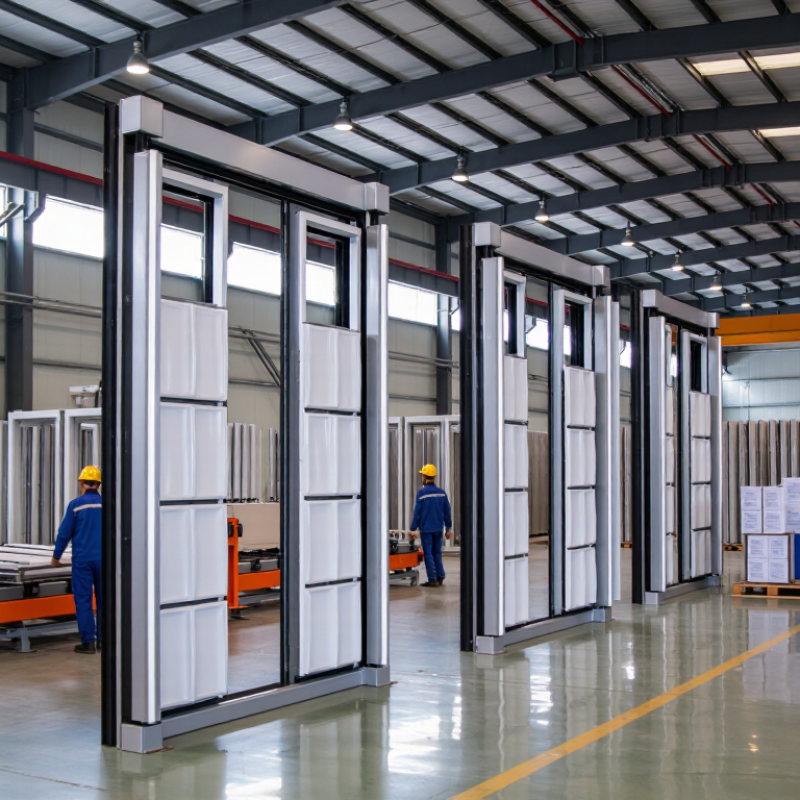
What defines an overhead door supplier in China? It is more than factory capacity or a polished catalog. A dependable supplier should control key processes, including steel forming, panel insulation, spring assembly, sealing, and final testing. This matters because Fortune Business Insights valued the global industrial doors market at about USD 7.2 billion in 2023, with continued growth expected through 2032. Rising demand increases competition, but not necessarily quality.
Technical evidence separates serious suppliers from traders. Ask for load calculations, cycle-life test results, wind-load ratings, thermal-transmittance data, and documented quality procedures. Suppliers serving cold storage, warehouses, and loading bays should explain how door speed, insulation, and sealing perform in real conditions. A factory audit can reveal details that brochures hide: uneven welding, poor gasket storage, or incomplete inspection records. Small details matter.
Export experience also defines capability. The supplier should provide clear drawings, installation manuals, spare-parts lists, and responsive engineering support. International Energy Agency reports that buildings account for roughly 30% of global energy demand, making insulated door design commercially important. Still, energy claims need verification. I would question any supplier promising dramatic savings without project measurements. Factory size helps, but traceable testing, honest limitations, and consistent after-sales communication matter more. Mistakes can happen. The response to them shows the supplier’s real professionalism.

Overhead doors serve different buildings, climates, and operating demands. Choosing the right type matters more than choosing the lowest quotation. China overhead door suppliers commonly provide sectional, rolling, high-speed, and specialized fire-rated systems.
Sectional doors use horizontal panels that lift along tracks. They suit warehouses, workshops, and loading bays with moderate traffic. Insulated panels help reduce heat loss in cold storage areas. Rolling doors need less ceiling space. They work well in retail units, parking structures, and industrial rooms. Their compact curtain rolls above the opening. High-speed doors open and close quickly. They support cleaner airflow and safer movement between busy production zones.
Fire-rated doors serve areas requiring compartment protection. They should match the building design and verified performance requirements. A site survey must check opening size, wind exposure, traffic frequency, and available headroom. Small details matter. For example, a dock door facing heavy rain may need better seals and drainage. A freezer door may require heated edges and suitable insulation.
In practice, door categories can overlap. A sectional door may also include vision panels, sensors, and emergency release features. Supplier documents should identify materials, cycle ratings, control systems, and maintenance intervals. I would not rely on attractive product images alone. Installation quality can affect safety, sealing, and service life. Some specifications look complete but omit local operating conditions. That gap deserves careful questioning before production begins.
When comparing China overhead door suppliers, begin with the factory, not the sales brochure. Ask for production photos, equipment lists, and a live video tour. Look for organized welding areas, sealed panel storage, and clear inspection records. A clean warehouse does not prove everything. It still reveals working habits.
Technical capability matters more than a low quotation. Compare panel thickness, insulation ratings, spring cycles, motor performance, and available door sizes. Request drawings before production starts. Confirm wind-load data and safety features for your installation site. Reliable suppliers should provide material certificates, test reports, and quality-control procedures. Check whether their products can meet the standards required in your market. Vague answers deserve caution.
Communication is another practical test. Ask one detailed question about lead time, spare parts, or warranty coverage. Measure the response for accuracy, not friendliness. Suppliers should explain packaging, loading methods, replacement procedures, and after-sales responsibilities. A written inspection plan can prevent expensive misunderstandings. Samples are helpful, but one sample cannot represent every production batch. This is easy to forget. Review payment terms, delivery records, and references from comparable projects. A supplier with strong engineering support may cost more initially, yet reduce fitting problems later. Do not select by price alone. That shortcut often becomes an installation problem.
| Evaluation Dimension | What to Compare | Objective Benchmark or Reference | Evidence to Request | Suggested Weight |
|---|---|---|---|---|
| Product Standard Compliance | Whether the proposed overhead door is designed and tested for the destination market. | For European projects, check EN 13241 and relevant EN 124xx performance test standards. For the United States, verify applicable requirements such as UL 325 for door operators and safety devices. | Declaration of Performance where applicable, test reports, technical file index, and conformity documentation. | 15% |
| Wind Load Performance | Resistance of the complete door assembly, including curtain or panels, guides, hardware, and fixings. | For EN-rated products, request the declared wind-load class under EN 12424. The required class should match the building location and project design wind pressure. | Wind-load test report, class declaration, design calculations, and installation requirements. | 12% |
| Safety Protection | Protection against crushing, shearing, impact, uncontrolled movement, and failure of lifting components. | The complete system should include tested safety edges, photoelectric protection where required, emergency release, mechanical restraints, and documented risk-control measures. | Safety circuit diagram, operator manual, risk assessment, test records, and replacement-part list. | 15% |
| Cycle Rating and Service Life | Expected operating cycles, duty classification, spring or counterbalance life, and maintenance requirements. | Compare the declared cycle rating of the complete door system rather than evaluating only the motor. Cycle figures must be supported by a written test method or manufacturer specification. | Cycle-test documentation, component life ratings, preventive-maintenance schedule, and failure-rate records if available. | 12% |
| Thermal Performance | Insulation level of the door leaf or curtain, seals, vision panels, and perimeter frame. | For European projects, compare the declared thermal transmittance value under EN 12428. A lower U-value indicates lower heat transfer, but the value must identify the tested door configuration. | Thermal test report, declared U-value, panel or curtain construction, and seal specifications. | 8% |
| Air and Water Tightness | Performance of side seals, bottom seals, panel joints, and head seals under pressure and rain exposure. | Where relevant, compare air-permeability and water-tightness classifications under EN 12426 and EN 12425. Requirements depend on building use and exposure. | Classification report, test pressure, door dimensions tested, seal drawings, and installation tolerances. | 8% |
| Material and Corrosion Protection | Steel or aluminum grade, panel coating, galvanized components, fasteners, and suitability for humid or corrosive environments. | Compare coating system, coating thickness, surface-treatment process, stainless-steel requirements, and environmental suitability instead of relying only on color or appearance. | Material certificates, coating specifications, salt-spray or corrosion-test reports where applicable, and finish samples. | 8% |
| Customization and Engineering Support | Ability to adapt dimensions, tracks, panels, windows, pedestrian doors, controls, colors, and mounting conditions. | The supplier should provide approved drawings showing opening dimensions, clearances, fixing points, electrical requirements, and interface conditions before production. | Shop drawings, dimensional tolerance schedule, electrical diagrams, load data, and engineering-change procedure. | 8% |
| Quality-Control System | Incoming-material inspection, in-process checks, final inspection, traceability, and nonconformance handling. | ISO 9001 certification can support process evaluation, but it should not replace product-specific inspection and performance evidence. | Valid certificate scope, inspection plan, sample inspection report, serial-number traceability, and corrective-action records. | 6% |
| Delivery and Production Control | Production capacity, confirmed manufacturing schedule, packaging method, export experience, and ability to meet project milestones. | Evaluate a written production schedule with drawing approval, material preparation, manufacturing, inspection, packing, and shipment dates shown separately. | Project schedule, factory capacity statement, packing specification, previous shipment records, and shipment inspection procedure. | 4% |
| Warranty and After-Sales Support | Warranty coverage, exclusions, response time, spare-parts availability, remote troubleshooting, and field-service capability. | The warranty should clearly distinguish the door structure, finish, motor, control system, safety devices, and consumable parts. Response obligations should be stated in writing. | Warranty terms, service-level procedure, spare-parts list, troubleshooting guide, and escalation contacts. | 4% |
Choosing among China overhead door suppliers requires more than comparing FOB prices. Verify the factory, not just the trading office. Ask for the business license, production address, equipment list, and recent project references. A live video audit should show cutting, welding, foaming, assembly, and final inspection. Look closely at door panels, seals, hinges, and surface coating. Small gaps often become large installation problems.
Request test reports from accredited laboratories, with clear product models and valid dates. Check requirements for the destination market, such as EN 13241 or UL 325-related safety provisions. The ISO Survey 2023 recorded 1,265,216 ISO 9001 certificates worldwide. Certification is useful evidence, but it does not prove every door performs well. Review corrective-action records, calibration files, batch traceability, and cycle-test results. Ask whether the reported test sample matches your ordered design.
Energy performance also deserves attention. The International Energy Agency’s Energy Efficiency 2023 report states that buildings consume about 30% of global final energy. A supplier should provide panel U-values, seal details, and evidence supporting those figures. Visit the factory if possible. Observe storage conditions, worker training, and how rejected parts are handled. No checklist is perfect. A polished audit file can still hide weak process control, so independent pre-shipment inspection remains a sensible cost.
Selecting the best China overhead door supplier starts with your project conditions, not a polished catalog. Measure the opening width, height, headroom, cycle frequency, wind exposure, and indoor temperature. A warehouse door used 100 times daily needs different hardware from a small service garage door. Write these details into a technical request.
Ask each supplier for drawings, material grades, motor specifications, safety features, and installation requirements. Request test records that match the proposed door, not a similar model. Check whether panels, springs, seals, and control parts are available for future maintenance. Clear answers matter. Vague promises do not.
Experience should be verified through completed projects, factory inspection records, and practical references. Speak with previous buyers when possible. Review how the supplier handles damaged cargo, replacement parts, and technical questions after delivery. Get warranty terms in writing, including response times and exclusions. A very low quotation may hide thinner panels, weaker springs, or incomplete installation support. That risk deserves attention.
Do not judge quality from photographs alone. Ask for a sample, detailed finish description, and packaging images. Confirm production checkpoints before shipment, including dimensions, balance, sensor operation, and surface protection. I would also compare delivery schedules carefully; rushed production can create avoidable errors. My own preference is a supplier who admits limitations and documents corrections. That feels less impressive, but usually more dependable.

Since 1984, Thermostop has been a reputable manufacturer of Industrial Sectional Doors, Cold Storage Doors and Specialty Doors such as Impactable Breakaway doors, Acoustic Doors and Ballistic Doors.
Contact