Why Is My Opendoor Garage Door Not Working? This question often begins with a silent wall button, a blinking opener light, or a door that stops halfway. The cause may be simple, such as a disconnected power cord. It may also involve worn rollers, broken springs, damaged cables, or misaligned safety sensors. Each symptom tells part of the story. None should be ignored.
Tom Wadsworth, a veteran garage-door educator, says, “A garage door problem should be diagnosed, not guessed at.” That principle matters when an opendoor garage door refuses to move. Stand inside the garage and check whether the opener hums. Watch the photo-eye sensors near the floor. One may be blocked by a box, dust, or a child’s toy. Try the wall control, then the remote. The results can narrow the problem quickly. Small details matter.
Do not pull loose cables or adjust spring hardware. Those parts store significant tension. A professional technician can test balance, travel limits, sensors, and opener force safely. If the door feels unusually heavy, stop using it. That detail may point toward a spring failure.
A reset sometimes works. It can also hide the real fault. That is easy to miss. This guide will examine common causes, practical checks, and warning signs that require expert service. It will not treat every failure as an opener problem. The door, track, hardware, and electrical controls must be considered together. Reliable troubleshooting begins with observation, patience, and a willingness to question the first assumption.
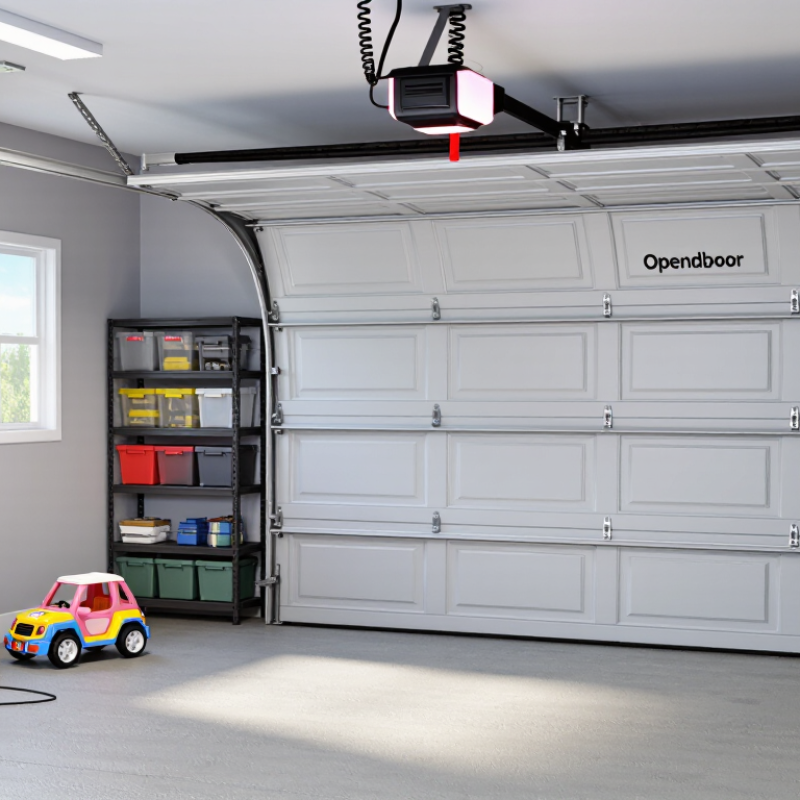
When a garage door stops responding, check power before blaming the motor. Look at the wall outlet, circuit breaker, and opener light. A dark control panel may indicate a tripped breaker or disconnected power cord. Test the remote with fresh batteries, then stand close to the opener and press the button. If the wall switch works but the remote does not, reprogramming may be needed.
UL 325 emphasizes two safety systems for residential garage door openers. The photoelectric sensors sit near the floor on both sides of the opening. Their small lenses should face each other, remain clean, and show steady indicator lights. A misplaced box, cobweb, or bent bracket can interrupt the beam. Wipe the lenses gently. Do not bypass them.
The second system is automatic force reversal. Place a flat piece of wood beneath the closing door and test only if the manual allows it. The door should reverse after contact. If it keeps pressing down, stop using the opener and arrange a qualified inspection. Springs and cables store serious energy. I have seen owners replace remotes when a misaligned sensor caused the real failure. That mistake is easy to make. Also, the sensor lights can appear normal while wiring remains loose, so inspect the connections carefully.
A garage door that stops halfway may have a simple safety issue. The photo eyes, mounted near the floor, send an invisible beam across the opening. Dust, leaves, or a small bump can interrupt it. Clean both lenses with a soft, dry cloth. Then check that they face each other and show steady indicator lights. Do not adjust wiring while the opener has power.
Test the photo eyes monthly, as recommended by the U.S. Consumer Product Safety Commission. Stand clear of the moving door and press the close button. Break the beam with your hand. The door should stop or reverse. Never test with your body underneath. That mistake can cause serious injury.
The auto-reverse system also needs a monthly check. Place a solid, flat object about 1.5 inches high on the floor beneath the door. Close the door using the wall control, not a remote from inside a vehicle. It should touch the object and reverse quickly. If it does not, stop using the opener and contact a qualified technician. I once found that a door passed the photo-eye test but failed this pressure test. Both systems matter. A weak spring, damaged track, or unusual grinding sound also requires professional inspection. Don’t guess.
A nonworking garage door often shows warning signs before it stops. Listen for a sharp snap, grinding rollers, or a motor that hums without movement. Check whether the door sits unevenly when closed. A tilted panel can indicate a loose cable, damaged spring, or obstructed track.
Torsion and extension springs commonly carry a rating near 10,000 cycles. One cycle means opening and closing once. Heavy daily use can reach that limit sooner than expected. Springs may still look intact while losing tension. That can make the door rise slowly or drop suddenly. Never adjust or remove a loaded spring without proper training.
Inspect the cables for fraying, rust, or gaps around the drums. Examine both tracks for dents, loose bolts, and packed debris. The rollers should move smoothly, not jump at each joint. I once blamed the motor for a stubborn door, but a bent track was the real problem. My first inspection missed it. That mistake matters because repeated operation can worsen alignment. Disconnect power before checking sensors or hardware, and keep hands away from moving sections. If a spring is broken, a cable has slipped, or the door feels unusually heavy, contact a qualified technician. Some repairs look simple. They are not.
A smart garage door opener that will not work needs a safety check before any reset. Inspect the tracks, rollers, cables, and springs from a safe distance. Do not touch a loose cable or broken spring. Pull the emergency release only when the door is fully closed. Then test the photo-eye sensors with a small cardboard box. The door should reverse when it contacts the box. The U.S. Consumer Product Safety Commission reports thousands of garage-door-related injuries each year, so a reset should never replace inspection.
If the door moves unevenly, reset its travel limits after confirming the path is clear. Hold the program button until the indicator changes, then set the fully open and fully closed positions. Follow the unit’s manual because button sequences differ. Adjust force only in small steps. Excessive force can hide a mechanical problem and create a serious hazard. I have sometimes blamed the opener too early; a dry roller or shifted track was the real cause. That mistake is worth remembering.
For Wi-Fi failure, confirm the opener has power and your phone is using the correct network. Many units require a 2.4 GHz connection during setup. Reset the network settings, reconnect near the router, and update the control application. A flashing status light usually indicates pairing mode, not a motor failure. UL 325 safety requirements emphasize monitored reversal protection, so never bypass sensors for convenience. If limits, force, or sensor tests keep failing, contact a qualified garage-door technician.
| Check or Symptom | Likely Cause | Safe Basic Test | Recommended Action | Typical Result or Timing |
|---|---|---|---|---|
| No lights or response | Power interruption, tripped circuit, loose plug, or failed control board | Confirm the outlet works with a lamp or other low-risk appliance. Check the breaker without opening electrical panels. | Restore power if safe. Do not bypass a breaker that trips again; arrange qualified service. | Indicator lights commonly return immediately after stable power is restored. |
| Door will not move | Locked door, manual release engaged, obstruction, or broken spring/cable | Inspect the door path from a safe distance. Check whether the manual-release cord has been pulled. Do not handle springs or cables. | Remove only loose objects from the path. Re-engage the trolley only if the door is closed and the mechanism moves normally. | A damaged spring, frayed cable, or visibly crooked door requires professional repair. |
| Remote control does not work | Weak battery, excessive distance, interference, or lost programming | Try the wall control first, then test the remote within a few feet of the opener. Replace the battery with the correct type. | Reprogram the remote according to the opener's instructions if the wall control works but the remote does not. | A fresh battery should produce a response immediately when the remote is properly programmed. |
| Door reverses or closes only partway | Misaligned photo-eyes, blocked safety beam, incorrect travel limit, or excessive resistance | Clean both sensor lenses and confirm they face each other. Check for blinking indicators or objects crossing the beam. | Realign the sensors and clear the opening. Never tape, bypass, or disconnect safety sensors. | Many systems show steady sensor indicators after alignment; allow several seconds for status updates. |
| Door stops at the wrong position | Travel limits were lost after a power event, adjustment, or control reset | Verify the door moves freely by hand with the opener disengaged and the door closed. Stop if it is heavy, uneven, or jammed. | Use the opener's limit-setting procedure to relearn the fully open and fully closed positions. | Limit learning usually takes one complete open-and-close cycle, but procedures vary by model. |
| Motor strains, hums, or reverses under load | Excessive door friction, imbalance, obstruction, or an incorrect force setting | With the opener disconnected and the door closed, a qualified adult may check whether the door lifts smoothly by hand. Do not force it. | Remove minor obstructions. If the door is heavy or binds, contact a trained technician before changing force settings. | Force adjustments should be minimal; repeated reversal indicates a mechanical or safety issue. |
| Force setting needs to be relearned | Controller reset, changed door resistance, or interrupted setup sequence | Confirm the travel path is clear and the door is properly balanced before starting any automatic force-learning routine. | Run the model-specific force or protection calibration. Keep people, pets, and vehicles away from the opening. | Calibration commonly requires two or more controlled cycles and may erase previous settings. |
| Wall control works intermittently | Loose low-voltage wiring, damaged cable, button failure, or control-board fault | Look for visible damage or loose wall-control trim without removing covers or touching terminals. | Stop using the control if wiring is exposed. Have the low-voltage circuit inspected and repaired. | An intermittent command is not considered a reliable operating condition. |
| Wi-Fi or app shows offline | Router outage, weak signal, changed network credentials, or lost opener pairing | Confirm another device can access the home network. Move the router or access point closer only if practical and safe. | Restart the network equipment, then place the opener in Wi-Fi setup mode and reconnect using the current network details. | Network recovery may take several minutes after a router restart or pairing reset. |
| Wi-Fi reset is required | Saved wireless credentials are outdated or the opener changed networks | Record the current network name and password before beginning. Keep the physical wall control available. | Use the designated Wi-Fi reset or setup control; avoid a full factory reset unless the manual specifically requires it. | A Wi-Fi reset can remove remote access while leaving mechanical travel settings unchanged. |
| Safety reversal test fails | Faulty sensors, excessive closing force, incorrect limits, or damaged door components | After normal operation is restored, place a solid test object of suitable height under the closing path only as specified by the manual. | Stop using the opener until the reversal function passes. Do not rely on manual intervention to prevent injury. | The door should reverse promptly upon contact or sensor detection, according to the model's instructions. |
| When to stop troubleshooting | Broken spring, frayed cable, bent track, burning odor, repeated breaker trips, or uncontrolled movement | Keep the area clear and disconnect the opener only if doing so does not require contact with damaged components. | Secure the door from use and contact a qualified garage-door professional or electrician as appropriate. | Do not adjust springs, cables, drums, or high-voltage components without proper training and equipment. |
A silent garage door can have a simple cause. Check whether the opener has power. Inspect the wall switch, remote batteries, and circuit breaker. Look at the photo eyes near the floor. They should face each other and remain free of dust, leaves, or stored boxes. A small obstruction can stop the door immediately. If the motor hums but the door stays still, stop testing it. The problem may involve the lifting system.
Torsion and extension springs carry extreme tension. A broken spring may leave a visible gap, a hanging cable, or a heavy door that will not lift. DASMA warns homeowners against adjusting, removing, or replacing these springs without proper training. One wrong movement can release stored energy and cause severe injuries.
I once saw a homeowner tighten a loose component because it looked harmless. It was not. Visual checks can help, but they cannot confirm safe spring tension. Do not pull red release cords while the door is raised. The door could fall unexpectedly.
Keep children away, avoid touching cables, and contact a qualified garage door technician. Ask for a written inspection and a clear explanation of the failed part. A careful professional should secure the door before working and test its balance afterward. Even experienced owners can misjudge a spring problem.

Since 1984, Thermostop has been a reputable manufacturer of Industrial Sectional Doors, Cold Storage Doors and Specialty Doors such as Impactable Breakaway doors, Acoustic Doors and Ballistic Doors.
Contact