2026 Top Sectional Overhead Door Suppliers for Global Buyers

Global buyers are entering a more demanding sectional overhead door market. Warehouses need faster cycles, tighter seals, and safer daily operation. Retail facilities often prioritize appearance, insulation, and limited maintenance. Agricultural buildings may require corrosion resistance and flexible ventilation options.

Market evidence supports this demand. Grand View Research identifies the broader global garage door market as a multi-billion-dollar industry, with growth linked to construction, replacement demand, and automation. Fortune Business Insights also reports steady expansion through the early 2030s. These reports cover more than sectional overhead door systems, so their figures should not be treated as exact segment values. That limitation matters.

Technical guidance from the Door and Access Systems Manufacturers Association emphasizes correct sizing, balanced components, safety devices, and professional installation. Tom Wadsworth, a recognized door and access systems educator, has repeatedly stressed this practical principle: “A door is only as good as its installation.” Buyers should remember it. A premium panel can still fail when tracks, springs, seals, or controls are poorly matched.

This 2026 supplier overview compares manufacturers through a buyer’s lens. It considers product range, thermal performance, cycle ratings, customization, certifications, service coverage, and replacement-part availability. It also examines factory experience and export support. A polished catalog is not enough. Ask for test data, installation guidance, warranty terms, and references from similar facilities.

Some supplier information changes quickly. Pricing varies by region, steel costs, freight, and project specifications. The rankings therefore require judgment, not blind acceptance. Real performance begins with a suitable door, installed correctly, maintained consistently, and supported after delivery.
2026 Top Sectional Overhead Door Suppliers for Global Buyers

Types of Sectional Overhead Door Suppliers in 2026

In 2026, sectional overhead door suppliers fall into four practical groups: manufacturers, regional fabricators, distributors, and installation integrators. Manufacturers offer controlled production, tested panels, and wider customization. Fabricators may respond faster with local dimensions and materials. Distributors often provide broader product access, spare parts, and export paperwork. Integrators combine doors, openers, sensors, and maintenance services for warehouses or logistics sites.

The choice should match the project, not only the price. MarketsandMarkets’ 2024 Industrial Doors Market report forecasts roughly 6% annual growth through the forecast period, supported by logistics and industrial construction. Fortune Business Insights also reports steady growth in the global garage door market. These figures suggest stronger demand, but they do not guarantee supplier quality. IEA Buildings data shows buildings use about 30% of global final energy. Insulated door panels, tight seals, and correct installation therefore deserve serious attention. I have seen specifications look excellent on paper, yet fail around weak bottom seals. Details matter.

Tips: Ask for test reports, thermal values, cycle ratings, warranty terms, and recent export references. Confirm compliance with local rules, including relevant EN or UL requirements. Compare delivered cost, not the factory price. No supplier type is perfect. A regional installer may understand the site better, while a large manufacturer may offer stronger testing. Leave room for review after installation. Real performance can differ from brochures.
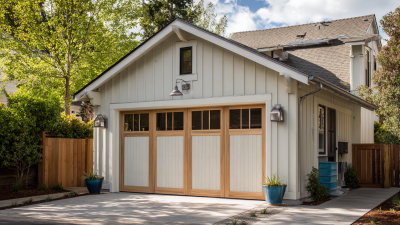
Key Features and Applications of Sectional Overhead Doors

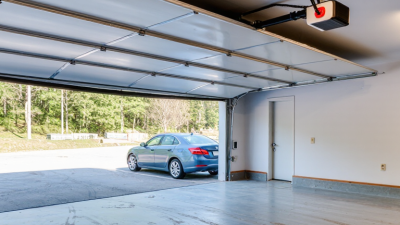
Sectional overhead doors combine guided movement, compact storage, and adaptable protection. Their panels rise vertically, then travel along ceiling tracks. This design preserves valuable floor space. According to Grand View Research, the global garage door market was valued at about USD 3.2 billion in 2023, with commercial and industrial upgrades supporting continued demand. Sectional systems serve warehouses, workshops, loading areas, and fire stations.

Insulated panels can improve temperature control in climate-sensitive buildings. The U.S. Department of Energy reports that air leakage may account for 25% to 40% of heating and cooling energy use in some buildings. A properly sealed door can reduce drafts around busy openings.

However, performance depends on panel thickness, seals, installation quality, and operating frequency. The door is only one part of the envelope.

Safety deserves equal attention. EN 13241 requires industrial, commercial, and garage doors to meet defined safety and performance requirements in relevant European applications. Buyers should examine photoelectric sensors, emergency release systems, wind resistance, cycle ratings, and spare-part availability.

A 2024 report from Fortune Business Insights places strong growth expectations on automated access systems, driven by logistics and warehouse expansion. Yet automation is not always better. Poorly trained users, weak maintenance routines, and incorrect track alignment can create avoidable downtime. Field experience suggests that a simple inspection record often prevents expensive repairs. Suppliers should provide tested specifications, clear installation documents, and service support suited to the building’s climate and traffic pattern.

How to Evaluate Suppliers for Global Purchasing

Selecting sectional overhead door suppliers for global purchasing requires more than comparing online prices. A polished website proves little. Ask for factory photographs, production records, and recent export references. Request technical drawings showing panel thickness, insulation value, hardware, spring rating, and maximum opening size. Ask for evidence.

A capable supplier should explain how its doors perform in different climates. Check corrosion protection for humid ports, sealing performance for cold warehouses, and wind-load data for exposed buildings. Review testing reports and compliance documents against the destination market’s applicable standards. Independent pre-shipment inspection can verify dimensions, surface quality, packaging, and accessories before payment. Small details matter. The wrong crate design can damage panels during a long sea journey.

Reliability also appears in ordinary communication. Does the supplier answer technical questions clearly, or only repeat sales language? Confirm production lead times, spare-part availability, installation guidance, warranty limits, and after-sales response times in writing. A video call can reveal whether engineers understand the drawings. Speak with previous buyers when possible, not only the references selected by the supplier. I have seen low quotations become expensive after missing hardware, unclear tolerances, or delayed replacement parts. Still, no evaluation method is perfect; factory audits can miss seasonal capacity problems. Keep a written comparison sheet, record every assumption, and leave room for a second technical review before placing a large order.

International Standards, Certifications, and Compliance Requirements

2026 Top Sectional Overhead Door Suppliers for Global Buyers

International Standards, Certifications, and Compliance Requirements

Global buyers should treat compliance as a specification, not a paperwork exercise. ISO’s 2023 Survey recorded 1,265,216 ISO 9001 certificates worldwide, showing how widely documented quality systems are used. However, ISO 9001 does not certify door safety or installation performance. Buyers still need product-specific evidence, factory records, and traceable testing.

For European projects, sectional overhead doors generally require conformity with EN 13241, covering safety and performance requirements. Machinery-related risks may also involve EN 12453, especially for powered doors and control systems. North American projects often reference ANSI/CAN/UL 325, alongside applicable building and electrical codes. Accredited laboratories should verify force limitation, emergency release, cycle endurance, wind resistance, and fire-related claims. Ask for test reports, not only certificates.

Energy performance also deserves attention. A 2024 industrial-door market analysis identified energy efficiency and automated safety as major purchasing drivers. Thermal breaks, insulated panels, and properly sealed guides can reduce heat loss around loading areas. Small gaps matter. They become expensive gaps over time. Yet buyers sometimes compare U-values from different test methods, which creates unreliable conclusions. Suppliers should state the testing standard, sample size, configuration, and installation conditions. Certification logos can look convincing, but they may not cover the exact door model, motor, or control package being supplied.

2026 Top Sectional Overhead Door Suppliers for Global Buyers

International Standards, Certifications, and Compliance Requirements

The chart shows the wind-pressure values associated with Classes 1–8 under EN 12424, a commonly referenced European classification for industrial, commercial, and sectional overhead doors. Buyers should match the required class to the building location, exposure category, structural design, and local project specifications.

For international sourcing, also verify product conformity with EN 13241 where applicable, operator and entrapment requirements such as UL 325 in North America, and supplier quality-management certification such as ISO 9001. These standards and certifications address different compliance areas and should not be treated as interchangeable.

Comparison Criteria for Selecting the Right Supplier

Selecting a sectional overhead door supplier requires more than comparing catalog prices. Global buyers should examine product experience, testing records, and after-sales support together.

Ask for evidence of cycle testing, wind-load performance, insulation values, and corrosion resistance. A reliable supplier can explain test conditions, not only display attractive figures. Request drawings showing panel thickness, track dimensions, spring specifications, and safety-device locations. These details help engineers check compatibility before installation. They also expose weak documentation.

Delivery performance deserves close attention. Compare production lead times, packaging methods, spare-part availability, and communication across time zones. A supplier should provide clear warranty terms and practical installation guidance. Training videos, labeled hardware, and responsive technical staff can prevent expensive site delays. However, a low quoted price may exclude crating, inland transport, customs handling, or replacement parts. Calculate the landed cost carefully.

Evaluate the supplier’s manufacturing experience through completed project references and quality-control records. Ask how defects are reported and corrected. This question often reveals more than a polished brochure. No scorecard is perfect. A supplier may excel in engineering but struggle with urgent communication. Another may respond quickly but lack consistent production control. Record findings in a shared comparison table, then verify critical claims with samples, inspection reports, and a small trial order.

2026 Top Sectional Overhead Door Suppliers for Global Buyers - Comparison Criteria for Selecting the Right Supplier

Comparison Dimension Recommended Benchmark for Global Buyers Evidence to Request Why It Matters Suggested Weight
Product scope Residential, commercial, industrial, insulated and non-insulated sectional overhead door options Current product catalogue, technical drawings and application matrix A broader range can reduce redesign, sourcing and installation risks across different projects. 8%
Applicable standards Products supported by relevant market requirements, such as EN 13241, CE-related documentation where applicable, UL-based requirements, or local building codes Declaration of Performance, conformity documents, test reports and installation instructions Compliance documents are essential for customs clearance, permitting, insurance and project acceptance. 15%
Wind-load performance Documented wind-resistance classification or structural calculations matched to the installation region Wind-load test reports, pressure calculations and anchoring details Wind exposure varies substantially by geography, building height and opening size. 12%
Thermal performance Insulated panels with declared U-value or R-value, continuous seals and thermally suitable glazing options Panel construction details, thermal test data and seal specifications Thermal performance affects energy consumption, condensation control and indoor comfort. 10%
Cycle life and hardware durability A clearly stated spring, roller, hinge and operating-cycle rating appropriate to the intended usage frequency Cycle-test records, maintenance schedule and replacement-part specifications Commercial and industrial users may operate doors many times per day, making life-cycle cost more important than purchase price alone. 12%
Customization capability Made-to-order dimensions, panel thickness, colours, windows, wicket doors, tracks and lifting configurations Engineering drawings, sample approvals and documented tolerance limits Non-standard openings and local architectural requirements often determine installation success. 10%
Quality management Documented incoming inspection, in-process checks, final inspection and traceability procedures; ISO 9001 certification is a useful reference point Valid certificate, inspection checklist, non-conformance procedure and batch records Consistent quality reduces field failures, claims and replacement costs. 10%
Export and packaging capability Experience with container loading, moisture protection, export documents and damage-controlled packaging Packing list, loading photos, packaging specification and previous export references Doors contain long panels and delicate hardware that require careful handling during international transport. 8%
Lead time and supply capacity A written production schedule, realistic capacity confirmation and defined delivery milestones for standard and customized orders Production plan, capacity statement, order-status process and historical on-time delivery data Reliable scheduling is critical when doors are linked to building handover or installation dates. 8%
After-sales and spare parts Multi-year warranty terms, illustrated parts lists, technical support and replacement components available after shipment Warranty policy, spare-parts price list, response-time commitment and service escalation process Local service limitations make remote technical support and parts availability especially important for overseas buyers. 5%
Total-cost competitiveness Evaluate total landed cost rather than unit price: product, packaging, freight, duties, installation, maintenance and expected replacement costs Itemized quotation, Incoterms, freight assumptions, duty classification and maintenance estimate A lower initial quotation may be offset by higher logistics, installation or life-cycle expenses. 10%
Total Evaluation Weight 100%

Note: The benchmarks above are supplier-selection criteria rather than claims about any specific manufacturer or brand. Buyers should verify all technical values, certifications, delivery commitments and commercial terms against project-specific requirements.