Choosing the best original overhead door in 2026 requires more than comparing prices or panel designs. Performance begins with the opening itself.
Recent guidance from the Door and Access Systems Manufacturers Association (DASMA) emphasizes correct installation, counterbalance safety, wind resistance, and tested hardware. Grand View Research’s 2024 garage-door market analysis also identifies insulation, automation, and durability as major purchasing factors. These trends matter in real buildings. A steel door may suit a busy warehouse, while an insulated sectional door may better protect a temperature-sensitive garage. Coastal properties need corrosion resistance. High-wind regions need documented pressure ratings, not attractive promises.
Climate changes the decision.
Tom Wadsworth, a veteran garage-door consultant and industry educator, has stated, “The best garage door is the one matched to the opening, the climate, and the owner’s habits.” That principle is easy to overlook. A high-R-value door cannot compensate for poor weather seals. A powerful opener cannot fix an incorrectly balanced door. The 2024 International Energy Conservation Code also reinforces the importance of practical thermal performance in building design, although requirements vary by location.
This guide examines steel, aluminum, wood, glass, insulated, and custom original overhead door options for 2026. It considers safety testing, maintenance, energy behavior, wind exposure, noise, and long-term value. Some recommendations remain imperfect. Product labels can simplify complex performance claims. Independent verification is still necessary. The best choice is rarely the most expensive door. It is the door that performs reliably in the conditions you actually face.
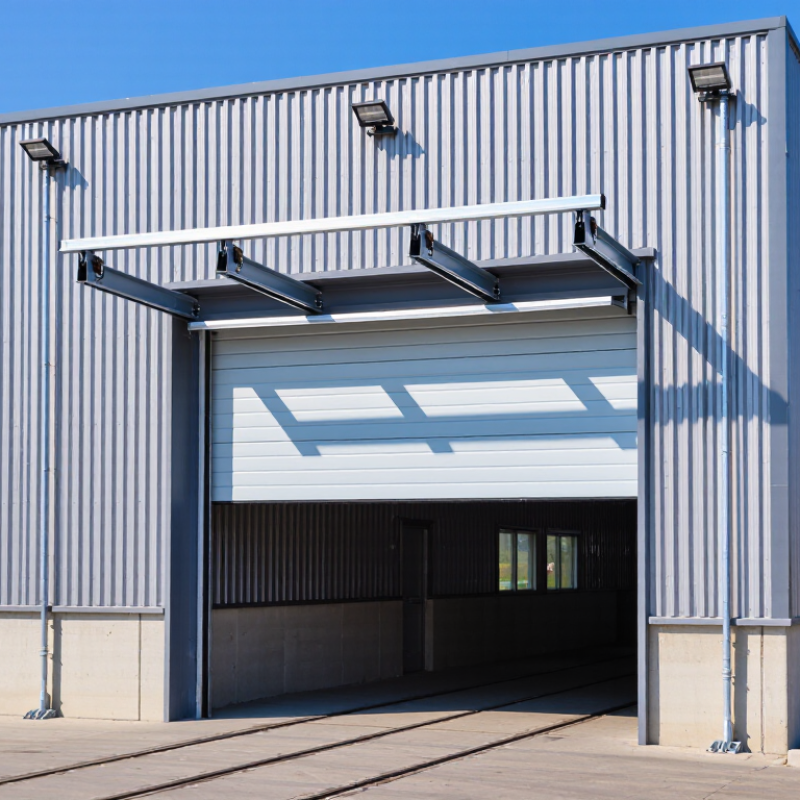
What Is the Best Type of Original Overhead Door in 2026?
An original overhead door in 2026 is more than a traditional panel that lifts above a garage. It is a complete, traceable system designed for one opening. Measurements, panel construction, tracks, counterbalance hardware, seals, and controls must work together. The door should fit the building’s wind exposure and daily traffic. It should also include clear installation records and service instructions.
Energy performance now matters. The U.S. Energy Information Administration’s 2020 Residential Energy Consumption Survey reports that space heating used about 42% of household energy. A poorly sealed overhead door can add cold drafts near the floor. Look for insulated panels, continuous perimeter weather seals, and a tight bottom seal. These details are small. Their effects are not. Yet insulation ratings alone can mislead when joints remain uneven or hardware causes binding.
Value matters, too. The 2024 Cost vs. Value Report recorded about 194% cost recoupment for garage door replacement. That figure supports careful selection, not automatic spending. A durable original system should open smoothly, resist corrosion, and permit practical part replacement. Cycle testing and documented safety checks strengthen reliability. Still, “best” is not universal. A coastal property needs different protection than a dry inland workshop. I would question any specification that ignores local weather, opening size, and actual use. Overhead doors are mechanical systems, and even excellent designs need inspection.
An original overhead door is a door that opens upward and stores above or along the ceiling instead of swinging outward. In 2026, the best type depends on opening size, available headroom, insulation needs, operating frequency, security requirements, and local wind or fire regulations.
| Door Type | Defining Construction | Typical Applications | Insulation Potential | Space and Headroom Needs | Operational Strengths | Key Limitations | Best 2026 Use Case |
|---|---|---|---|---|---|---|---|
| Insulated Sectional Overhead Door | Multiple hinged horizontal panels travel on vertical tracks and then move across the ceiling. Panels commonly use steel skins with a foam core. | Residential garages, workshops, warehouses, loading areas, and temperature-controlled buildings. | Can provide strong thermal performance when the panels, perimeter seals, and bottom seal are properly specified. |
Requires ceiling tracks and adequate clearance above the opening. Vertical-lift and high-lift configurations can reduce interference with interior space. | Good balance of insulation, security, appearance, repairability, and everyday operating performance. | Tracks, rollers, hinges, and springs require periodic inspection. Damaged panels can affect alignment and sealing. | Best overall choice for most buildings that need dependable daily use and meaningful thermal control. |
| Non-Insulated Sectional Overhead Door | Hinged overhead panels, usually formed from single-layer or lightly reinforced metal sections without a substantial thermal core. | Detached garages, unconditioned storage areas, agricultural buildings, and low-cost utility spaces. | Performance depends mainly on panel construction and the quality of the perimeter seals. |
Uses standard overhead tracks and normally needs similar ceiling clearance to an insulated sectional door. | Lower initial weight and cost, straightforward operation, and broad availability in common opening sizes. | Offers less protection against heat transfer, outdoor noise, and condensation than an insulated design. | Best when the building is unconditioned and purchase cost is more important than energy performance. |
| Rolling Steel Door | Interlocking or single-skin metal slats coil into a barrel above the opening rather than moving across ceiling tracks. | Commercial storefronts, service bays, parking structures, warehouses, and secure storage areas. | Insulated slat options are available, but thermal performance varies considerably by curtain design and side seals. |
Needs overhead barrel space but can preserve more ceiling area than a sectional door. Side-room requirements depend on the guides and operator. | Strong security, compact storage, durability, and suitability for frequent commercial use. | Often provides less daylight, visibility, and thermal sealing than a well-insulated sectional door. Slats and guides need cleaning and inspection. | Best where security, compact overhead storage, and resistance to heavy use are priorities. |
| Rolling Grille or Perforated Overhead Door | Open-pattern metal curtain rolls into a head assembly, allowing airflow and visibility while restricting access. | Retail security openings, parking facilities, transit areas, and interior commercial partitions. | Designed primarily for visibility, ventilation, and security rather than weather separation. |
Requires a head assembly above the opening and guide space at both sides. | Provides visual openness, airflow, controlled access, and efficient storage above the opening. | Does not provide the weather barrier or sound reduction of a solid insulated curtain. | Best for interior or semi-enclosed locations where visibility and ventilation are more important than insulation. |
| Tilt-Up or One-Piece Overhead Door | A single rigid slab pivots upward and rests partly outside or inside the building when open. | Older residential garages, small storage buildings, and selected low-cycle applications. | Can be insulated, although the single-panel design may produce less flexible sealing at the joints. |
Needs clear swing space in front of the opening and sufficient interior clearance for the pivoting slab. | Simple appearance, fewer panel joints, and relatively uncomplicated construction. | Requires more exterior and interior swing clearance and is generally less adaptable to high-cycle commercial use. | Best for low-frequency use where a simple single-panel design fits the building geometry. |
| High-Speed Fabric or Flexible Door | A lightweight flexible curtain travels vertically or horizontally through guided tracks and is designed for rapid cycling. | Industrial production areas, cold-storage zones, clean areas, distribution centers, and internal traffic openings. | Can reduce air exchange through rapid opening and closing, although performance depends on seals and operating conditions. |
Usually requires limited storage space, but the required headroom and side-room vary by curtain and track arrangement. | Very fast cycling, reduced waiting time, improved traffic flow, and lower exposure between adjoining zones. | Not normally intended as the primary high-security exterior barrier. Flexible curtains can require replacement after impact or severe wear. | Best for high-traffic internal openings where speed, workflow, and environmental separation are critical. |
| Fire-Rated Rolling Door | A rolling metal curtain with tested fire-resistance performance and a release or closing system activated by specified fire conditions. | Fire-separated walls, commercial kitchens, industrial facilities, parking structures, and code-regulated openings. | Its main function is fire compartmentation; thermal and air-sealing performance are secondary unless separately specified. |
Requires a compatible head assembly, guides, clearances, and installation that matches the tested assembly. | Can help limit the spread of fire through a rated opening when correctly selected, installed, inspected, and maintained. | Must match local code requirements and the tested wall-and-door assembly. It may close automatically during an emergency. | Best when fire separation is a statutory or life-safety requirement rather than an optional feature. |