What Are the Top Garage Door Manufacturers Worldwide?

A garage door is more than a front-facing design feature. It is a moving barrier, a daily access point, and a major security component. Worldwide manufacturers compete through insulation, spring systems, smart controls, weather resistance, and service networks. Yet brand reputation alone does not prove long-term value.

Tom Wadsworth, a respected door-and-access-systems educator, describes the product simply: “A garage door is a moving wall.” That idea matters. A homeowner may open the door four times daily, through heat, rain, dust, and freezing temperatures. Small weaknesses can become expensive repairs. The best manufacturers therefore combine tested engineering with clear installation guidance, replacement-part availability, and responsive support.

This guide examines the top garage door manufacturers worldwide through practical criteria. These include product durability, safety features, design range, energy performance, warranty clarity, and regional availability. It also considers independent certifications and installer experience, where reliable information exists. Market rankings are not perfectly objective. A leading brand in North America may have limited reach in Asia or Europe. Even a well-built door can perform poorly after careless installation.

That part is often overlooked.

Readers should compare models, not only logos. Steel thickness, panel construction, track quality, opener compatibility, and local service can change the ownership experience. Prices also vary sharply between markets. This overview aims to separate marketing language from useful evidence, while recognizing one limitation: manufacturer data naturally presents the strongest side of each brand.
What Are the Top Garage Door Manufacturers Worldwide?

What Defines a Leading Garage Door Manufacturer?

What Are the Top Garage Door Manufacturers Worldwide?

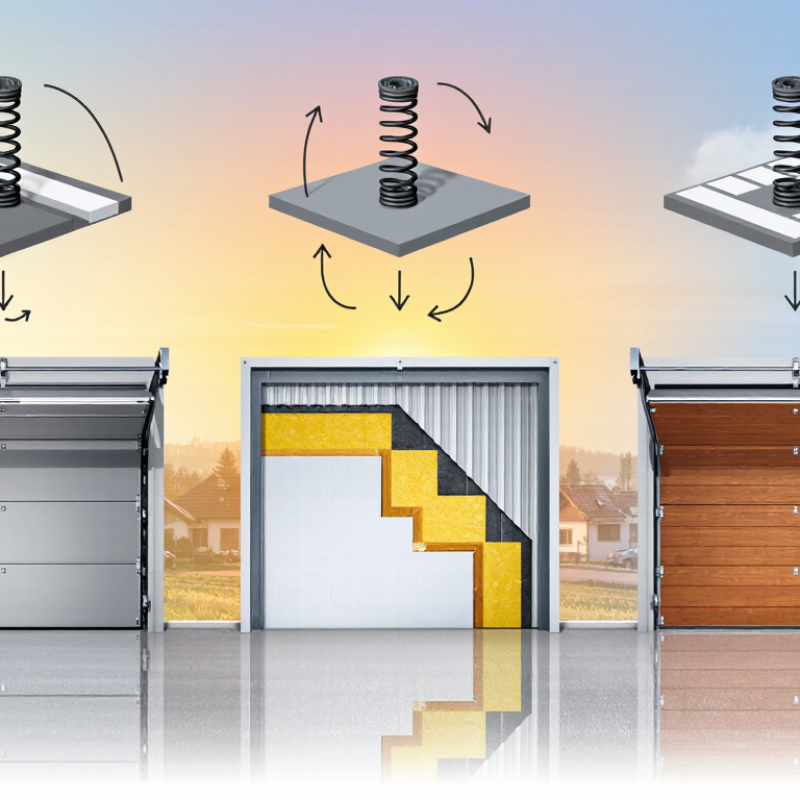
A leading garage door manufacturer is defined by more than production volume. It combines tested materials, precise engineering, and dependable service. During a site inspection, I look closely at panel alignment, spring balance, sealing quality, and operating noise. These details reveal more than polished product images.

Reliable manufacturers publish clear specifications, safety guidance, and maintenance requirements. They test doors through repeated opening cycles and changing weather conditions. Strong quality control should cover hinges, rollers, tracks, insulation, and electronic controls. Local support also matters. Replacement parts should remain available after installation, not disappear after a few seasons. Certification from recognized testing bodies can strengthen confidence, but certification alone is not enough. A door may meet standards and still perform poorly when installed carelessly.

Tips: Check the warranty’s exact coverage. Ask about cycle testing and spare parts. Inspect the factory’s installation guidance. Compare insulation values, wind ratings, and corrosion resistance. Request references from completed projects. Small details matter.

Manufacturers should also communicate honestly about limitations. No product performs perfectly in every climate. Coastal air, freezing temperatures, and frequent use create different demands. I have seen specifications look impressive while maintenance instructions remained vague. That gap deserves attention. A leading manufacturer accepts feedback, explains technical choices, and improves designs when field experience exposes weaknesses. Consistent documentation, responsive support, and transparent testing often distinguish a trusted manufacturer from a merely visible one.

How Garage Door Manufacturers Are Classified by Product Range

What Are the Top Garage Door Manufacturers Worldwide?

How Garage Door Manufacturers Are Classified by Product Range

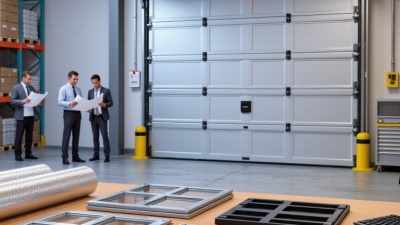
Garage door manufacturers are often classified by the breadth and technical depth of their product ranges. Entry-range suppliers typically offer manual or motor-ready sectional, roller, and side-hinged doors. These products focus on standard dimensions, galvanized steel, basic locks, and limited color choices. They suit detached homes, small workshops, and cost-sensitive replacement projects. Price alone misleads.

Mid-range manufacturers usually add insulated panels, quieter lifting systems, weather seals, and remote controls. According to Grand View Research, the global garage door market was valued at approximately USD 3 billion in 2023. Its forecasted growth reflects rising demand for energy efficiency and automated access. In practice, insulation matters most where garages connect directly to living areas. A cold panel can raise comfort complaints during winter.

Premium and specialist ranges include custom-sized doors, high-cycle hardware, aluminum or timber finishes, advanced safety sensors, and connected control systems. Commercial lines may include high-speed, fire-rated, or heavy-duty doors for warehouses and service facilities. MarketsandMarkets reports that automation and smart-building integration are important growth factors in related access-control markets. However, “smart” does not always mean better. A weak internet connection can reduce convenience. Buyers should compare cycle ratings, warranty conditions, repair networks, and replacement-part availability, not only software features. The classification remains imperfect because one manufacturer may sell basic residential doors and highly engineered industrial systems under the same catalog.

How Garage Door Manufacturers Are Classified by Product Range

Manufacturers are commonly grouped by the largest typical opening their product range is designed to serve. The figures below show representative upper-end opening widths for major market segments, not company rankings or market share.

Residential ranges generally cover single- and double-car garages, while commercial sectional and industrial rolling-door ranges support wider openings. Actual limits vary according to door construction, wind-load requirements, operating system, and local building standards.

Which Companies Are the Top Garage Door Manufacturers Worldwide?

The top garage door manufacturers worldwide are usually established companies with strong engineering, broad distribution, and dependable after-sales service. Leading producers often supply residential, commercial, and industrial doors. They invest in insulated panels, quiet lifting systems, corrosion-resistant hardware, and tested safety controls. Their products must perform across cold winters, coastal moisture, and high-use warehouse environments.

A reliable manufacturer also shows clear technical data. Look for published wind-load ratings, thermal values, cycle testing, and installation requirements. Independent certification adds confidence, but paperwork alone does not prove field performance. In my experience, service networks matter just as much as attractive product designs. A well-built door can still disappoint when replacement springs or control parts are difficult to obtain. Some manufacturers deserve attention for innovation, while others remain stronger in durable, practical systems. Rankings can change by region and application.

Tips: Compare warranty terms carefully. Ask who handles repairs locally. Check the door’s tested cycle rating, not only its appearance. Request references from similar buildings. Measure opening size twice. Small errors become expensive. I would also inspect showroom samples before ordering, because brochures can hide weak seals, thin coatings, or noisy movement. One limitation remains: performance depends on correct installation and maintenance, not manufacturing quality alone.

What Are the Top Garage Door Manufacturers Worldwide? - Which Companies Are the Top Garage Door Manufacturers Worldwide?

A practical comparison of the main global manufacturer categories, product technologies, compliance requirements, and distribution characteristics used in the garage door industry. Company and brand names are intentionally omitted.

Manufacturer Category Primary Geographic Strength Main Product Categories Common Door Materials Typical Insulation Options Common Operating Systems Relevant Standards and Certifications Typical Distribution Model Key Selection Advantage
Large North American manufacturers United States, Canada, and selected export markets Sectional garage doors, rolling doors, carriage-style doors, commercial overhead doors Galvanized steel, aluminum, wood, and composite materials Non-insulated, polyurethane-insulated, and polystyrene-insulated constructions Manual lift, chain-drive, belt-drive, screw-drive, and jackshaft systems UL 325, ASTM requirements, local building codes, and regional wind-load certifications Dealer networks, installers, home-improvement channels, and commercial distributors Broad residential and commercial product coverage
Major European manufacturers Western Europe, Central Europe, and export markets Sectional doors, side-sliding doors, roller shutters, industrial doors, and fire-rated systems Steel, aluminum, timber, glass, and sandwich-panel assemblies High thermal-performance panels, double-skin steel panels, and insulated aluminum sections Electric operators, tubular motors, side-mounted motors, and industrial control units CE marking, EN 13241, EN 12453, EN 12424, and applicable fire-safety classifications Certified dealers, specialist installers, construction contractors, and project sales Strong emphasis on thermal performance and European compliance
East Asian volume manufacturers China, Japan, South Korea, and nearby export markets Roller doors, sectional doors, residential garage doors, shutters, and access-control products Galvanized steel, aluminum alloy, stainless steel, and engineered polymers Single-layer, foam-filled, and multi-layer insulated constructions Tube motors, chain operators, remote-control systems, and smart-control interfaces Local electrical approvals, CE requirements for export, ISO 9001 quality systems, and project-specific testing Original equipment manufacturing, distributors, online channels, and regional agents Competitive production scale and configuration flexibility
Australian and Oceania specialists Australia, New Zealand, and Pacific construction markets Residential sectional doors, roller doors, industrial doors, and high-wind systems Steel, aluminum, timber-look steel, and weather-resistant composites Insulated steel panels and designs adapted to hot or coastal climates Automatic openers, roller-door motors, battery-backup systems, and smart controls AS/NZS 4505, AS/NZS 60335.2.95, electrical safety rules, and local wind-rating requirements Installer-led sales, building suppliers, retail channels, and authorized service networks Climate and wind-condition adaptation
Commercial and industrial door specialists Global project markets, logistics centers, factories, warehouses, and retail facilities High-speed doors, fire doors, dock doors, rolling steel doors, and oversized sectional doors Insulated steel, stainless steel, aluminum, PVC curtains, and fire-resistant composites Insulated panels, thermal curtains, and low-air-infiltration assemblies High-cycle motors, variable-frequency drives, hydraulic systems, and automatic controls EN 13241, EN 12453, UL and NFPA requirements where applicable, and local fire codes Direct project sales, engineering contractors, facility-service providers, and maintenance contracts High durability, safety integration, and frequent-cycle operation
Custom architectural door manufacturers North America, Europe, the Middle East, and premium urban developments Full-view doors, custom sectional doors, glass garage doors, timber doors, and concealed-frame systems Aluminum, architectural glass, natural wood, steel, and composite panels Thermally broken frames, insulated glass, and insulated panel cores Low-noise electric operators, concealed motors, smart-home integration, and manual systems Local structural codes, glazing standards, electrical safety standards, and project-specific testing Architects, designers, builders, specialist dealers, and direct specification High design customization and architectural integration
Regional residential manufacturers Domestic markets with established housing and renovation sectors Basic sectional doors, roller doors, side-hinged doors, and replacement door systems Painted steel, aluminum, timber, and cost-oriented composite materials Non-insulated and standard insulated options Manual operation, chain-drive openers, belt-drive openers, and remote controls National building codes, electrical approvals, safety testing, and local wind or snow-load rules Local dealers, independent installers, hardware retailers, and replacement contractors Accessible pricing and localized after-sales support
Smart-access and automation-focused manufacturers North America, Europe, and technology-oriented urban markets Automatic openers, retrofit kits, connected garage doors, access-control systems, and sensors Products are commonly paired with steel, aluminum, wood, or composite door panels Dependent on the selected door panel; insulated systems are widely supported Wi-Fi, Bluetooth, wireless keypads, smartphone applications, battery backup, and safety sensors UL 325, EN 60335 series, radio-equipment rules, cybersecurity requirements, and local electrical codes Installer networks, electronics retailers, online platforms, and integration partners Convenience, monitoring, and compatibility with connected homes

What Technologies and Materials Set Manufacturers Apart?

Leading garage door manufacturers distinguish themselves through engineering choices, not colorful catalogs. Their strongest systems combine galvanized steel, aluminum, insulated panels, and carefully sealed joints. Steel offers impact resistance, while aluminum reduces weight and corrosion concerns. Wood composites can create a warmer appearance, but they require closer moisture control.

Insulation technology matters in attached garages. Polyurethane foam usually provides better density and thermal performance than loose-fill alternatives. Thermal breaks reduce cold transfer through the panel. Weather seals should remain flexible across seasonal temperature changes. Small gaps can still cause drafts, dust, and water entry. Field installers often inspect the bottom seal first.

Smart technology adds practical value when it solves a real problem. Position sensors can report whether the door is open. Obstruction detection can stop movement when an object interrupts the safety beam. Quiet belt drives, LED lighting, and battery backup also improve daily use. However, connected controls need secure setup and dependable local operation. A weak wireless signal can make an advanced system frustrating.

Manufacturers also differ in testing discipline. Reliable producers test repeated opening cycles, wind resistance, corrosion exposure, and emergency release performance. Regional climate should influence the final specification. Coastal properties may need stronger corrosion protection. Cold regions may need higher insulation and freeze-resistant seals. No material is perfect. A heavier door may last longer, yet it can demand stronger springs and more careful maintenance. A polished specification sheet cannot replace accurate installation.

How to Compare Global Garage Door Manufacturers for Different Needs

Comparing global garage door manufacturers requires more than checking price lists. Start with the building’s climate, opening size, traffic frequency, and available service network. A coastal warehouse needs stronger corrosion resistance. A suburban home may prioritize insulation, quiet operation, and appearance.

Grand View Research estimates the global garage door market will grow at roughly 5% annually through 2030. That growth reflects replacement demand, construction, and connected-home upgrades. However, market forecasts use different product definitions. Treat the figures as directional, not absolute. Compare thermal ratings, wind-load certification, cycle-life testing, and warranty terms together. A low purchase price can become expensive when springs, panels, or control systems need frequent replacement.

The International Door Association emphasizes trained installation and regular maintenance in its industry guidance. Ask manufacturers for documented test results, spare-parts availability, and response times in your region. Check whether local technicians can service the motor and safety sensors. This matters more than impressive online specifications. For high-use facilities, calculate total cost over ten years, including electricity, inspections, repairs, and downtime. For homes, test the door in person if possible. Listen for vibration. Watch the closing speed. Small details reveal poor alignment.

One comparison weakness remains. Published ratings may reflect laboratory conditions, not dusty sites or severe winters. Request installation references from similar buildings. Then challenge your own assumptions. The strongest manufacturer is not always the largest; it is the one that fits the site, support needs, and operating risks.